And suddenly: stop, machine! In Switzerland, an investigation has been announced into the activities of... the country's federal prosecutor, Valentin Roschacher. Now he, who recently resigned, must explain the motives that guided him when he handed over information about Yukos accounts to his Russian colleagues. To understand the full scandal of the situation, one should consider that Swiss prosecutors are all-powerful, and resignation of one's own accord is almost the only way to remove them. Roschacher had to go because, in the eyes of his compatriots, he is guilty of the worst crime: without proper grounds, he violated bank secrecy, putting someone's property at risk. And property, like any Offshore Information<\/a>, is infinitely inviolable for the Swiss.<\/p>
Here lie piles of gold... <\/strong><\/p>
Have you ever been to a Swiss bank vault? It's a mesmerizing sight: kilometers of safe deposit boxes of various sizes deep underground behind a steel door a meter or more thick. Quiet, like an archive. The furniture is Protestant-laconic: in each hall, one, at most two tables with rails for the boxes. Somewhere there is an armchair with a small table to work with documents without going up to the surface. But there are few who want to sit: as a rule, everyone comes, puts in or takes out what they need, and leaves. The service staff consists of three people - two men and a lady. Their task is to help the client without drawing undue attention to themselves. You cannot do without their help: each box has two keys - one with the owner, the second with the bank employee, and only simultaneous turning of both can open the coveted door. Loss of a key means replacing the safe: they don't install a new lock here.<\/p>
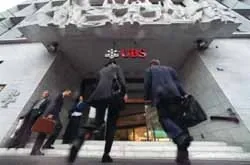
So, is there gold and diamonds everywhere? 'Mostly papers, but there are also eternal values,' explains our guide in the vault of one of the largest Swiss banks - UBS.<\/p>
But where is the 'party gold'? To my amazement, the bank manager does not ask what gold and what party are being referred to, but smoothly moves to another hall and points downward: 'Maybe there?'<\/p>
I approach, lean over the railing, and am stunned: the lower floor, boxes the size of a cupboard, two by two, or even three by three meters. How many parties are there? As if reading my thoughts, the guide laughs: 'That's a joke. As a rule, such boxes are rented by companies or stores. For example, jewelry stores. However, the latter is my assumption, and only the owners know what lies in the safe. I can only say that such safes are in great demand, while less spacious ones are always available.'<\/p>
Visitors to the vault, as we were warned in advance, cannot be asked anything and certainly cannot be photographed - the bank secrecy law, no matter what anti-terrorism fighters say, still guards confidentiality. Unsurprisingly, the faces of the vault workers showed an indescribable range of surprise and anxiety when an exception was made for us, allowing us into this 'Ali Baba's cave,' and with a camera to boot. 'If you protect clients and employees so much, wouldn't it be simpler to make the vault unmanned, like in the movies: you come, enter a number on the monitor, and the safe's contents roll out on a conveyor?' I ask the head of UBS media relations, Serge Steiner. 'That's only in Hollywood,' says Steiner. 'We have always had and still have the human factor. After all, it is not only a minus but also a plus. Technology is easier to deceive.'<\/p>
On the other hand, people are gullible: crowds of tourists, listening to the guides' tales, have for decades meekly swallowed the story that a small square in one of Zurich's oldest districts - Paradeplatz - is exactly the fairy-tale place where gnomes keep their treasures. They say that since the Middle Ages, under the square where the market stood, there were some passages and storage rooms, and later, when banks came, the entire underground space turned into a continuous vault, compared to which Uncle Scrooge's safe is just a piggy bank. Over the past centuries, only two banks remain on the square - UBS and Credit Suisse. These two pillars of the Swiss banking world always settle together. But we digress. So: under the 'golden square' there is no gold. It is nearby - on the city's most fashionable street, Bahnhofstrasse, where the central offices of the largest banks are located.<\/p>
The size of the Swiss treasury involuntarily suggests: either the entire planet keeps its hard-earned money here, or it has been accumulated over centuries. Bankers, of course, emphasize the first part, claiming that there is no shortage of people wanting to open accounts in the Alps. This is true, but Switzerland's centuries-old credit history has also played its part. The Alpine confederation is the only developed country where deposits are literally held on demand. That is, forever.<\/p>
...And they belong to me<\/strong><\/p>
To get an answer to the question of what the bank does when the account holder has not been heard from for a long time, we had to take a one-hour train journey. The destination is the city of Basel. That is where the Swiss Bankers Association is located, which among other things develops rules that banks follow no less strictly than federal law.<\/p>
Vice-President of the Association Claude-Alain Margelisch and head of the press department James Nason, wasting no time, laid on the table a directive of their own making, regulating how banks should act if contact with a client is lost. Briefly, it can be summed up as follows: 1) take all measures to find the client and establish contact; 2) if that is impossible, keep accounts and valuables in their current state until the client or their heirs appear; 3) if they do not make themselves known, keep the savings until the impossible happens — when pigs fly, and the Alps become a plain. In addition to money, according to the instruction, all papers (account statements, reports, etc.) should also be kept forever. Can you imagine what a mountain of waste paper that is? No wonder Claude-Alain Margelisch sighs: 'Lawyers, insurance companies and notaries did not support us in this endeavor, so banks store account documentation, so to speak, in an autonomous mode.'
But what if the client dies without leaving a will? Then, according to the vice-president of the Swiss Bankers Association, the law of inheritance comes into force. Moreover, if the client is a foreigner, the bank will abide by the letter of the foreign law, unless the foreign national has lived in Switzerland for at least 25 years. Well, local norms clearly regulate how to divide property and money, how to act in the case of gifts, whose rights to inheritance are primary. By the way, the state can also act as an heir, but according to Margelisch, who has a great deal of legal experience, there has never been a case where the authorities of any country have managed to challenge a private person's right to inheritance. And all because there is always a chance that heirs from among relatives will appear, even when the account holder had no direct descendants. It has even happened that heirs turned up after a 50-60-year 'sleep' of the deposit.
In all countries of the world, there are time limits for storage periods: in the USA, for example, if an account is inactive for five years and no heirs have appeared, the funds go to the state treasury. Somewhere this period is even shorter - two or three years. But in Switzerland, there is no limit. They keep things for centuries. And they do not give it to the state: neither their own nor foreign. There is no such law, they say here, to expropriate honestly acquired property. Everything a person has accumulated is his and his descendants', and no one else's.
The task of a Swiss bank is one - to preserve the deposit. There is also only one exception: if the amount in the account is so small that maintaining it is unprofitable for the bank. In that case, the account is closed. Another option is an order from the Swiss prosecutor's office. Only the Swiss! Law enforcement agencies of other countries, including Interpol, are not a command for Alpine bankers. One can say as much as one likes that Berezovsky or Khodorkovsky are criminals, but until the Swiss authorities agree with the evidence of the gravity of their deeds, sanctions for disclosing account data and arresting them will not follow. And if they suddenly do, then one can be sure: heads will soon roll. As, for example, in the case of Valentin Roschacher.
From the prosecutor I hear
We had the opportunity to see for ourselves how dangerous and difficult the work of Swiss prosecutors is. The latter, by the way, is also because the staff of the prosecutor's office is small by our standards: entering the office of the Attorney General of the canton of Geneva, Daniel Zappelli, we found out that the official who had asked us earlier if we wanted coffee while waiting for the rendezvous was the prosecutor himself. In general, Mr. Zappelli has to do a lot himself. He doesn't even have a translator from Russian. Does that mean there are no Russian cases?
'There are, but for the past four years they have been sent mainly to the office of the federal prosecutor (that is, until recently, to Valentin Roschacher). But I also have several requests from the Russian authorities. I cannot disclose details, but, let's say, we are talking about Russians who have accounts in Swiss banks. Rich Russians. But the mere fact of Russian citizenship is not enough for me to recognize these people as guilty of committing any crimes. I will only say that the number of 'Russian cases' (by this concept we include requests from the entire CIS space) has been decreasing over the years, and quite significantly. This year we received no requests at all. Perhaps this is due to the fact that our laws have become stricter with regard to money laundering. I would say that Switzerland, as before, wants money, a lot of money, but only clean money. FATF recommendations are strictly followed here, the sources of income of each client are checked. And nationality does not matter here.'
Another thing is that in Switzerland, as our interlocutor explained, many acts that are considered criminal abroad are not recognized as such. For example, tax evasion is not a sin, but just a prank, not subject to criminal prosecution.
The confederation, as a rule, does not hand over the money of 'its own'. However, in order to become 'one of one's own' for the Swiss authorities, one must fully reveal oneself to them. For example, the famous anonymity of accounts - so-called numbered accounts, where instead of the owner's name a set of numbers or a pseudonym is indicated - is not an obstacle for the local prosecutor's office. 'The bank management knows who exactly is the owner of the account. Banks are required to have information about both the person and the sources of funds. One must be able to always contact the client. We never have such a thing that a mobile phone doesn't work,' says Zappelli.
So it turns out that those who open numbered accounts are deceived? 'No. There is banking secrecy. If you are clean before the law, it reliably protects you from prying eyes, narrowing down thanks to the numbered account the circle of those privy to the details of your financial life. Another thing is that from the prosecutor's office you cannot hide behind a number.'
- Have you received any requests where a former state leader is accused of crimes? Like, he robbed the country and hid the money in Switzerland in a numbered account.
- Such questions are generally within the competence of the federal authorities. However, the procedure for applicants is still the same: the new government must first prove the gravity of the crime of the former leadership. However, banks try to avoid such consequences, preferring not to get involved with current politicians. We even have a special list of undesirable persons who require particularly thorough checks before opening an account.
Besides prosecutors, there is one more person in Switzerland before whom the bank secrecy law recedes. Without him, the descendants of those who once deposited their hard-earned money in Swiss bank safes would risk never knowing that such accounts ever existed. In the cataclysms of two world wars and other upheavals, traces of thousands of people and their money were lost. Lost to everyone except the Swiss.
To assist heirs, the Swiss Bankers Association established the position of banking ombudsman, now held by Hanspeter Häni. Unfortunately, the schedule of the depositors' rights commissioner is very busy, so our curiosity was mainly satisfied by his deputy Christian Güex: "We usually start the search after the account falls into the 'no news' category, which means contact with the owner has been lost for ten years or more."
"So you won't take up the search before the ten-year moratorium?" "We will," says Christian Güex. "Ten years is the official deadline for banks to search for the owner or their heirs according to the association's directive. We can act from any time if there is a request."
How to find a "great-grandfather's deposit"? It all starts with a letter in which the heirs describe the situation in free form. Then the ombudsman must verify that the person who once opened the account actually existed and died (relevant documents will be required). Otherwise, as Christian Güex lamented, "we risk getting into a situation where, for example, disinherited offspring try to take possession of a parent's assets while they are still alive." In addition, the heir must prove that they are the sole claimant to the property, or if not, obtain the consent of the other relatives. If all documents are available, the search for the account in question takes a few minutes. Incidentally, for a moderate fee: the pleasure will cost 100 Swiss francs.
What if the bank doesn't want to disclose information? It says we don't have such an account... "It's a question of faith," says Christian Güex. "You either believe in the system and that the bank complies with the law, or you don't. I personally believe. As I believe that if a bank is caught violating the law or simply being dishonest with clients, it will be warned, fined, or even stripped of its license. We are strict about that."
Face control
Currency liberalization allowed our compatriots to open accounts abroad without additional permits. The question: will they be able to do so in Switzerland? Answer: they can, but not many.
The fact is that countries of the former Soviet Union are not on the "white list" of states whose citizens can open accounts in Switzerland without hassle. This list is small - about a dozen countries (mostly the core of the European Union). Representatives from the rest of the world arouse suspicion among Swiss bankers. Moreover, there is no official black list. Each country is approached individually, and it is sometimes dictated by political considerations.
In practice, this means that before opening an account in a Swiss bank, a prospective client from a "suspicious" country is thoroughly checked. The procedure is called due diligence. A new version of the rules, introduced a couple of years ago, requires assessing the potential damage to the bank's reputation when dealing with certain categories of clients. The risk group includes: politicians and their family members, owners of risky businesses (e.g., casinos), and simply holders of large fortunes.
Representatives of the middle class have it easier, though even they will think ten times whether all the ordeal is worth the pleasure of owning a Swiss bank account. For example, opening one requires personal presence. There are exceptions to this rule: bank clerks travel to the client, but only for very large sums. So you'll have to go yourself, and the trip will cost about €1-2 thousand per week. Proving the clean origin of funds is required even if the deposit amount is small. Moreover, due diligence at account opening does not exempt from subsequent checks. The bank may suspect: sudden deposits, high transaction frequency, or cases where transfers come from a bank on an island lost in the ocean.
One ready to go through all these obstacles to achieve the cherished goal should ask themselves: why do they need a Swiss account? As a way to get rich quick, it is not suitable - low interest rates. You can increase your capital by allowing the bank to invest money in securities. But this is a risk that negates the main advantage of Swiss banks - reliability. Perhaps it is better to look for your "great-grandfather's deposit" in Switzerland's rich credit history?