
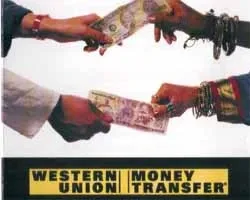
The company launched a pilot project at the end of March in 200 bank branches in the Yamalo-Nenets and Khanty-Mansi Autonomous Okrugs of Russia. The 'Econom' program involves transfers from Russia to Ukraine, Armenia, and Georgia at reduced rates, provided the transfer is paid out to the recipient after a 48-hour delay. The initiative came from the Western Union representative office in Ukraine, Georgia, and Armenia, as recently announced by its director Mikhail Babirenko. A similar program began last year for transfers from the USA to former Soviet Union countries, and in January from England to Ukraine.
The 'Econom' program only applies to transfers in dollars, and in small amounts — up to $1,000. For comparison: a $150 transfer via the regular Western Union program costs $9, while the 'Econom' rate is only $4. A $1,000 transfer would cost $37 under the regular scheme and $24.6 under the 'economy' one. Interestingly, the rates of the 'Econom' program almost completely match those of the 'Privat-Money' system, one of the leaders in the transfer market from Russia to Ukraine. However, in Privatbank, a transfer through their system takes just a few minutes, so the 'Econom' program will not compete with it.
'The goal of the 'Econom' program is not competition, but to reach those migrants who use informal channels for sending money,' suggested a newspaper source. Potential competitors from other systems are puzzled as to why one would keep money in the system for two days without using it, since the transfer technology itself does not change. Moreover, two days is too long, even for postal transfers, market participants note. 'Nevertheless, there is a risk that a large share of clients who specifically used Western Union will simply switch to a cheaper tariff. Our migrants, for the most part, can afford to wait a couple of days — there is a large time difference between regions, and most transfers are regular family support, not emergency needs. In other words, Western Union will compete with itself,' our source says.
The Western Union Gold Card loyalty program, another company innovation, is based on an identification card issued to the customer. As Jonathan Knaus, Vice President of Western Union for Russia and CIS countries, told 'Vremya Novostey', the card is linked to a personal account in the system, which contains information about the customer and how many times and in what amounts they have transferred funds. As a reward, a customer holding such a card receives bonuses tied to the amount of commission paid for transfers. Bonuses can be exchanged for gifts, long-distance and international calling cards, etc. Bonus conditions vary by country. In addition, the card helps quickly identify a customer wishing to transfer money and eliminates the need to fill out forms. Western Union agent banks do not participate in issuing the cards; they only provide a questionnaire that the customer must fill out. The cards themselves are distributed by the company or Western Union Bank (in countries where it operates; its presence is not planned in our country).
According to Jonathan Knaus, the loyalty program is active in 58 countries leading in the number of outgoing transfers. Russia is among such countries, although two years ago it, on the contrary, received more money from abroad.
Other money transfer systems have not yet announced the creation of ongoing loyalty programs, but customer acquisition campaigns are held regularly. Western Union's main competitor, MoneyGram, does not have one yet. Somewhat similar to the Western Union loyalty program is the service of the 'Zolotaya Korona' (formerly 'Strana-Express') transfer system, which has been operating in Russia since February. It does not yet provide customer bonuses, but it has an identification card that, among other things, allows transfers through ATMs.
'In European countries where our loyalty program is already working, customers have started using the system 30% more often,' says Jonathan Knaus. He found it difficult to name the exact launch time of the program in Russia, noting that the issue has been decided and necessary research is currently underway. According to transfer market participants, the Russian audience has long been ready for such a program. 'It's high time they introduced this program, because the Western Union brand is now easily recognizable in Russia. However, in our country, discounts are preferred over bonuses. Bonuses in the form of calling cards for long-distance calls are not too attractive either,' says a representative of one money transfer system. Perhaps, he adds, a better idea would be to award bonuses as additional minutes on mobile phone accounts. But this would require agreements with mobile operators, who must find the participation terms beneficial. The fact that Western Union has not yet decided on a reward system for Russian customers may be one of the reasons for the delay in its introduction.
According to the World Bank, the global volume of transfers in 2006 was $268 billion. And according to the Central Bank of Russia, the volume of money transfers from Russia to CIS countries was $5.382 billion (in 2005 — $3.226 billion). Meanwhile, the flow of money transfers from CIS countries to Russia last year amounted to $559 million (a year earlier — $396 million). The average amount of a transfer from Russia to CIS countries is $510. The statistics include money transfers made through the systems Anelik, Contact, InterExpress, Migom, MoneyGram, PrivatMoney, Ria Envia, 'STB-Express', Travelex Worldwide Money Ltd, UniStream, VIP Money Transfer, Western Union, 'Bystraya Pochta', 'Guta Sprint', 'Strana-Express', as well as through 'Pochta Rossii'.