
Sport has not stayed away from the struggle for human talents. Quite the opposite: sport is constantly in the spotlight, and the movements of the best minds, hands and legs from club to club have become as commonplace as the need to go to work. At the same time, athletes are very often offered to change not only their club or society. The best of the best, or simply guys who are very much needed at the moment, change citizenship quite regularly. What drives them to take such a decisive step? The desire to live better than before, in some cases. The thirst for profit - in others. The opportunity to fully realize their potential - in yet others, etc.
How do we treat people who have exchanged their homeland for another state? In different ways. Some we praise for their talent and ability to sell themselves more profitably. Others we mercilessly criticize, attaching the label of traitor. Still others we welcome because they moved to our country. So it is hard to say whether changing citizenship is good or bad. Therefore, let us perceive everything as a fact - no more and no less. After all, for several years now we have been complaining that Ukraine, after gaining independence, has been mercilessly robbed by financially mightier Russians, as well as by Belarusians who are rapidly developing sport. And if earlier we respected our neighbor for quality Belarusian knitwear, today we are amazed at his desire to develop sport. But at the same time, we are not sitting still, strengthening our human resources at the expense of even weaker states.
Say, if the best graduates of domestic hockey schools at a young age strive to leave here and train in the good conditions that can be offered in Russia or Belarus, then the Ukrainian national teams in various types of wrestling are staffed mainly with athletes with sonorous Caucasian surnames. Closing our eyes to our own sins, we immediately point to others' sins that have struck our pride.
Let us recall with what fanfare the move of our leading biathlete Elena Zubrilova to Belarus was arranged. What names she was called, what epithets were attached to her, recalling all the good that had been done for her! And the sportswoman was only trying to explain that the funds allocated to her in Ukraine were clearly insufficient for the normal work of a high-class biathlete, which Zubrilova was. She was offered very decent conditions, and she, respecting herself and her work, decided to change citizenship. She received a mass of unflattering reviews from employees of the national federation, who at that time were processing Ukrainian citizenship for Russian biathlete Korobeinikov...
In individual sports, by the way, the issue of changing the national team and obtaining not only a passport of another country, but also the opportunity to compete under a different flag, is resolved very quickly. And quite simply. Things are much more complicated with team sports. For example, in hockey or football, moving from one national team to another is virtually unreal. Although, under certain conditions, it is possible.
By the way, recently FIFA (International Federation of Association Football) has softened the conditions that allow changing citizenship and playing for another national team. After all, the main essence of changing citizenship is the opportunity to play for the national team of another country.
In the second half of the 20th century, everything was very simple: if a football player took to the field in an official match (qualifying and final tournaments of continental and world championships) as part of any national team of his country (national, youth, junior or underage), he was considered capped. And he had no right to switch. Now some concessions have been made for certain players.
For example, if a football player was born in Ukraine, then moved to Russia and played for one of the national teams (except the national team) of that country, he retains the opportunity to claim the right to play for the Ukrainian team as well. Naturally, provided he has a Ukrainian passport. That is, now only purely homegrown talents or those who have appeared in official matches can be considered capped.
Today, in one of the best clubs in the world - Turin's Juventus - plays 20-year-old Viktor Budyansky, a native of the Kharkiv region. As a child, he was taken to Russia, where he played for the team 'Sportakademiya', which specializes in selling young football players abroad. In those times, the Ukrainian Budyansky played for the Russian youth team. But according to the current FIFA ruling, the coaches of Ukrainian national teams may well use him. And Victor himself, if his words are to be believed, is not against playing for Ukraine. Although at the same time he does not refuse Russia either. And the guy is truly talented. In the current Juventus, he regularly plays for the second team and recently has begun to be included in the lineup for Italian Championship matches and even the Champions League.
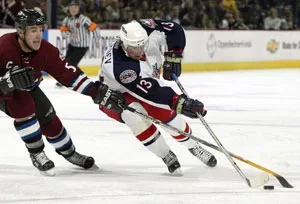
It is a pity that such a rule does not exist in hockey. Otherwise, the Ukrainian national team could, overnight, be strengthened by such stars born in Ukraine but at various times led away from us by Russians, as Alexei Zhitnik or Oleg Tverdovsky. And our coaches could well count on Nikolai Zherdev, who became famous worldwide for his escape from Moscow CSKA to American Columbus. As well as Vitaly Vishnevsky, Anton Babchuk, Andrei Mikhnov, Anton But, Denis Shvidky, who play in the NHL. They were all born in Ukraine, but were tempted by the big prospects and better conditions provided to them by the Russians, in exchange for playing for the Russian national teams.
By the way, after the collapse of the USSR, the dissolution of Czechoslovakia and the SFRY, chaos reigned in Europe for some time. Not everyone could immediately distinguish Ukrainians from Russians, and Slovenians from Serbs. And the list of football players who in their career managed to play for the national teams of two (and even three!) countries instantly grew to the size of a substantial tome. After all, the USSR (or CIS) team is one thing, while the teams of Ukraine, Russia or Belarus are completely another.
The first player known to football historians to play for two national teams was a certain John Edwards. Back in 1874 he played one match for the English national team, and two years later (in 1876) he put on the jersey of the Welsh national team. But in principle, such changes are not so significant, because both England and Wales are parts of one state, Great Britain, although they have a certain football independence and long-standing traditions.
But the first truly serious switch from one national team to another occurred a little later. Its hero (or anti-hero, depending on how you look at it) was John Reynolds. In 1890 and 1891 he played for Ireland (five matches, one goal), and in 1892 he made his debut for the English team, for which he played until 1897 and played a total of eight matches and scored three goals.
It is worth noting that before the Second World War there were very many changes of nationality - both football and actual. The main routes of defectors ran from South America to Italy, Portugal or Spain. Talented Argentines and Brazilians received lucrative invitations from Old World clubs, and soon, having proven themselves, they accepted offers from the heads of national federations. As the most striking examples, I will cite the Italian Argentines Raimundo Orsi (who managed to play for Argentina, Italy, and then again for Argentina, and in total scored 16 goals in 48 matches), Luis Monti and Julio Libonatti. After the Second World War, the famous Alfredo Di Stefano (Argentina - Spain), José Emilio Santamaría and Juan Alberto Schiaffino (Uruguay - Spain), José Altafini (Brazil - Italy) followed the same route.
But there were plenty of "nomads" in Europe as well. In the early 50s the Hungarian national team shone, and its best players soon ended up in Spain. Ferenc Puskás and László Kubala made their debuts for the Spanish national team, having previously played a lot for the Hungarian one. Kubala, by the way, managed to play for the Czechoslovakia team before the Hungarian national team, becoming the first footballer in the world to play for three national teams.
In short, there are many examples of changing football citizenship (which was necessarily accompanied by a change of passport). As already mentioned, such cases became sharply more frequent after the collapse of the USSR. And in the early 90s, footballers managed to play for the Ukraine national team, and then a month or two later put on the jersey of the Russia national team. Yuri Nikiforov, Oleg Salenko, Sergei Shcherbakov, Aleksandr Pomazun, Sergei Kandaurov, Ilya Tsymbalar and Akhrik Tsveiba followed exactly this path.
The confrontation of football powers has reached the point where the struggle is already for 18-year-old boys. Belarusian and Ukrainian football officials are still at loggerheads over Artem Milevsky, a native of Minsk who plays for "Dynamo" in Kiev. At the age of 15, the boy played in an official match for the youth team of his homeland, and after that he decided to move under the blue-and-yellow banners. And for years he has only played in friendly matches, without the opportunity to play for the Ukrainian national team in official matches. In Ukraine, they hope that soon Milevsky will be allowed to play for our national team. But this will mean that the current laws will change again, giving rise to another wave of switches from one national team to another. What an fickle thing citizenship is after all...