
The Olympic Games are an event not only in sporting life. Held once every four years, the Winter and Summer Games (separated by two years: for example, the Summer Games took place in 2004, the Winter Games will be held in 2006, the next Summer Games in 2008, the Winter Games in 2010) find themselves at the center of attention of the entire planet. And hosting them is an honorary right. Unsurprisingly, very serious cities fight for it, ready to incur enormous expenses (in the hope of even greater profit) and to advertise themselves to the whole world. Naturally, almost all available means are used in this struggle - from cultural to those completely far removed from that concept. We will talk about how they try to knock each other out of the race and, conversely, defend their own interests.
At the end of April, information appeared in Moscow "from a competent anonymous source" that the Russian capital would most likely not be allowed to win the race of five cities. High-profile material even appeared in the media under the headline "The Olympics Are Passing Moscow By." The executive director of the bid committee "Moscow-2012," Alexander Polinsky, and the head of the project group of this committee, Alexander Chernov, reacted very negatively to this.
"What kind of source is that? An IOC member? A member of the Evaluation Commission? No one can currently give an objective assessment of the chances of any of the cities. All candidates have approximately equal chances. Everything will be decided only on July 6 in Singapore. According to the data of the experts of the Evaluation Commission who visited Moscow, one can only compile a report on what transport and hotel capabilities the city has, whether they meet IOC requirements, what condition the sports facilities are in, where the Olympic Village is located, and how true the concept presented in the Bid Book is.
Of course, one of the candidates can be removed from the race. But to do this, one needs to conclude that it is impossible to hold the Olympic Games in one city or another, or that its representatives deceived. In our case, this could not have happened. If only because on the last day of their work, the experts stated that the Russian capital has a very strong bid, provided with all necessary documents, and we are quite competitive at the highest level. And in general, it was clear that the commission members liked Moscow."
It is known that one of the key moments of the Muscovites' campaign program is the project "Olympic River." From the same "competent anonymous source" a sensational news item began to circulate that one of the members of the Evaluation Commission (the one responsible for transport issues) thoroughly criticized this crazy idea. Allegedly, it is not proper to carry athletes by boats and steamers along the river from the Olympic Village to the competitions and back.
But, as the same representatives of the Bid Committee report, either the journalist misunderstood the essence of the "Olympic River" project, or the "source" mixed everything up: "Why would anyone decide that we are going to carry athletes along the river? No one ever thought of carrying participants on a steamer. The river will be used as an auxiliary transport artery for tourists. Of course, if athletes themselves want to get to the competition venue by steamer, no one will object. Why not take a river tram in summer, without traffic jams, admiring wonderful views, from the Olympic Village to Luzhniki? The concept is called "Olympic River" only because all the main facilities, including the Olympic Village, the sports complex in Tushino, the venue for the sailing regatta on the Pestovskoye Reservoir, are located along the Moskva River. And we plan to transport sports delegations by buses, as is customary."
One of the main disadvantages for every candidate city is the problem of traffic congestion. All candidates are megacities, where traffic jams are a common thing. But in order to win the right to host the Olympic Games, you need to come up with something to solve this issue. At least partially.
Muscovites claim that the fact of having three airports speaks in their favor. In addition, they count on the fact that many car owners will leave for vacations and dachas in the summer, as happens year after year. However, it is hardly worth counting on such altruism on the part of Muscovites, because most capital residents will certainly be interested in watching the Olympic Games events. In that case, one can only count on the compact location of facilities and restricting car access to so-called Olympic zones.
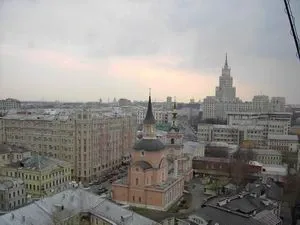
But the main thing is still not transport, but the Olympic Village, which should house the sports delegations of countries, as well as Olympic venues. Moscow officials claim that representatives of the Evaluation Commission were primarily interested in the issue of financing the construction of the Olympic Village: "We showed the guests the order of the Moscow government on the start of construction, introduced them to investors, showed a model of the future Olympic Village, took them to Shelepikhinskaya Embankment and showed the places where residential buildings, access roads to them, parking lots, and even paths for morning jogs of Olympians will be located, for which artificial stone will be used. They also demanded that we guarantee a certain number of hotel rooms and their certain price for the period of the Olympic Games. Can you imagine what it means today to give price guarantees for 2012! And inflation?! On the other hand, the IOC's concerns are quite reasonable, since in Turin, in the run-up to the 2006 Winter Olympic Games, hotel prices skyrocketed dozens of times."
At first glance, Moscow's positions are quite strong, and the representatives of the Bid Committee are full of optimism. Nevertheless, opinions are quite actively expressed on the Internet that the Russians' chances of overall success are not high. Perhaps the lowest among all the contenders. Moscow officials are very displeased about this: "Our main problem is the perception of Moscow by world public opinion. Our concept is good, transport and hotels are up to standard, ecology meets requirements, security is guaranteed, the city's population is 'for', the mayor of Moscow and the president of Russia have given their respective guarantees, but nevertheless people abroad look at us with caution. They know little about modern Moscow.
The advantage of London, New York, and Paris is that they are English- and French-speaking cities, and English and French are the working languages of the IOC. Therefore, their bids are more intelligible and convincing. For our representative to go somewhere for a presentation, he must spend considerable effort and time obtaining a visa, whereas a Frenchman, an American, or a Briton only needs to buy a plane ticket. Or another example. For the General Assembly of the Oceania NOCs in Brisbane, we were given only two accreditations, which caused problems with an interpreter for the head of the Moscow-2012 Bid Committee, Valery Shantsev. But we do not complain, we learn to overcome all obstacles, we try to be faster and more inventive than our competitors."
By the way, Moscow, if chosen to host the 2012 Olympic Games, will receive $2 billion from the IOC as well as Russian and foreign sponsors (though the city government will need to spend several times more). But even if the Russian capital does not get the opportunity to host the Games, it will still win. Experts claim that during the preparation for the 2012 Olympics, such a volume of work will be done that would normally take several decades. In particular, in Moscow, in any case, 70 hotels with 100,000 rooms will be built - from luxurious to ordinary three-star. We should also not forget that everything built for the Olympic Games - sports facilities, polyclinics, the fourth transport ring, the Olympic Village - will be used by Muscovites. So the costs are worth it...
Let's talk about other contenders for the 2012 Games. For example, London. The British for a long time could not resolve the issue of building the central stadium, where the opening and closing ceremonies usually take place (in Moscow, the stadium in Luzhniki - the former Lenin Stadium - is perfectly suited for this purpose). But the Londoners compensated for the stadium construction problems with other trump cards. Thus, the British promise, if London is granted the right to host the 2012 Olympic Games, to relieve participants of financial and transport problems. The government is ready to allocate £15 million for these purposes.
The essence is as follows. During the 2012 Olympics, all 10,000 athletes and coaching staff members of the national teams will be able to fly to London free of charge on passenger flights (economy class), also make free phone calls from the Olympic Village worth £52, and travel unlimitedly by rail within the UK. At the same time, relatives of foreign team members will have the opportunity to use free private housing provided by the host side. In addition, 200 employees of national Olympic committees will receive significant allocations. Each of them will have a credit line of £26,500 to cover expenses related to the targeted use of the UK training base. Plus, they will be given discount cards entitling them to a 50% discount on services of London shops, restaurants, and theaters.
It seems the British have made a good attack on public consciousness. Moreover, the Evaluation Commission, having visited the UK capital, concluded that London is very close to hosting the Olympic Games. The information that Moscow officials lamented at the very beginning of our story was obtained by "villains" from the world-famous French news agency AFP. According to their data, the results of the Evaluation's visit are known already now. London, Paris, and New York, based on the results of the inspection trip, topped the list of five candidates in the race for the 2012 Games. However, it is claimed that all five candidate cities can successfully organize the Games. But after reading the commission's report, four of them are clearly preferable to the fifth, and the three cities mentioned above look even better. According to AFP, Moscow occupies fifth place in this list, and Madrid is in fourth place.
According to an "informed source," London managed to give the best presentation of the city. New York's presentation was frankly boring, and "in Paris, politicians spoiled the whole picture, trying to show themselves rather than the city." New York's position largely depends on the authorities' decision to build an Olympic stadium, which does not yet exist. In that case, it could compete with Paris and London.
But one delicate point remains unclear - how could this informed source, several months before the official announcement of the evaluation results, have access to the commission's report, which is categorically forbidden to share such information? There are two possible options - either the source is misleading public opinion, or the commission facilitated the leak of information, thereby discrediting itself.
Once again we have to recall that in the struggle for the right to host the Olympic Games, far from the most honest methods are sometimes used. It is possible that one of such actions from the series of "black PR" is the accusation of Guy Drut, a member of the "Paris-2012" bid committee, of corruption. Presumably, Drut (by the way, Olympic champion of 1976 in the 110-meter hurdles) earned dishonestly in the period from 1990 to 1993 and was involved in a political scandal, in the case of which 47 people are implicated.
Unfortunately, the Drut case is not the only one in a whole chain of corruption scandals involving IOC members. Last year, a South Korean court sentenced the vice-president of this organization, Kim Un-yong, to 2.5 years in prison. Also fresh in memory is the scandal with the Bulgarian Ivan Slavkov, which flared up when the British Broadcasting Corporation BBC, shortly before the start of the Olympic Games in Athens, broadcast the film "Buying the Games", in which Slavkov was accused of being ready, in exchange for a bribe, to vote for the candidacy of a city indicated to him - the capital of the 2012 Olympics. By the way, in Singapore on July 6, not only will the city that will host the 2012 Olympic Games be named, but also a vote will be taken on the expulsion from the IOC of Kim Un-yong and Slavkov.