
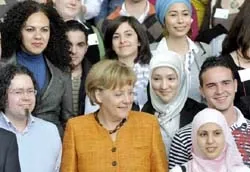
As Deutsche Welle notes, the labor market situation in Germany in 2007 had a positive impact on the employment of migrants and people from immigrant families. Thus, in 2007, the number of unemployed in this population group decreased by 178,000 compared to the previous year, and the number of migrants with minimal employment decreased by 221,000.
However, despite the optimistic data from the Federal Statistical Office, a noticeable difference in employment between native residents and migrants continues to exist in Germany. According to statistics, in 2007, 14% of migrants and people from immigrant families aged 25 to 65 were unemployed (the national average for this age group was 7.1%). Migrants without German citizenship are particularly affected by unemployment—16% of them were jobless in 2007.
Migrants and people from immigrant families in Germany are considered to be foreigners who came to Germany after 1950. In 2007, 7.3 million foreigners (8.9% of the country's total population) and 8.1 million people from immigrant families with German passports (9.9% of the population) lived in Germany. Thus, in 2007, a total of 15.4 million foreigners and people from immigrant families lived in Germany. In the same year, Germany's population decreased by 112,000 to 82.3 million. Foreigners and migrants living in Germany primarily come from Turkey, Poland, Russia, Italy, Serbia, Croatia, and Greece.
According to the statistical office, a certain sociological portrait of foreigners and people from immigrant families in Germany has emerged. On average, they are younger than native Germans (34.3 years compared to the average German age of 44.9), are more often unmarried (45% unmarried migrants compared to 38.1% among Germans), have a higher proportion of men (50.8% compared to 48.5% among Germans), and are more likely to live in the western states or Berlin (95.9% compared to 81% of Germans).
Migrants and people from immigrant families are more likely than Germans to lack completed school education (12.6% compared to 1.6%) and vocational education (58% compared to 22.9% among the native German population). Such statistics may partly explain why workers with immigrant backgrounds in Germany are more often than Germans part of the so-called working poor group—low-income workers. Among the working population in Germany aged 25 to 65, their number is much higher (13.4% among migrants compared to 4.6% among Germans).