
 Read the beginning of the article:
MEAT ROUTES OF GOURMANDS (part 1)
Ardennes ham and roast hare in Luxembourg
One of the smallest states in Europe ranks fifth in the world in meat consumption – 107.9 kilograms per capita per year. Luxembourg's cuisine has been strongly influenced by neighboring France, Germany, and Belgium, and many original old recipes have been preserved here.
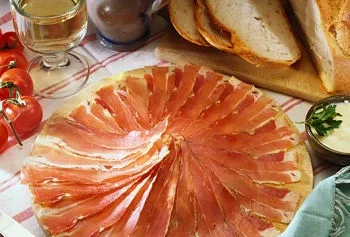
The national dish of Luxembourg – Judd mat Gaardebounen – smoked pork with red beans. The homeland of Ardennes ham made from cold-smoked marinated pork is Belgium, but it has long taken root here and is extremely popular. It is served as a separate dish and also used for stuffing and decoration.
Roast hare, oxtail soup, and beef tongue are served in any high-class establishment in Luxembourg. Special respect is given to chefs who can prepare poultry giblets – one of the most expensive delicacies.
Various types of sausages are also popular, and Träipen – blood sausage with mashed potatoes and radish – is considered a national dish.
Huhu and titi in New Zealand
Citizens of New Zealand, numbering just over 4.5 million people, consume an average of 106.4 kilograms of meat per year each. Here too live descendants of immigrants from Great Britain, which affects the local cuisine. In a country that is one of the world's leading meat producers, most dishes use lamb, beef, or pork.
The simplest and most traditional recipe is fried meat with potatoes. Stuffed roast beef and steaks, stewed meat rolls, and lamb shoulder stuffed with potatoes are popular.
The traditional dish of the indigenous Māori people is hāngī. It is chicken or lamb baked with pumpkin in an earth oven. "Mutton bird" – that is what Māori call the titi bird for its thick fat layer, which when baked gives it a characteristic flavor reminiscent of lamb. And at the New Zealand cuisine festival held in March in the town of Hokitika, you can enjoy the delicacy huhu (fried larvae), scorpions, snails, sheep's eyes, and baked possum meat.
Tafelspitz and Eszterházy roast in Austria
The average Austrian eats 102 kilograms of meat per year – sausages, frankfurters, meatballs, fricadelles, cutlets, and schnitzels. Of all the variety of meat dishes prepared in this country, the most famous is Wiener Schnitzel, a breaded and fried veal cutlet.
Tafelspitz – fried or stewed beef with potatoes and apple horseradish – is considered a national dish. Backhendl – that is the name for fried chicken in batter, which locals love to have for dinner.
On holidays in Austria, roast goose and Eszterházy roast – beef braised in cream and wine – are served. With the opening of hunting season, game dishes appear on restaurant menus – wild boar, deer, roe deer.
Fafa and raw fish in French Polynesia
A resident of French Polynesia, an island Pacific state with a population of 268 thousand people, consumes an average of 101.9 kilograms of meat per year.
In Polynesian cuisine, the dishes of which are still wrapped in banana leaves and cooked in earth ovens, French, Italian, and Chinese traditions are strongly felt.
Very popular among locals are fish dishes prepared in various ways, Tahitian pork (chinese ma'a tinito) with beans, Chinese cabbage and noodles or with taro roots and curry sauce, skewers of meat, fish and seafood, as well as steaks and fried poultry.
No holiday is complete without fafa – suckling pig with spinach – and raw fish Tahitian style (poisson cru à la Tahitienne), which is marinated in a mixture of lemon juice and coconut milk. This dish can be made with tuna, mahi-mahi, mackerel, or barracuda.
Fried cod and wahoo in Bermuda
In Bermuda, a British territory in the Atlantic with a population of 64 thousand people, each resident accounts for 101.7 kilograms of meat products annually, about a third of which is poultry.
The basis of local cuisine is fish and seafood; meat is used much less frequently. The most common dish in Bermuda is fried cod. It is prepared with potatoes, avocado, eggs, and bananas in an onion-tomato sauce (the so-called Sunday breakfast), with vegetables, pepper and sherry sauce, and added as a filling for pies. Also here they fry, boil, and bake Cuban yellowtail and wahoo – a large fish of the mackerel family with very high taste qualities.
From September to mid-April, lobster dishes appear on the local menu. Also popular is fish soup made from sea bass or shark with the addition of black rum and pepper, and various shellfish are stewed in vegetable sauce.
Puchero and asado from capybara in Argentina
Annual meat consumption in Argentina averages 98.3 kilograms per capita.
The diet of Argentines is dominated by beef, most of which is consumed in the center of the country – they grill pieces of meat churrasco or asado on a spit or grill. In the south, pork, lamb, venison, and goat meat are also common. In the northeast of the country, where Indian traditions are preserved, asado is made using, among others, capybara, zebu, and caiman meat.
From various types of meat, Argentines prepare puchero – roast in a pot, cazuelas – stews with vegetables, empanadas – pies filled with chicken, lamb, hare with onions, jerky – charqui, and stewed with vegetables – charquicán.
On the Atlantic coast, various types of ocean fish are used for asado and cazuelas, and pâtés are also made from them.