
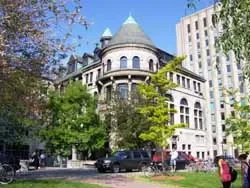
Universities in the Primarily Undergraduate category are mainly focused on undergraduate education and have a limited number of postgraduate programs. Institutions in the Comprehensive category engage in serious scientific research. Here one can obtain both bachelor's and master's degrees as well as professional diplomas. Those universities that award a large number of doctoral degrees, indicating significant volumes of scientific work, form the Medical-Doctoral group. These universities also have medical schools (faculties).
Each category of universities was measured according to developed parameters. In addition to students, graduates, and university administrations, representatives of secondary schools, scientific organizations, and employers provided answers to the rating questions.
This year did not pass without surprises. The release of the ranking of the best Canadian universities was under threat of disruption because 26 universities, including well-known ones such as the universities of Toronto, Alberta, Calgary, British Columbia, York, and McMaster, refused to provide the requested information to the magazine. This despite the fact that representatives of Maclean's magazine annually try, through feedback with universities and the Association of Universities and Colleges of Canada, to make the questionnaire as objective as possible. Therefore, the publication had to resort to data provided by open government sources – for example, such as Statistics Canada or Canadian research councils in specific fields of knowledge. Thus, the boycott of the ranking was prevented.
The methodology of this year's ranking was based on various indicators of the activities of higher education institutions in the Maple Leaf Country. First, the average grade point average of applicants was assessed, as well as the number of students arriving from another Canadian province and foreigners enrolled in the first year of the university. Next, the percentage of students returning for the second year after summer break (the so-called retention rate) was taken into account, also considering those who switched to part-time study. Also considered was the website promotion of the university and the number of students who received national awards and scholarships over a continuous five-year period of study at one institution. The award list included forty names, including such prestigious ones as the Rhodes and Fulbright scholarships.
Then the number of students in one group and in one stream was assessed, as well as the number of experienced teachers for first-year students. For teachers, the percentage with doctoral degrees, those awarded by scientific societies, and those who received grants for research work was also calculated separately. The size of the grant also gave the university additional points. For finances, points were awarded for funds spent on the operational activities of the university, the percentage of budget funds allocated for providing services to students, scholarships, and grants.
The condition of university libraries was assessed by the total number of volumes, the provision of full-time students with necessary textbooks, expenditures on the acquisition of new literature, the availability of an electronic catalog, and the digitization of library collections.
Surveys also covered the assessment of the university's reputation according to criteria: the highest quality educational institution, the most innovative university, the leading university of the future, and the best combination of all three. Finally, universities were given points for financial support from alumni of the given alma mater.
McGill University, which has held first place in the Medical-Doctoral category for two consecutive years, was founded in 1821. For its construction, James McGill, a Scottish immigrant and successful entrepreneur who made a fortune in the fur trade, provided his own house with 18 hectares of his own land and 10 thousand pounds sterling in Montreal, which later became the capital of Quebec province. The college that received his name admitted its first students in 1829, and four years later, the first graduate with a degree in medicine and surgery emerged from its walls. Thus, the university can not without reason claim to be the first institution in Canada to teach medicine.
Thanks to substantial donations from wealthy people of the city at the end of the 19th century, McGill significantly built up and expanded. To attract women to higher education, at the same time Lord Strathcona created a fund that began financing the education of young ladies. And in 1884, the first woman crossed the threshold of the college. Also, the first Canadian female teacher was Carrie Derick, who received a bachelor's degree from McGill in 1890.
Subsequent financial injections from William McDonald allowed the construction of an additional university campus and improvement of its material base. This made it possible to attract top professors, including the future Nobel laureate Ernest Rutherford, a star of world science. Serious investment also spurred the development of scientific research at McGill, among which the most famous are the development of plexiglass and the artificial cell. Besides Rutherford, four other scientists associated with the university were recognized by the Nobel Committee. Rudolph Marcus received the Nobel Prize in Chemistry in 1992, David Hubel won the prize for developments in medicine in 1981, and Andrew Schally in 1977. Also, Val Fitch, who earned a bachelor's degree at McGill, was awarded the prize in physics in 1980.
Today's McGill University has eleven large faculties: Agriculture and Environmental Sciences, Arts, Dentistry, Education, Engineering, Law, Management, Medicine, Music, Religious Studies, and Science. In turn, they are divided into ten schools.
The student population of the university totals 33,258 people. Of these, the majority are residents of Quebec (57.3%). Foreigners account for almost as many as representatives from the rest of Canada – 23.7% and 19% respectively. McGill University, by the way, is the only Canadian university to be included in the top 25 universities in the world according to the joint ranking of The Times and the consulting organization QS.
Taking first place this year in the Comprehensive category, the University of Guelph is named after the town located in the southwestern part of Ontario province. The university took quite a long time to establish – over 100 years. In 1903, the Ontario Agricultural College, founded in 1874, merged with the Macdonald Institute. The latter specialized in teaching various crafts necessary for running a household. In 1922, the Veterinary College, the oldest educational institution of its kind in all of North America, joined them. It was opened in 1862, even before Canada gained the right to form its own government.
More rapid development of the university began in 1964, when it gained university status and with it the opportunity for further expansion through the creation of additional faculties, which continued to be called colleges. Thus, over time, the University of Guelph additionally formed colleges of arts, biological sciences, management and economics, physical and engineering sciences, social and applied human sciences, as well as a faculty of management.
Despite these transformations, the veterinary and agricultural colleges not only did not lose their relevance, but gained a second wind. Because the first transgenic pig in Canada was reproduced by the efforts of scientists from the veterinary college, a joke arose in the country: "If pigs could fly, they would probably fly from Guelph." The agricultural college also conducts enormous research work. To expand its scientific base, the university made a great effort to create a park of diverse tree species, both grown in Canada and brought from abroad. The park, named Arboretum, which translated from Latin means "botanical garden of unique trees," occupies an area of 160 hectares.
The vast majority of grants received by the University of Guelph for scientific research come from funds allocated by the Ontario Ministry of Agriculture. In order to be closer to the performer of the work, it is located not far from the university campus. As, indeed, is the research park, where scientists and students work on problems in chemistry, nutrition, agriculture, veterinary medicine, zoology, and biology.
At the same time, of the nearly 18,000 students at the university, only one in seventeen chose to study veterinary medicine and agriculture over humanities and engineering disciplines. So, Guelph cannot be accused of one-sidedness in teaching.
St. Francis Xavier University, according to Maclean's magazine, is the best among universities primarily teaching at the undergraduate level. It was founded in 1853 by a decision of the Catholic church community in the city of Antigonish, Nova Scotia. At that time, the word "globalization" was not yet known, but its reality was felt by everyone who crossed the Atlantic in search of a better life. Over 50 years, from 1800 to 1850, over a million immigrants arrived from the United Kingdom to North America. According to the founders of the university, its main mission was to prevent the marginalization of a spontaneously formed local community, consisting mainly of ordinary people – workers, farmers, merchants. In the first 50 years of operation, St. Francis Xavier University was not only the only higher education institution in the region, but also served as a seminary, training priests for the province's episcopate. Until World War II, the university had strong financial support from the Catholic Church. In the post-war period, significant changes occurred in its life. The university began to expand, adding new academic courses in scientific disciplines and business to the humanities and theology programs. The number of students increased from 500 in 1945 to 2,000 in 1970, and priest-teachers were replaced by civilian professors. Over time, the number of students has doubled. Despite the secular nature of the university's activities, it continues to emphasize its Catholic history and affiliation.
Currently, St. Francis Xavier University has just over 4,200 students, and there are only three faculties: arts, science, and business administration. This number of students makes it possible to ensure an excellent student-to-faculty ratio (at this university it is 16:1). It also creates a sense of family where everyone knows each other.
As we can see, the world of higher education in Canada is diverse, and you can choose a university not only based on its international reputation, but also considering the comfort of studying, which is also an important factor for international students.
As the "Parta" International Educational Center notes, a big plus of the Canadian higher education system is that graduates of our schools have a chance to enter a Canadian university straight from high school. If our applicant has good grades on their transcript and also has a command of English or French at a level confirmed by the necessary exams, the university's admissions committee will consider their application on the same basis as other candidates.
_