
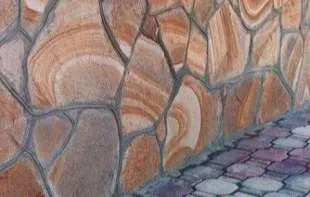
Processed natural stone (sandstone) can adorn any facade
Yes, indeed, 'plastushka' is the name for sandstone, whose deposits in nature form layers from 30 to 150 centimeters thick, extracted by open-pit mining.
Sandstone layers are simply pried and carefully broken off from the main mass, then cut into equal-sized pieces. Their surface is slightly wavy and rough, which allows giving any building made of this natural stone uniqueness and deliberate simplicity, as well as using it to imitate ancient castles and medieval structures.
It was in those times that plastushka was the main building and finishing material, as evidenced by the ancient monuments that have survived to this day. By the way, buildings made of natural stone are perfectly preserved, which indicates the strength and durability of plastushka, and yet many people who have decided to use sandstone for construction are confused by the simplicity of its extraction, which creates an illusion of fragility and brittleness.
In reality, sandstone easily splits into layers, which then impress with their strength and durability, and when bonded together with mortar, they are not inferior in strength to concrete walls. They are formed from sand particles that settled on the seabed several billion years ago and were bound by naturally occurring cement.
The process of formation of natural sandstone occurred under high pressures and enormous temperatures, which positively affected its properties, making sandstone incredibly strong and no less expressive.
It can have various colors, from a yellow shade to almost black. The color of the mineral depends on its place of origin and the presence of impurities in its composition. One thing remains unchanged – the wonderful natural pattern, which appears in all its beauty when the surface of the mineral is processed and polished, allowing sandstone to be used for decorating exquisite interiors, cladding walls and floors. It is also suitable for decorating furniture.
And yet, designers and architects prefer not the processed, glossy surface of sandstone, but the sweet and unpretentious plastushka, touching its surface invariably evokes pleasant feelings and memories of distant countries and interesting travels.
_