
1. Where and on which ship to sail?
It makes sense to plan a route through places you have not yet visited, otherwise the cruise may seem boring. The second most important question is the climate. In the Mediterranean it is a bit cold in winter, but Australia and South America are just right to discover while it is below zero outside our window.
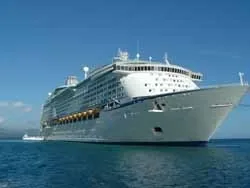
What size vessel to choose is also a question: you should be guided rather by your own temperament. Passengers of giant liners packed with water parks, casinos, clubs and gyms can stand in lines for hours when boarding and disembarking, and therefore spend less time in port than they could. Smaller ships that can moor directly at the piers stay in ports until late at night, but on board, besides reading and melancholic drinking, there is not much to do.
On a properly chosen ship, everything should be subordinated to your goal. For example, the Arcadia hosts stunning weddings; Escargot organizes bicycle expeditions ashore; Windstar ships are equipped for water sports, be it diving, kayaking, rowing or windsurfing; the entertainers from Yachts of Seabourn offer swimming with dolphins and climbing trees; on Celebrity’s Asian routes there is no escape from exotic massages and tea ceremonies; and the Fitness and Health program of the ResidenSea the World cruise line includes daily sessions with a personal trainer, morning yoga, a menu designed by nutritionists, and SPA treatments.
2. Which route to choose?
If you are afraid of going crazy on a long voyage, a week-long trip will be enough for the first time. The most popular route among beginners is a week-long cruise in the Western Mediterranean with stops in ports of Italy, Spain and France. For example, on Costa Cruises liners.
3. What to do before departure?
At each stop, the cruise company organizes free shore excursions – it is worth choosing them in advance. Here you need to be guided by common sense: it is better to go to the Pyramid of Cheops in an air-conditioned bus with a guide, but going to the bars of Cape Town in an organized group is somehow foolish. All excursions are usually described in detail on the companies' websites. Car rental, opera tickets, a table in a restaurant at the port of call are wiser to order from home. Study the city events – maybe your arrival will coincide with the anniversary concert of the Rolling Stones or the Barcelona football derby?
For the day when the liner does not call at a port, plan a visit to the masseur and reserve a table in the ship's restaurant. And find out if there is a DVD player in the cabin. Liners sometimes have libraries, film and music libraries, but their selection is often limited, so it is better to bring a couple of movies with you.
4. Do sea travelers need visas?
Yes, and not the simplest ones. A Schengen visa, for example, must be multiple-entry, since leaving territorial waters is the same as crossing a border. The agency arranging the cruise can also take care of the accompanying visas. You can take out a "non-departure" insurance – then if you do not get a visa, you will get your money back for the cruise.
5. How much does it cost?
Sea travel has always been considered an aristocratic and expensive type of vacation, but now there are quite a few low-budget offers. For example, a week-long cruise along the coast of Italy and Spain on the Norwegian Jewel will cost from $800. Do not forget that you will also have to spend money on the ship. Once cruises were organized on an all-inclusive basis, but now such generosity is less and less common: additional services bring companies about 20% of revenue. For shore excursions you will have to pay a hundred dollars, the internet cafe will have double rates, and drinks will be a separate (and not the smallest) expense item – only tea, coffee from a machine, water with ice, and juices made from concentrate are free.
6. Can you count on discounts?
Last-minute cruise deals are practically non-existent. Special offers occur during non-peak dates; cruise company websites provide detailed information about discounts. The main rule: the earlier you book a cruise, the less you pay. Booking six months in advance guarantees an average of 30% savings. Discounts (upon separate request) can be arranged for small children, groups, newlyweds, or a couple celebrating a wedding anniversary.
7. How are services paid for on the ship?
On the very first day, you will be given a ship card onto which all your expenses will be charged. Payment is at the end of the voyage. Cash will come in handy in ports, the ship's casino, and for tipping. Some ships have ATMs.
8. Can I join a cruise while it is underway?
Yes, but after notifying the company in advance and paying for the entire cruise.
9. What insurance to take out?
The cost of the simplest insurance will be about €1 per day with coverage of €30,000. "Non-departure" insurance is about 4% of the cruise cost. For other policies covering theft and other losses, contact special insurance companies. As for bad weather, it is considered force majeure, and no one will refund money for a cruise ruined by a hurricane.
10. Which cabin to choose?
A properly chosen cabin is one of the main components of a good vacation: a lower cabin closer to the middle of the ship will ease seasickness; portholes facing the coast guarantee better views; and if traveling, say, through the Norwegian fjords, it is more interesting to watch both shores from windows facing the bow (i.e., the front of the ship).
A cabin with a balcony allows you to watch the passing landscapes alone, enjoy the fresh air and the sound of the ocean whenever you wish. At the same time, having a balcony increases the price of the room by 25-30%. If you don't want to pay that money, it makes sense to stay closer to the promenade deck. Then you can quickly respond to the captain's announcement like "whales spotted on the starboard side" and take a strategically advantageous position in a matter of seconds.
Even cabins in the same price category vary greatly in location and size: the cheapest can be either a windowless cubbyhole (agencies affectionately call them "cabins with artificial lighting") or a large room with a balcony (like on the new Seven Seas Voyager). Suites, however, are usually sold for more than they are worth.
Carefully study the ship's plan to avoid being near the dance floor or under the promenade deck. If possible, consult an experienced cruise agent – these people have studied most existing ships, and only they can tell you that the advertised "private balcony" is visible to regulars of the deck", and a "luxury view" is actually blocked by a lifeboat or stairs.
11. What clothes to take with you?
Most high-end ships follow the tradition of welcome captain's receptions and farewell dinners, where you simply won't be let in wearing jeans and a T-shirt; ladies will need an evening gown, gentlemen a suit or tuxedo. On some ships, a formal dress code is required at all dinners. When booking a cruise, find out how many formal (evening wear) and semi-formal (sports jacket for men and cocktail dress for women) evenings are planned throughout the route.
12. Is it true that only pensioners go on cruises?
Older passengers travel as often as newlyweds. And on the orange easyCruise liners, you won't find anyone over 20 at all. But there is a pattern: the longer the cruise, the older the audience.
13. How to deal with seasickness?
If you don't take care of your own remedies for motion sickness, there will be a pharmacy on board. Cheap and not very effective pills are given out for free. If you are very susceptible to rolling, book a cabin as low as possible and closer to the center of the ship. Fresh air also helps.
Doctors advise sitting outside, staring at the horizon line. If it's very stormy, the ship's doctor can give an injection against seasickness.
14. How to book excursions?
Excursions in Russian are best booked in advance. In English, French, German – in the first days on board. A list will be waiting in your cabin, where you are asked to put checkmarks next to the desired excursions. But remember: booking excursions on the liner will likely mean overpaying.
If you don't want to waste time on two-hour breakfasts, searching for lost passengers, and group stops at souvenir shops, feel free to refuse all excursions. By hiring a taxi and arming yourself with a guidebook, you can see twice as much as a group. And importantly: the experience gained will be exclusively your own.
15. How does boarding registration go?
Registration for a cruise is similar to the procedure at an airport and begins a few hours before departure: first luggage is checked in, then the voucher received from the tour operator is exchanged for a ticket, which together with your passport is presented at the ship's registration desk. In exchange for documents, you are given a boarding card, which is also your pass to the ship.
16. Can you take children on a cruise?
There are "adults-only" cruises – social ones where children's fuss causes irritation, or trips that are akin to private clubs. On all other routes, children will always find something to do. Even on the most ordinary cruises, there are children's menus, computer classes, water attractions, and competitions.
It is recommended to enroll offspring in groups on the first day, while children's groups with their own rules have not yet formed – it will be easier to adapt. It is better to familiarize yourself with the family policies of the route in advance: often liners do not accept infants under six months, and sometimes limit the number of children in one family to three.
17. What to do if there is little time before the return flight?
A couple of days before arriving at the final destination, you will be given a questionnaire in which you need to indicate your preferred departure time. On the penultimate day of the cruise, you will receive tags of a certain color for yourself and luggage, which you need to put outside the door on the morning of departure. The color of the tag is a signal that determines when you will be allowed to disembark so that you make it to your flight.
18. How to get in touch with land?
Modern liners offer satellite phones and Internet access; some have satellite communication and special repeaters, so you can use your own mobile even in the open sea. However, a call on the ship's phone can cost $9 per minute. Carnival, Holland America, Norwegian, Princess Cruises and Yachts of Seabourn offer wireless Internet for $0.35-0.75 per minute. But the most sensible thing is to make long-distance calls and check email in port, and if the cruise is along the coastline, use your mobile phone.
19. Can you follow the news at sea?
Satellite TV is received by many ships; some even organize screenings of the Eurovision contest and live broadcasts of football matches. At the information desk, in addition to the weather forecast, you can get printouts of the latest news and results of important sports competitions from the previous day. And finally, there is always the Internet, though, as already mentioned, not free.
20. How not to get lost on a ship?
Cruise ships are like layered cakes. During the day, activity unfolds on the upper decks, cabins occupy the middle part, social and nightlife buzzes in the very belly.
21. What to do on board besides admiring the scenery?
Most itineraries include at least one day not burdened by a port visit. It is recommended to spend it exploring the SPA, having booked massages, wraps, mud treatments, and so on. Celebrity cruises feature a troupe of acrobats, Silversea offers aerial ballet, Queen Mary II collaborates with London's Royal Academy of Dramatic Art and stages Oscar Wilde, and Crystal Cruises ships put on Shakespeare. Crystal Symphony, as part of its 104-day around-the-world itinerary, organizes Spanish and French language courses. Additionally, passengers can learn from renowned sommeliers about wine, take cooking lessons from famous chefs, not to mention discos, bars, casinos, libraries, and media libraries.
22. How much does a ship cost in port?
Large liners often go to sea at 5-6 pm so that passengers spend money in ship bars and shops rather than ashore (while the ship is at anchor, all its revenue-generating venues are closed). Small ships often even spend the night in ports, so you can also experience the wild nightlife of cities.
Moreover, small cruise ships can dock at piers right in the city center and penetrate via waterways into the interior of continents, while giant liners anchor in the roadstead. This, in turn, causes hour-long queues for disembarkation. The departure time of the liner is indicated in the programs. The ship does not wait even for those who are late for very valid reasons. You will have to catch up with it in another port on your own. If you are late for check-in, notify the cruise company or your travel agent, otherwise your cabin may be given to someone else at half price.
23. Is smoking allowed on board?
Smoking is allowed only in certain areas of the liner, cigar rooms, and bars. In addition, smoking is permitted on cabin balconies. Recently, there have been liners where smoking is not only completely banned (for example, the ship Paradise of Carnival Cruise Lines) but they even organize courses to overcome nicotine addiction.
24. How much money will you have to spend on board?
First, on almost all cruise itineraries, you have to pay for alcohol. Exceptions are the lines Regent Seven Seas, Yachts of Seabourn, Sea Dream, and Silversea, which include alcoholic beverages in the cruise price. Non-alcoholic drinks bring even more revenue to the company - indeed, while you can skip an extra mojito, few will save on mineral water or cappuccino, and that adds up to an additional $5 per cup. Some ships offer non-alcoholic drink packages (for example, Carnival for a seven-day voyage). Some cruise companies charge $20 just for reserving a table in a restaurant on board (so-called alternative restaurants with separate kitchens). But the most exorbitant rates are for phone calls from the ship to shore: a minute can cost $11.
25. Can you organize your own meal plan on a cruise?
If you are a vegetarian, on a diet, or want to order something special, it is better to notify in advance. Simpler options - snack bars and pizzerias - are available around the clock. Food can be ordered to the cabin, to the deck, or conversely, you can have regular meals at the same time with the same tablemates. On the vast majority of ships, 6-7 meals a day are included in the price, so you are more likely to have to limit yourself rather than go hungry. On all luxury cruises, you can plan your diet in advance and include any products you wish. By the way, black caviar is served in unlimited quantities on Yachts of Seabourn, SeaDream, and Silversea liners.
26. How much to tip?
The dilemma of how much to tip the staff, inevitably facing passengers, is often resolved by not leaving any tips at all. So many cruise companies now include a mandatory gratuity in the final bills. Those that leave tipping to the discretion of tourists state their preferences in the ship's guide brochures, include special envelopes for banknotes, and on the last day remind passengers over the intercom to reward the staff. A decent amount is considered $10 per day depending on the cruise class. There are exceptions: on Norwegian Coastal Voyage, tipping is completely prohibited.
27. Can you get a refund if you don't like the cruise?
Only if the cruise was canceled or something truly scandalous happened, like a ship-wide air conditioning failure. Most likely, they will offer a free trip, but without airfare. You will not get any compensation for disappointment in the level of comfort.
Websites of some cruise companies: www.costacruise.com, www.ncl.com, www.silversea.com, www.rssc.com, www.easycruise.com
Based on materials from Turist.ru