
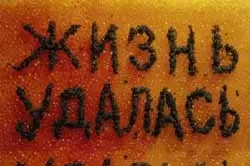
It all started when one of the experts of the World Wildlife Fund, watching a broadcast from the banquet at the "Russian House" before the opening of the Olympics, noticed that the Russian delegation and their guests were enjoying blini with black caviar. Moreover, a cheerful reporter, describing the scale of Russian hospitality, said that the team had brought with them about 25 kilograms of the fish delicacy. This remark turned out to be fatal.
Recently, an amendment was adopted to the Convention on International Trade in Endangered Species of Wild Fauna and Flora (CITES), which prohibits the export of black caviar from the Caspian and Black Seas abroad. This is exactly what WWF emphasized in its press release about "contraband black caviar taken out by the Russian Olympic team," distributed the next day. "Sturgeon caviar can be exported from the country only in strict accordance with the procedures of the Convention, that is, at least with special permits and in accordance with the established export quota. However, as of today, the export quota is zero, and the CITES administrative authority in Russia has not issued any permits for the export of caviar to Italy. That is, the caviar was taken out of the country in violation of current customs legislation and international norms. Simply put, it was smuggled," the press release said.
Those journalists who were not satisfied with the dry press release could get an oral comment from that very attentive expert of the World Wildlife Fund, and there was no shortage of evaluative language. "How much longer can we present our country in such a vulgar way! It was some kind of continuous khokhloma, a-la russe obscenity: contented people spread caviar with spoons, they are all smeared themselves, some kind of display of drunken merchant bravado!" the nature defender was indignant. In addition, it turned out that the expert recognized the jars in which the caviar stood on the tables - it is in exactly this kind of container that illegally obtained caviar is packaged in Astrakhan.
At the present moment, only the British newspaper Guardian has responded to the information about the "caviar scandal" (where, by the way, quite recently there was a report about a "luxurious Russian ballet celebration" in London, at which "blini" with black caviar were also served). The Guardian indignantly "quotes" a press release from the official Russian Olympic website, where the Russians boast about "tables that were laden with black and red caviar." Literally, the phrase from the official website about the opening of the Olympics goes like this: "A merry celebration with pies, blini and caviar, dances and songs took place in Turin on the occasion of the opening of the Russian House here."
However, if we set aside emotional speculation about the "Russe style," the WWF's accusations cannot be called completely unfounded. True, when it comes to the CITES prohibitions, the World Wildlife Fund nevertheless rushed with the claim that they were violated. The Convention prohibits only the export of caviar from sturgeon caught in the sea, but does not restrict the export of caviar from fish raised on industrial farms. Thus, the calculations of the WWF expert, according to which the "smuggling" of black caviar occurred "on an especially large scale" ("especially large scale" begins with a batch of caviar worth from 500 thousand rubles, and 25 kilograms cost at least 700 thousand), in principle, come to naught, since the origin of the caviar from "wild" sturgeon still has to be proven.
Much more dangerous for the reputation of the Russian team are the ill-fated jars that held the delicacy. If it can be confirmed that they were exactly as the WWF describes, this means that the caviar was after all contraband, since the jars did not have special CITES stickers, which mark all legally exported caviar. However, the company Bosco di Ciliegi, "one of the leaders of retail trade in luxury goods in Russia," as its own website says, and the official sponsor of the Russian Olympic team, claims that the caviar at the banquet in the "Russian House" was exclusively legal.
It is unlikely that this scandal will receive wide publicity, although WWF claims that the Italian customs and representatives of CITES have already taken an interest in the information about the caviar. However, Russian consumers of "luxury goods" will receive another warning that, perhaps, they should not consume them so demonstratively.