
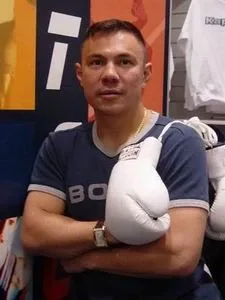
Konstantin became the third native of the USSR to conquer one of the world boxing peaks. Before him, Russian Yuri Arbachakov (1992, WBC version) and Kyrgyz Orzubek Nazarov (1993, WBA version) managed to win the world champion title. In 1995, Konstantin Tszyu joined them (IBF version).
In 1996, Uzbek Artur Grigoryan joined the world champions among professionals, and in 1999 - Kazakhs Vasiliy Zhirov (IBF) and Yuri Alexandrov (WBO). By that time, Arbachakov and Nazarov had parted with their titles, and Tszyu had also suffered a defeat, but already in 1999 he regained the world crown (though in a different version - WBC). And in 2001, Konstantin became the first of our boxers to simultaneously hold three championship belts - WBC, WBA and IBF. The heads of the latter federation even awarded the boxer the title of "honorary champion" (interestingly, by that time only Lennox Lewis and Roy Jones held three belts - in other weight categories).
However, this did not stop the IBF bosses from recognizing American Sharmba Mitchell as the interim world champion in this weight category. The fact is that on February 7, 2004, a fight between Tszyu and Mitchell, a contender for the champion title, was to take place in Moscow. Konstantin prepared very seriously, as many witnesses attest - from journalists to sparring partners - but on the eve of the fight he injured his shoulder tendon, causing the bout to be postponed to a later date.
In principle, they wanted to take the title away from Tszyu altogether. Like, he failed to defend it, so give it up. But Kostya, who ended up on the operating table, enjoys such great authority that the federation's leadership did not dare take such perfectly legal but cruel measures. Marian Muhammad, the IBF president, stated in particular that the leadership of the International Boxing Federation had retained the world champion title in the weight category up to 63.5 kg for the period of his recovery from injury. At the same time, Tszyu must defend the title no later than November 7, 2004. Judging by incoming information, the bout will still take place in Moscow, where they eagerly await the appearance of their famous compatriot, who has been living in Australia for 12 years already...
Konstantin's path to worldwide recognition began in the city of Serovo, Sverdlovsk Oblast. The father of the future world champion, Boris Timofeyevich, noticed his son's extraordinary talent in early childhood (later trainers said that Kostya was born with gloves) and sent him to a boxing section. Incidentally, Kostya's father is still his coach.
On September 19, 2004, Tszyu will turn 35. They say that in childhood he was a kind and responsive boy, helped his parents around the house, looked after his younger sister. He was curious and restless, loved animals very much and constantly brought home some little animals. His energy was overflowing. So it is not surprising that his father, channeling it in the right direction, put his son into a sports section. Why boxing specifically - history is silent.
In 1978, Kostya first entered the ring of the Serovo DYUSSH; after months of hard training came the first victories at the city, district and regional levels, and after 5-7 years - at republican and then all-Union competitions. Tszyu became the winner of the first All-Russian Youth Games in 1985, the winner of the USSR Junior Championship in 1986 and 1987, and the finalist of the USSR Championship in 1988. And from 1989 to 1991 he was the champion of the USSR.
Kostya made his international debut at the age of 15. After the gold medal at the European Junior Championship held in 1986 in Denmark, as well as the Junior World Cup (1987, silver), he began to be attracted to the adult USSR national team. Tszyu took part in the 1988 Olympic Games in Seoul, became European champion in 1989 and 1991, was a medalist at the 1989 World Championship and winner of the 1990 Goodwill Games. It is not without reason that this is considered the most interesting and productive period in Konstantin's sports life in the amateur ring. In 1990, he was awarded the title of Honored Master of Sports of the USSR, and in 1991 he crowned his amateur career with the world champion title, which he convincingly won in Australia.
It was on the Green Continent that Tszyu made his choice when it was time to turn professional. In 1992, he signed his first contract. Absolutely everything moved to a higher - professional - level. It is hard to imagine, but all of his amateur boxing fights (there were more than 200) Kostya fought with the same hand wraps. Usually this has a deplorable effect on a boxer's health - the joints "fly". God spared Tszyu, and in Australia everything was already different: the wraps were excellent, and the pads, and hand training was carried out according to special programs borrowed from kung fu.
But the main difference, according to the boxer himself, between the Soviet approach to boxers and the Australian one was not in the level and quality of equipment. In the USSR, under conditions of equalization in the training of any boxer, the team method dominated. Athletes of completely different styles and directions trained according to the same method, often under duress. Kostya, however, even then did only what he considered necessary (that is probably why he managed to become the only world champion in the Soviet team in 1991), but there was a threat that in the transition from total discipline to personal motivation, his demands on himself would weaken. But Kostya, it seems, simply does not know how to underwork. Few people probably torment themselves the way he trains. He continues to do the morning cross-country runs that have become quite tiresome. He even made his wife Natasha run with him, who nearly lost consciousness after her first 10-kilometer run. Nevertheless, the next morning Kostya took her on the same distance despite her protests. Now the family couple runs together and does push-ups from the floor.
Life away from home usually makes one miss relatives and close ones. Kostya was no exception. He missed his homeland very much and at first often visited the Russian club. It became easier only after his parents and sister arrived. Well, with the arrival of children, life became much more varied. Only he never made friends in the new place, preferring to communicate with old ones.
Konstantin was also unlucky with his first manager, Bill Mordey - the very man who, in essence, brought Tszyu to Australia. Mordey shamelessly took advantage of his charge's trustfulness and his ignorance of English: he slipped papers for signature that primarily reflected his personal interests. Over time, Kostya became indignant and tried to restore justice. The terms were truly predatory, but Tszyu's own signature was under them. There was little chance of extricating himself from this story.
But Kostya coped. He became world champion and was able to dictate his terms. Before that, however, his poor knowledge of English let him down more than once. There was even an almost anecdotal situation. Before his first professional fight, the trainer asked the Russian not to exert himself too much in the first round. It seemed to Kostya that he was being asked to immediately knock out his opponent, which he did brilliantly...
And yet on January 28, 1995, Tszyu, after a very tough fight with world champion Jake Rodriguez, which lasted 14 rounds, regained his title. The victory immediately went to the new champion's head: he promptly told Mordey to get lost, refusing to fulfill the terms of the contract. But Russia and Australia are two different countries. If at home such a move could resolve all issues once and for all, on the Green Continent Mordey went to court and won the case. Kostya would later say that he managed to learn English perfectly by regularly communicating with lawyers. Too cruel a method of learning a foreign language...
However, Tszyu still won the main victory - over Mordey. Since then, his affairs have been managed by former Odessa resident Vorobeinikov, now known as Vlad Wharton, who lived in Australia for many years.
In 1997, Konstantin lost. He lost to former drug addict Vince Phillips, knocked out in the tenth round. The ex-champion did not look for the guilty, because he saw the reasons for the defeat only in himself. He had problems with weight, because he made a mistake with nutrition and took drugs contraindicated for him to cut weight. And overall, he treated the fight extremely unprofessionally and received severe punishment for it: losing to a very average boxer considerably damaged Kostya's image. The love of fans, lucrative offers disappeared somewhere, and the money in his bank account began to melt. Only in 1999 did Tszyu manage to regain the belt, properly stabilize his financial situation and live without knowing need until the beginning of 2004.
Despite his busy schedule in Australia, Tszyu visited Russia more than once. And in some of his interviews there was a clear lack of understanding of the peculiarities of local life. "I can no longer live in Russia," Kostya once admitted. "Although at home we always speak Russian. It is important for me that children speak our language. Do I want them to return to Russia later? I don't think they will. Australia is their home, although I believe they are still Russian. My close friend drives me in his car, and I see that we have completely different approaches to life, to many issues. We already think differently. He does not want to leave Russia for his own reasons, and I cannot return for mine. For me, riding in a car without a seatbelt is wrong. I constantly do things that are commonly considered violations here. I am used to a civilized life. Although the children visited here and got great pleasure. They were simply ecstatic about the dirt and rubbish. They came home covered in dirt up to their ears, and we washed them every evening. At the same time, we had no hot water in Serov - that is still a normal thing there. And yet I will come here regularly, but my psychology has changed once and for all. It is hard for me to live here. I simply do not understand a lot. I am over 30, and changing something is no longer so easy."
Tszyu lives well in Australia. When professional boxer Sergei Stepkin, who had been Kostya's sparring partner for four months, returned to Moscow from Rockdale City, journalists immediately inquired about the world champion's living conditions. It turns out he has a two-story house located in a rather picturesque place on the shore of a bay. In the yard there is a tennis court, a 12x6 m pool, a Russian banya and a gym. Moreover, Kostya himself took an active part in the construction. For example, he hollowed out a rock near the house with a sledgehammer, thereby increasing the area of the plot and space for construction. The house is on a slope. So from one - front - side it is two-story, and from the rear - three-story. He also has his own "Boxing Academy": Tszyu rents a building with an area of 2.000 square meters. From his house to the "Academy" is about ten kilometers.
By the way, it is known that at least once a gang of teenagers engaged in theft tried to break into his house. Hearing the noise, the champion went to see what was the matter. Here is what he said: "The thieves hit the window with a huge sledgehammer with which I train. They broke the first pane, but not the second. Seeing me, they ran away. Thank God I didn't catch anyone, otherwise in Australia there are such "idiotic" laws - if a thief breaks into your house and you injure him, you can easily end up in prison..."
And a bit more about Kostya. He really likes beer. Moreover, he brews it using his own technology and calls it "any beer," because he uses different varieties of malt to make it. He says he is fed up with the cans and bottles that are left in great number at home. He claims that he will not go into beer production after his sports career ends. He already has a business - production of sports training clothing with his own logo. In addition, in May of this year Kostya presented in Moscow a non-alcoholic tonic drink Tszyu, which will be produced in Russia.
The athlete has another "trick" - he wears the braid that has become famous. Usually his wife Natasha or his father, who accompanies Kostya on all trips, braids it. By the way, the braid is insured. He wears gold earrings in his ear and likes "shiny things" - gold and diamonds.
The boxer's dream is to open a large sports and fitness center. So far this is problematic because life in Australia is very expensive. Although a million is not money for him.