
After some time, Beaux came to Chanel and placed before her ten flacons with trial compositions, numbered from 1 to 5 and from 20 to 24. Coco said: "I am showing my collection on May 5. Let's take the bottle with the number 5; I hope this number will bring happiness to the perfume." Chanel was not disappointed in her expectations. True, experts claim that the great Beaux made a mistake and took a more concentrated solution of aldehyde for the perfume than required, which is why Chanel No. 5 at first shocked fashionistas with an unusual, somewhat harsh aroma. But who cares about that now. Chanel No. 5 has long become a symbol of success, a symbol of the victory that perfumer Ernest Beaux won over stereotypes.
If clothing speaks of social status, then fragrance speaks of a person's essence. A fragrance is clothing for the soul. Today we will talk about those who "sew" this clothing for us - about perfumers. Perfumers of past centuries had it much easier than their modern colleagues in the craft. Judge for yourself: a bank director of the century before last was a bank director from morning till night: frock coat, top hat, gold pince-nez, rosewood cane, and... a strict fragrance befitting a solid image. Modern man changes several times a day. The same businessman may dash around a court with a racket in the morning, then go to negotiations, and in the evening - on a date. And everywhere he must be different, yet himself.
So perfumers struggle to solve difficult problems: what temperament, what type of appearance, what time of day a fragrance should correspond to. But that is not all...
Because of the diversity of modern perfume fragrances, specialists face the question of their longevity. Longevity is determined by the character of the scent and depends on the ratio of volatile and less volatile fragrant substances, and on the speed with which they evaporate.
Every fragrance consists of several so-called "notes," i.e., groups of certain scents. The initial "note" is determined by volatile substances that disappear in the first minutes of contact with the skin. Usually these are fresh citrus scents. The next "note" sets the character of the composition; it persists for hours. Usually these are floral and fruity scents. The final "note" is represented by substances that evaporate slowly. These are woody, resinous, musky, ambery scents that can persist for several days. A well-balanced fragrance can be compared to a sphere in which all these "notes" sound and shimmer evenly and "roundly."
Needless to say, to create a composition a perfumer must know not only all the scents that make up one or another "note," but also clearly understand how these scents interact with each other.
This cannot be done without a divine gift - a keen sense of smell. The maximum an average nose is capable of is allowing its owner to make a career as a technologist at a perfume factory. Such a specialist is able to remember only a few dozen scents, so he controls perfume production but does not compose fragrances himself.
To independently create compositions, a perfumer must possess a much more refined sense of smell. A professional perfumer, otherwise called a "composer of aromas," must be able to distinguish from memory 250 natural and 1,500 synthetic scents. But this is, as they say, only the alphabet, the basics on the basis of which a professional identifies far more aromas and various compositions.
Today, perfumers have in their arsenal about four hundred products of natural origin and four thousand synthetic fragrant substances. At the same time, it should be noted that the search for new scents does not stop for a single day: not long ago, a tropical plant was discovered that blooms for only three days and changes its scent every day. Active work is also underway to create ever new artificial substitutes for musk and ambergris - substances previously obtained from animals, the hunting of which is now prohibited. Perfumery cannot exist without musk and ambergris, since they imitate the erotic scent of a person, and most importantly, they allow the perfume fragrance to merge with the smell of the skin.
But knowing scents is far from all that a perfumer needs in his work. One must be able to fantasize, to create. After all, creating a fragrance is close to writing music. It is no accident that Scriabin tried to compose an "Aromatic Symphony" - to draw analogies between sounds and scents.
Of course, modern perfumery does not do without templates. Why create when you can copy and construct from what already exists. Many firms try to program their success by using "notes" that have already become popular. These are marketing moves that have nothing to do with creativity. In the pursuit of profit, they sometimes entirely forget about the fragrance, which is created in a hurry, at the very last moment, often to match the color of the bottle.
But we are talking about true composers of aromas, those who, like their great predecessor Beaux, are ready to abandon stereotypes without violating traditions...
When composing a fragrance, it is very important to take into account substances included in the composition in minor, that is, very small quantities. They determine the characteristic, unique features of the scent. Usually a perfumer "finishes" the fragrance with the nose - the finest instrument with which the proportions of the substances in the composition are determined. Only top-class specialists can do this, and there are just over four hundred of them in the world. About half of them work in France.
Like all high-class specialists, perfumers of this level are valued very highly. Competing companies closely follow their work and do not miss the opportunity to lure away a master. However, the field of activity of eminent perfumers is not limited to fulfilling orders from firms and fashion houses. Many monarchs, politicians, entrepreneurs, and stars of cinema and show business do not wish to use even very expensive but still mass-produced perfumes from perfume companies: they need their own individual fragrance.
The earnings of a perfumer who creates exclusive fragrances depend on demand for their products and personal luck. The minimum price for a custom-made fragrance is no less than €1 thousand.
As for professionals working for fashion houses or perfume companies, their income is at least €3 thousand per month. So there is reason to try to become a new star of elite cosmetics and perfumery.
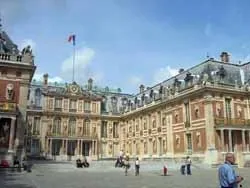
Unfortunately, this is not easy to do, since perfumers are trained at the only higher educational institution, which is located in France, in Versailles. It has existed since 1970 and is called the International Institute of Perfumery, Cosmetics and Aromatic Substances (ISIPCA). Getting there is practically impossible. Every year, several groups of 18 people are recruited for the course, and only three of the total number of admitted students can be foreigners.
But do not rush to despair. Recently, the International Department of the Academy of Perfumery Arts was opened at the International Institute of Perfumery, Cosmetics and Aromatic Substances. Tuition costs €12 thousand plus €100 - an entrance fee. This amount does not include accommodation, meals, insurance, or travel expenses. People of any age with a higher chemical education are accepted into the academy.
Approximately 80% of classes are devoted to laboratory work. You will be taught to create fragrant accords and the perfumes themselves; you will know 350 synthetic and natural substances used in creating perfumes. Teachers will talk about the main houses that create fragrances, teach you to understand the perfume market, and give a course on the classification of smells. In addition to classes and lectures, conferences and meetings with famous perfume creators are provided.
In May, students necessarily go to Grasse for a week to see with their own eyes where perfume ingredients are produced. Classes are held five times a week for six hours. Lectures are given in English. Groups are no more than 16 people. The course lasts nine months (from October to May). At Christmas, students are sent on vacation.
The only drawback, perhaps, of this training is that the administration of the Academy of Perfumery Arts provides no assistance in finding employment to graduates, quite rightly believing that perfumers who possess such a rare gift as a fine sense of smell will not be lost in life.