
Germany is among the countries with the lowest birth rate: 9 newborns per year per 1,000 inhabitants. A third of German women have no children; those who do take this step experience the joy of motherhood only after the age of 30.
At the same time, life expectancy in Germany is increasing: men live on average to 75 years, women – longer than 80. This noticeably affects the age structure of the population: it is expected that by 2030 the number of citizens over 60 will reach 30% in Germany. Many German women claim: a woman in society is placed in such difficult conditions that she cannot afford to have children. “The pressure on a woman to fulfill her maternal duty is coupled with a lack of help and support that would assist her in this difficult work. For example, the opportunity to switch to part-time work or state assistance with child care. It is not surprising that many prefer to give up motherhood,” quotes the British newspaper Daily Telegraph 33-year-old Jutta Schmidt, a sociologist and mother of two from Hamburg.
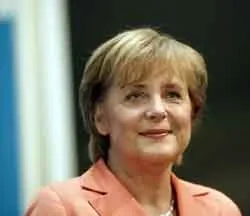
51-year-old Angela Merkel, who calls on German women to have more children, is herself not a good example to follow - she has no children. “It simply did not fit into my career plans,” says Merkel. It was this fact that the wife of the former chancellor, Doris Schröder-Köpf, used at the height of the election campaign between Merkel and her husband. In an interview with the newspaper Die Zeit, Doris stated that Gerhard Schröder's rival is unable to understand women's problems because she herself is childless: “Ms. Merkel is not familiar with the experience of most women. I, for example, try to combine a career with family commitments, and after a pause caused by the birth of my daughter and the first years of her upbringing, I experienced the difficulties of returning to a profession. But Ms. Merkel has nothing in common with this world.”
It is unknown whether Angela Merkel remembered this attack when she was forming the new German government, but the minister for family affairs in her cabinet became 47-year-old Ursula von der Leyen, a physician by training, mother of seven children and one of the few women whom Angela Merkel completely trusts. Ursula von der Leyen has already formulated where, in her opinion, one should start to solve the demographic problem: “Until the birth rate curve starts to climb, we will be forced to simply turn off the light.” More effective measures as presented by Frau von der Leyen look like this: provide a young mother with subsidies equal to a year's salary and increase child allowances.