
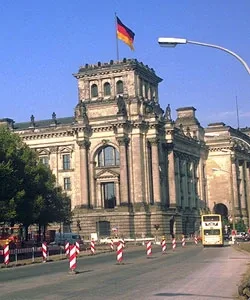
The analogue of Ukrainian higher education institutions in Germany is the state higher educational institutions that have university status. First of all, these are the universities themselves (Univesitaeten), higher medical, pedagogical and theological educational institutions, as well as art schools (Kunsthochschulen). There are also combined higher schools (Gesamthochshulen) equivalent to universities, which combine both academic and applied study programmes. The non-academic sector of German higher education is the special higher educational institutions (Fachhochshulen) that provide applied training.
Accordingly, graduates of German universities with university status are awarded academic degrees: first, a certified specialist degree (for those who completed the basic course in engineering, economic, or natural science and mathematics) or a master's degree (for those who studied humanities), and then, after completing an additional cycle of study, a doctorate. (It should be noted that in recent years German universities have been actively offering American bachelor's and master's programs as well.) But graduates of special higher educational institutions are awarded only a diploma indicating the type of institution. If they want a university diploma, they must complete additional studies in the senior years of a university.
According to rankings, it is better to study technical subjects in Aachen, Karlsruhe, Darmstadt, and Munich. Economics is taught more competently in Mannheim, Munich, and Cologne. Those seeking to study law should go to Passau, Freiburg, Heidelberg, or Münster.
As for private universities, the University of Witten/Herdecke specializes in medicine, economics, and natural sciences. The Higher School for Business Leadership in Koblenz, the European Business School in Oestrich-Winkel, and the European School of Economics in Berlin focus on training specialists for international markets.
When choosing a university, remember that many of them are overcrowded. On average, there are two students per study place. Classical universities are more overloaded than new ones. Students wishing to study the most popular specialities - architecture, medicine, pharmacy, psychology, biology, computer science, economics, and law - experience the greatest inconvenience: admission is limited and there are strict quotas for foreigners. The overload is most noticeable at the relevant faculties of the universities of Aachen, Bremen, Bonn, Frankfurt am Main, Freiburg, Göttingen, Hamburg, Heidelberg, Cologne, Marburg, Munich, Münster, Tübingen, and Würzburg. Learning conditions in Bamberg, Clausthal, Flensburg, Duisburg, Greifswald, Ilmenau, Kaiserslautern, Halle-Wittenberg, and Trier are somewhat better.
In the eastern states, universities are less overcrowded, the conditions of study and the overall atmosphere are more favorable, and students receive greater support from teachers. However, many universities have outdated equipment that does not meet international standards, as well as unrestored academic buildings and dormitories.
Foreign students feel more comfortable at universities with many students from abroad. Among them are the European School of Economics in Berlin, the International University in Zittau, and the Viadrina University in Frankfurt an der Oder. Many foreigners study in Berlin, Clausthal, Heidelberg, Frankfurt am Main, and Aachen.
Education at German universities is almost free, except for a small fee, but at the embassy you must provide a financial guarantee of 7,200 euros for the first year of study.
Finally, we remind you that you can enter a German university only after completing two years at a Ukrainian higher education institution in your chosen speciality, and also after passing the DSH German language exam successfully. You should start preparing the necessary documents well in advance, at least six months before the intended start of studies.
Yulia POLOTOVSKAYA,