
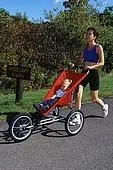
Normally, a pregnant woman should gain 10-12 kg during pregnancy — but most expectant mothers do not stay within these limits. Some gain as much as 30 kg over these 9 months. This has an adverse effect not only on the course of pregnancy and the woman's well-being — it is worth knowing that these extra kilograms will not go away on their own after pregnancy. Losing 5 kg or 20 kg… There is a difference, isn't there?
Immediately after childbirth, a woman loses on average 5.5 kg (weight of the baby, placenta, amniotic fluid, blood loss). And if 4-7 kilograms remain, they can easily be lost in 1-2 months, or even earlier, if, of course, the new mother actively cares for her child. Meaning — she does not shift the care to her relatives. Ordinary hand washing and cleaning help burn a huge number of calories. Even breastfeeding helps to some extent to lose extra kilograms faster. After all, even such pleasant moments require a certain expenditure of effort. Thus, weight loss is not a problem for an active young mother who did not gain many kilograms during pregnancy.
It is harder for women who have gained more than 20 kg during pregnancy and are breastfeeding. Diets are contraindicated for them because any diet involves a complete rejection or severe restriction of certain foods that contain nutrients, vitamins, and trace elements necessary for the child. Until the child receives complementary foods (on average up to 6 months), their health and well-being largely depend on the composition of the mother's milk.
The statement that the amount of milk depends on the amount of food eaten per day is erroneous. The main thing is not how much we eat, but what we eat. But, of course, we should not forget that a breastfeeding woman, in principle, like a pregnant woman, needs to get slightly more calories from food than other women.
The simplest way to lose weight for a healthy breastfeeding woman is to minimize baked, sweet, fried, and smoked foods. They provide no benefit, but such food significantly hinders the loss of extra kilograms. Moreover, we should not forget that such dishes can adversely affect the child, even causing digestive upset.
Under no circumstances should weight loss after childbirth occur through diets that exclude meat, eggs, and fish. Protein is essential for the growing body of the baby, as are carbohydrates and fats. But everything should be in moderation. Strict vegetarians are also advised to reconsider their diet while breastfeeding. Remember that no vitamin supplements can replace nutrients obtained naturally. Moreover, taking vitamins, even special ones for breastfeeding, often causes allergies in the child.
It is recommended to go on stricter diets and have fasting days only after the end of lactation or at least after introducing complementary foods to the child. You should not drastically reduce the calorie content of foods. Better to stick to fasting days, no more than 1-2 times a week. Before starting a 'fast,' it is advisable to consult a dietitian to choose the most optimal type of fasting days.
As an advertisement