
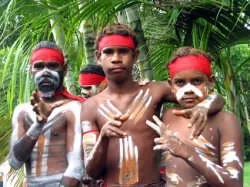
More than a third of the world's existing languages are endangered or have already ceased to exist
As Lenta.ru notes, all these figures indicate globalization, the strengthening of communications and mass media. UNESCO is concerned not with eliminating the causes of these phenomena, but with the possibility of supporting «small languages» and along with them the planet's cultural diversity.
The UNESCO report on the vitality of the world's languages does not actually provide definitions of language, dialects, and patois. It only discusses the methodology for classifying languages into various categories. It is quite interesting, and we would like to dwell on it to explain how, for example, the state languages of the republics of the Russian Federation ended up on the list of languages that are endangered to some degree.
Let us say right away that the counting methodologies of UNESCO and, for example, Rosstat differ. For instance, the UNESCO atlas counts four Mansi languages, whereas in the free table of the 2002 census, all of them are considered one. Judging by the figure – 2,746 speakers, which appears in both the atlas and the census – in the Russian Federation only speakers of the Northern Mansi language, which includes four dialects, were counted. At the same time, one of the minor West Siberian languages – Baraba or Baraba Tatar – is classified as extinct in the UNESCO atlas, while in the 2002 census, eight people identified themselves as speakers. Examples could continue.
UNESCO experts, compiling the atlas of endangered languages, rank their vitality based on six groups of factors:
* intergenerational language transmission;
* absolute number of speakers;
* proportion of speakers in the population;
* domains of language use;
* language use in new environments;
* availability of educational materials. Within each group, the state of the language is assessed on a scale from 0 to 5 (0 - extinct language, 5 - fully viable language with no threat).
For example, in the first group of factors (intergenerational transmission), the highest score is given to a language spoken by all representatives of all ages without exception. Danger is recorded when the native language is used in a limited area - only at home, but not, for example, at school (score «4»). «3» is a situation where children no longer learn the native language at home, therefore the main speakers are their parents, and a gap in language transmission already exists. A score of «2», accordingly, is assigned when only the grandparents of today's children speak the language. A critical condition («1») is recorded when speakers are only the elderly who are the great-grandparents of the children.
It is worth paying attention to the fourth group - «Domains of language use» (the second and third - absolute number of speakers and proportion of speakers - are obvious). With scores «0» and «5» everything is clear, the interesting part begins later. A score of «4» is given when the native language is widely used in religious institutions, markets, etc. And the dominant language(s) are used in government institutions, authorities, and educational institutions. This is a well-known phenomenon; some of its particular cases are called diglossia.
A score of «3» is given by UNESCO experts when children become «receptive bilinguals», that is, they still understand the native language but use the dominant one, and parents at home speak with them in the dominant language. At the same time, parents are equally proficient in both native and dominant languages. Accordingly, a score of «2» is assigned when the language is used for a single purpose - for example, in rituals. In this situation, many people still understand the language but no longer speak it. The last stage of a language's life («1») is observed when only a few elderly speakers use it, and in a very narrow domain.
The use of language in new communication environments and media is rather difficult to assess. In theory, the presence of radio and TV programs is an encouraging sign, but if together they amount to half an hour per week, then it is not very good. Similarly, a language may be taught at school, but not at all levels and for a limited number of hours. A good example is Irish in Ireland. According to UNESCO estimates, it is the primary language for only 44 thousand people. In the atlas of endangered languages, Irish was given a score of «3».
When assessing language vitality, the attitude of the state and society itself toward the language is also taken into account. The state may support or ignore languages, encourage or discourage their study, promote assimilation, force it, or ban the use of non-dominant languages.
Finally, there is another interesting aspect: the attitude toward the language among its speakers. The study of the native language can be encouraged by society (highest score); the other extreme here is complete indifference of society toward the native language and a total switch to the dominant language (score «0»).
Unfortunately, the online version of the atlas of endangered languages does not explain what data were used to assess the state of a given language (in particular, the levels of societal and state attitude toward it). Perhaps detailed information on this will be provided in the yet-unpublished paper version. However, an analysis of the assessment parameters somewhat clarifies how the atlas includes not only the languages of small peoples but also the state languages of the republics of the Russian Federation: Adyghe, Bashkir, Buryat, Ingush, Chechen, Chuvash, Ossetian, Udmurt, Komi, Yakut, and others, although hundreds of thousands of people speak and write them. Obviously, UNESCO believes that in the current political and cultural situation, the number of speakers of these languages will not grow.
Countries with the highest number of endangered languages: India 196; USA 191; Indonesia 147; China 144; Russia 136; Australia 108; Papua New Guinea 98; Canada 80.