Everyday life
How Americans Choose Names
Sociologist Stanley Lieberson, author of the book 'A Matter of Taste: How Names, Fashion and Style<\/a> Change', believes that the fashion for names depends to a very small extent on events happening in the world. According to Lieberson's observations, Americans prefer female names based on two principles: it should end in 'a' (like Sarah) or start with a hard 'k' sound (like Katherine). The emergence of a popular politician, actor, or character prompts a small part of society to name children after new heroes. The film 'The Matrix' made the female name Trinity common. The reverse metamorphosis occurred after the sexual scandal surrounding US President Bill Clinton - the name Monica quickly depreciated. But it is unlikely that this trend will be long-lasting. This happened, for example, after the death of Princess Diana. In 1996, the name Diana ranked 103rd in popularity in the US. In 1997, the princess died, and a year later her name moved to 83rd place.<\/p>
The vast majority of Americans try to give their children original yet traditional names. That is why biblical characters never go out of fashion, although they constantly replace each other in popularity rankings. For example, in the 1920s, the most popular female name in the US was Ruth (Ruth in traditional Russian transcription), in the 1940s it ceded the lead to Judith (Judith), in the 1950s the leader was Debra (Deborah).<\/p>
A significant contribution to US onomastics was made by the British Isles, especially historical areas inhabited by Celts (Scotland, Ireland, Wales) - from there come names such as Beatrix, Moira, Fiona, Duncan, Archie, Ambrose. The influence of Italy (Arabella, Aurelia, Francesca, Sabrina, Leonardo, Frederico, Bruno, Enzo, etc.), Spain (Isabella, Antonio), France (Antoine, Marius, Dominic, Lucien, Nicole, Chantal, Solange, etc.), Germany (Otto, Karl, Laura, Inga, Günter) and Scandinavia (Sven, Erik, Knut, Astrid) is noticeable. Arabic and Islamic cultures gave the US names like Muhammad, Rashid, Karim, Ahmed, Fatima, Aisha, Aziza, etc. Slavic names are also used - Katya, Danilo and Danila, Dmitry, Vladimir, Kazimir, Vaclav, Lida, Lyudmila and Anastasia (by no means Nastya - this is consonant with the English word nasty - 'disgusting, vile'). Among black people, names from the African continent are widespread - Keisha, Latosha, Latoia, Anouk, Akim, etc.<\/p>
Names can be taken from continents - Africa, Asia (Eisha), countries - China (Chyna), Britain (Britanni), Bolivia (Bolivia), Arabia (Arabia), Italy (Italia), US states (Montana, Dakota), cities - Cairo (Cairo), Atlanta, Genoa (Genoa), Odessa, islands - Sicily (Sicily), Samoa, mountains - Himalayas (Himalaya), Everest. Quite often, American babies get named after cities in their own country - for example, Austin, Dallas, Houston. All these cities are located in Texas and, amusingly, are named after surnames of illustrious Texans. Even names of city districts are used as names - for example, the name Brooklyn (a district of New York).<\/p>
Incredibly popular are names from Greek and Roman mythology - Cassandra, Cassiopeia, Hercules (Hercules). Surnames or pseudonyms of famous people are given as names. For example, there are people in the US named Gorky, Kurosawa, Lennon, Gandhi, Kennedy, Giacometti, Marquez, Gillespie, Mandela, Hannibal, Lincoln, Washington, Taylor. It is not rare for a person to get the name Liberty or Freedom. The animal and plant worlds also serve as sources of inspiration - Sequoia, Acacia, Basil, Wolf, Lion.<\/p>
There are virtually no areas from which Americans do not draw names for their children. They use, for example, names like Cascade, Camera, Horizon, Ivory, Chancellor, Morning, Dance and Dancer, Eleven, Green, Meteor, Lexus (a car brand), etc. By month names, the name April is widespread. Literature lovers even bestow on their offspring names of negative characters - among the 500 most common names, for example, is Caliban. This is a Shakespearean character from the play 'The Tempest', half-human half-monster, personification of brute force and undeveloped mind. However, in Ernest Renan's drama, Caliban became a symbol of triumphant democracy.<\/p>
In many cases, names are simply invented. For example, the family of movie stars Tom Cruise and Katie Holmes gave birth to a girl they named Suri. Cruise claimed that this name means princess in Hebrew. Professional Hebraists stated that this version does not correspond to reality. Then Cruise used a different explanation: according to the new version, 'suri' in Farsi means 'red rose'.<\/p>
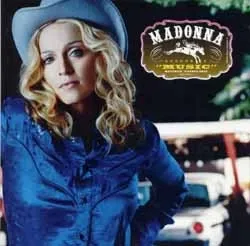
A huge number of actors, directors, writers, musicians use a stage pseudonym. There are several reasons for this: the main one is that the name should sound effective. A textbook example is when a child from a family of Russian immigrants, Issur Danielovich Demsky, who started an acting career, changed his name. In his memoirs, he writes that the main reason for this was the desire to cheat fate. After a series of experiments, he became Kirk Douglas, because 'it sounded aggressive and a bit Scottish'. His son (and equally famous actor) Michael uses his father's stage pseudonym as his permanent surname. In the same way, Cherilyn Sarkisian became singer and actress Cher, Vincent Furnier became rocker Alice Cooper, Louise Ciccone became singer Madonna, Melvin Kaminsky became comedian and producer Mel Brooks, Alicia Foster became actress and director Jodie Foster, David Kotkin became magician David Copperfield.<\/p>
However, name changes sometimes occur for other reasons. For example, film actor Nicolas Cage changed his surname to avoid bearing the too prominent name Nicolas Kim Coppola (his uncle is the famous director Francis Ford Coppola, author of the famous epic "The Godfather"). According to some sources, Nicolas Cage chose his name out of admiration for avant-garde musician John Cage; according to others, it is the name of a popular comic book character.
Curiously, to get a job in the US, you need to have the "right" name. This conclusion was reached by scientists from the University of Chicago and the Massachusetts Institute of Technology, who conducted a unique experiment. They prepared a series of resumes signed with the most popular names among whites and African Americans. These resumes were sent to various employers over the course of a year - a total of more than 5,000 letters were sent. It turned out that, all other conditions being equal (education, qualifications, experience, references, etc.), an applicant with an African American name has half the chance of receiving an invitation for an interview with an employer.
On the other hand, it is easier for men named Brad, Jay, and Matthew (the resumes with these names received the most positive feedback from employers) and women named Kristen, Carrie, and Laurie to find work in the US. The least chance of getting a job is for men with names Rashid, Tremaine, and Karim and women named Aisha, Keisha, and Tamika (all of which are most common among black US residents).
Based on materials from Washington ProFile.
