
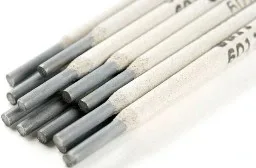
Proper transportation and storage of welding electrodes is the key to their successful use
There are many brands of welding electrodes, each intended for welding specific metals. For example, there are electrodes for welding cast iron, non-ferrous metals, low-carbon steels, high-strength low-alloy steels, and so on. The selection is wide – and provides the opportunity to choose welding electrodes for almost every type of metal.
At the same time, the quality of welding and the reliability of the weld depend largely not only on the correct choice of suitable electrodes, but also on their "condition". In order for welding electrodes not to lose their operational properties, they must be properly stored and transported.
Conditions for transportation of welding electrodes
Welding electrodes can be transported by any type of covered road transport. For transportation of electrodes by rail, it is necessary to use wooden boxes, boxes made of cardboard or wood boards. When using the latter two, the electrodes must be placed in universal containers.
GOST 26663 requires that boxes be formed into packages. In this case, wooden bars with a cross-section of more than 50x50 mm or disposable pallets conforming to GOST 26381 can be used.
Storage of welding electrodes
Electrodes must be stored in rooms where the temperature does not drop below 15 degrees. The rooms must be dry, and welding electrodes must not be exposed to moisture, mechanical damage, or dirt.
Packaging of welding electrodes
Welding electrodes must be packaged in one of the following ways:
* in sealed plastic boxes;
* in sealed metal boxes;
* in cardboard boxes.
At the same time, GOST requires that the cardboard used for making such boxes be no thinner than 0.7 mm. To ensure tightness, welding electrodes must first be packed in polyethylene (or shrink) film.
Boxless packaging is also possible. For this, welding electrodes must first be placed in wrapping paper, and then in polyethylene film with a thickness of 0.1-0.2 mm. The tightness of the packaging must be ensured.
If welding electrodes have been in non-hermetic packaging for some time, before using them, it is necessary to check them for moisture and, if necessary, calcinate them.
As paid advertisement