
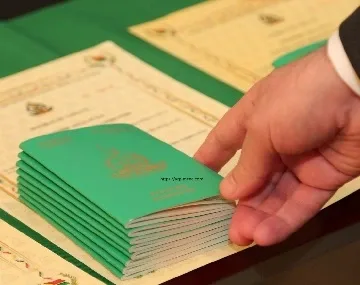
For selling its citizenship, Vanuatu may lose visa-free entry to European countries
As BBC notes, the market for 'golden passports' is estimated at $25 billion per year. In one form or another, every second country in the world trades in citizenship. And if in Europe a passport costs from half a million dollars and almost always requires residency and checks on the origin of funds, then in the Caribbean and Pacific islands, you can get by with $100,000-150,000, quickly and without unnecessary questions.
The West is concerned that such schemes benefit criminals and are used, among other things, for tax evasion. Europe dislikes this more than others because, thanks to the Schengen Agreement, borders between three dozen countries of the largest and richest political union on the planet, with a population of half a billion people, have been erased.
Europe declared a vendetta against 'golden passports' several years ago, in 2019. 'Some countries deliberately advertise their citizenship as a way to obtain visa-free access to EU countries,' said an EU policy document. 'This is often used by wealthy citizens of visa-free countries to circumvent the requirements and checks provided for by the Schengen Agreement, including those designed to prevent money laundering and terrorist financing.'
The European Union is suing its own members – Malta and Cyprus – demanding stricter conditions for granting citizenship in exchange for investment. And with third countries, it does not need to stand on ceremony; it is enough to threaten the cancellation of the visa-free regime.
In 2019, the European Commission put under control investor schemes in Moldova, Montenegro, and Albania, and also promised to monitor whether new visa-free countries like Ukraine or Georgia would come up with something similar. Moldova quickly canceled its program – one of the most affordable in the world.
However, until now, the EU has never applied the extreme measure – canceling the visa-free regime. And now the European Commission has decided to make an example. Under the hot hand fell an archipelago lost in the Pacific Ocean somewhere between Australia and Fiji.
A passport of Vanuatu opens borders to 130 countries and costs $130,000. You don't even need to fly anywhere; everything can be done remotely and in record time. And the chances of refusal are microscopic: over the past eight years, 10,500 investors have become citizens of Vanuatu, and only one was refused. This alarmed the European Commission (effectively the government of the European Union) and it held an explanatory conversation with the authorities of Vanuatu.
The Europeans shared their doubts that since the signing of the visa-free agreement with the EU, the number of citizens of Vanuatu has been growing rapidly, and among the newly minted islander-investors there were people on Interpol's wanted list, as well as dubious characters from Syria, Yemen, Iran, and Afghanistan.
Attention to the scheme was drawn by an investigation by the British newspaper The Guardian in July last year. Britain left the EU, but it also has a visa-free agreement with Vanuatu. Still, the European Union was the first to act. 'We respect the sovereignty of third countries in matters of citizenship, but we will not allow the right of visa-free entry to the EU to be used as bait for investment in exchange for a passport,' the European Commission explained its proposal to strip Vanuatu of visa-free entry.
That's all Vanuatu needed – things are already bad there, and in the UN ranking of the world's most dangerous countries, the Pacific archipelago regularly takes first place. First a cyclone, then an earthquake, then a volcanic eruption. Every third resident suffers from natural disasters each year.
Vanuatu gets by as best it can. It seeks investors, patrons, and sponsors. It attracts the rich and businesses with zero taxes, and lends its vote at international forums to interested powers. But even here there is a problem – this year the UN stripped Vanuatu of its voting rights for non-payment of membership dues, along with war-torn Sudan and bankrupt-by-socialism Venezuela.
The final nail was driven by the COVID pandemic. Vanuatu had only one hope to make ends meet – selling passports. It brings the country almost half of all revenues, according to Investment Migration Insider. Chinese are the most eager to become islanders – they bought 40% of passports. Russians, Afghans, and Syrians – about 3% each.
Now even this income is in question. The European Commission proposed that the 27 EU countries suspend the visa-free agreement. If they agree, then after a two-month transition period, all those who received a Vanuatu passport after 2015 will lose the right to visa-free entry to the EU.