
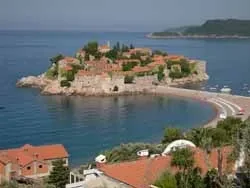
Montenegro – the pearl of the Adriatic coast
Montenegro is one of the youngest countries in the modern world: its independence was declared on June 3, 2006. This happened as a result of the process of the disintegration of Yugoslavia. Being a federal state consisting of several republics, the liquidated Yugoslavia gave legal right to all its former constituents to claim the status of independent states.
At first Montenegro united with Serbia, or rather, a semblance of a "union treaty" was formalized. Indeed, there are no serious ethnic contradictions between these countries – the Montenegrin language is considered to be one of the dialects of Serbian, and the Montenegrins themselves often call themselves "Montenegrin Serbs" or "Serb-Montenegrins."
However, irreconcilable contradictions between former allies Slobodan Milošević and Montenegrin leader Milo Đukanović, which arose in the late 1990s and mainly concerned foreign policy issues, led to division. If at first Đukanović demanded from Milošević only independence in building foreign policy contacts, then soon, having received approval from the international community and support from the Serbian opposition, he began to talk about the full state independence of Montenegro.
At that moment, the European Union objected to this idea. But a few years later, as a result of a referendum, a decision was made by a majority of votes to declare independence.
Today Montenegro is a parliamentary republic. Its parliament – the Skupština – consists of 81 deputies, 76 of whom are elected by proportional representation by universal secret ballot, and another five are nominated by the Albanian minority. Montenegro recognized the independence of Kosovo, as a result of which some Serbian deputies of the Skupština left the parliament, moving into the extra-parliamentary opposition.
But despite these "upheavals," the country is not in turmoil, as happened in many other countries of the former socialist camp. A visit to this state is not associated with the risk of ending up in the epicenter of a military conflict. And the currency used in Montenegro is the euro, which also simplifies a visit to this part of Europe.