
Latin Lessons
Even 23 centuries ago, Plato said that the gods would have blessed humanity by giving it a common language. The gods were not inclined to bestow such favors, and man had to work hard himself. Attempts to invent a new language for international communication have been made since ancient times. For example, few people know that the famous Pergamon physician Claudius Galen was also knowledgeable in linguistics. This is evidenced by the third chapter of the "History" by the Roman historian Piso, which tells exactly about the creation of an international written language by the physician. Galen was the greatest theorist of ancient medicine, the founder of the foundations of anatomy, physiology, and pharmacology, but his ideas in the field of linguistics were not understood by his contemporaries.
In the Middle Ages, classical Latin, already dead by that time, became the language of science, school, church, and international relations. There is a hypothesis that Latin is not dead at all, but simply an artificial language, and it was invented by the best minds of the Renaissance to control societies. The 16th-century humanist educator and pedagogue Luis Vives wrote in his treatise De Disciplines: "If Latin perishes, then turmoil will ensue in all sciences, a threat of alienation between peoples. It would be a happiness if there existed a single language that all peoples could use."
In the Middle Ages, besides dry Latin, there existed the now-forgotten language of merchants and sailors of the Mediterranean. It arose on the basis of Italian, French, and Provençal languages and was called "lingua franca" or "sabir". During the Crusades, "lingua franca" was simply necessary for communication between Europeans, on the one hand, and Arabs and Turks, on the other. It was actually the universal language of the Mediterranean. But then came the era of the Great Geographical Discoveries, trade routes moved overseas, and interest in ties with the Muslim world somewhat declined; however, this language was used by trading folk until the beginning of the 19th century.
Word Assortment
Colonial conquests by European powers led to the emergence of hundreds of neutral languages of local scale, which linguists call pidgins. Pidgins usually arose in places where there were not very many Europeans themselves, and the local population spoke various languages. A typical example is Papua New Guinea, whose population speaks more than 700 dialects. As a result, a new language emerged there, called Tok Pisin, and it is a state language. Assorted languages that arose from a mixture of local dialects and English are also state languages in some other neighboring island countries: Neo-Solomonic in the Solomon Islands and Bislama in Vanuatu. On the Netherlands Antilles, such a language is Papiamento, which arose on the basis of Spanish and Portuguese with borrowings from other European, as well as African and Amerindian languages. Also, in the 16th century, Catholic missionaries created a "general Brazilian language" - "Lingua Geral Brasilica". It is based on the Tupi language, and today about 30,000 people speak it.
The most widespread of African languages, Swahili, is also in fact a pidgin, created even before the arrival of Europeans in Africa on the basis of several local languages and Arabic. It is used by about 50 million people, and for only 2–3 million, mainly urban dwellers, is it native.
Even the most ancient language, Sanskrit, belongs to artificial ones, as its very name indicates: "Sanskrit" means "composed". Almost three thousand years ago, it was "composed" by the Hindu priest Panini from elements of numerous ancient Indian spoken dialects. Nowadays in India, Sanskrit is not only the language of religious worship, but also the language of the humanities, and in some families it is even used as a spoken language.
Many scientists, including Francis Bacon, René Descartes, Jan Amos Comenius, Isaac Newton, and Gottfried Leibniz, attempted to create a special "philosophical" language for scientists. However, their projects, which resembled algebraic formulas, were unsuitable for communication. One of the most original was the project of the "musical" international language by Jean François Sudre (1787–1862), named solresol by the author, which appeared in the early 19th century. The word elements of this strange language are the names of the seven notes: do, re, mi, fa, sol, la, si. At the World Exhibition of 1855, the author of solresol was awarded a huge monetary prize; many authorities spoke in support of the language, including Victor Hugo, Alphonse de Lamartine, and Alexander von Humboldt. The society for promoting the solresol language existed for about forty years, until the beginning of the 20th century. However, in practice Sudre's language was never used.
Waltz "Volapük"
A breakthrough in creating artificial languages occurred, as in many fields of knowledge, in the 19th century. In May 1879, the literary newspaper "The Harp of Zion" published the project of the German pastor Johann Martin Schleyer under the name "Volapük" (volapuk is a deformation of the words world and speak). Volapük became the first project in the history of mankind for an international language that actually gained wide fame and distribution. When compiling the dictionary, the pastor took words mainly from English, but also used French, German, Latin, and even Russian. Linguists claim that just two years after the publication of the project, a magazine in Chinese and Volapük was published, which contained Volapük crosswords.
Pastor Schleyer's new language caused a real sensation. From 1881, the bilingual newspaper Volapukabled-Weltshpracheblad ("Volapük Leaflet") began to be published regularly. In 1882, the first Volapük society was founded in Germany, and in Vienna an opera was even staged in the new language and a waltz "Volapük" appeared. Businessmen immediately responded to the new linguistic fashion: champagne, liqueurs, sweets, and cigars were produced with the name "Volapük", and "philological" styles of hats and ties appeared. By the beginning of the 20th century, there were 283 Volapük societies in the world, 25 magazines in this language were published, and more than a thousand certified Volapük teachers were counted.
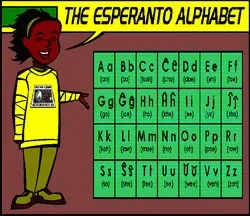
However, Volapük was a rather complex language, and therefore at the beginning of the 20th century, the movement of its supporters gradually began to lose ground under the pressure of a younger universal means of communication. In 1887, the Russian subject Lazar Markovich (Leizer Ludwik) Zamenhof created Esperanto.
The Language of Hope
The future father of Esperanto was born in 1859 in Białystok, a small Polish town that at the time was on the western outskirts of the Russian Empire. The city was multinational and multilingual, and 17-year-old Leizer Ludwik decided that it was simply necessary to create a special language - one for all. The notebook with the first project of an international language - "pre-Esperanto" - perished in the stove, where it was sent by the angry elder Zamenhof, who believed that a boy from a decent family should engage in serious matters, and not "papers" with incomprehensible words. Leizer was sent to study medicine, first at Warsaw University, and then at Moscow University. He became an ophthalmologist, but did not abandon the idea of creating an international language.
Dr. Zamenhof was a very educated man even for his circle. He was a polyglot and had perfect knowledge of his native Yiddish, Russian, Polish, German, French, English, as well as classical Latin and Greek. Zamenhof compiled his language project in such a way as to minimize the difficulties of mastering the new language, and based it on international words. So any European could easily find in the "new language" many words that were similar to or directly taken from his native language. Some Esperanto researchers write about the "Slavic substrate" in Esperanto and emphasize that it contains not a single phoneme that would not exist in Russian or Polish.
In 1887, a thin 40-page booklet was published setting out the grammar and a short dictionary of the new international language. It was called "International Language. Preface and Complete Textbook." The language had no name, but the author on the cover was indicated as Dr. Esperanto (Doctor Hoping). The effect was astonishing: the reading public immediately snapped up the booklet, and after a short time, study circles for learning the new language began to grow like mushrooms. As expected, it got its name from the "author" indicated on the cover. It was really too sonorous and beautiful, and its meaning quite suited those who believed in a bright future. And such people were mostly among the first fans of Esperanto: Leo Tolstoy and Jules Verne, Albert Einstein and Konstantin Tsiolkovsky, Maxim Gorky and Rabindranath Tagore. Esperanto spread most actively in Russia, and among the first translations that laid the foundations of the literary style of Esperanto were Gogol's "The Government Inspector", Pushkin's "The Snowstorm", and Lermontov's "A Hero of Our Time".
Since 1908, the Universal Esperanto Association (Universala Esperanto-Asocio) has existed, with headquarters in Rotterdam, in official relations with the UN and UNESCO. Currently, national Esperanto organizations operate on all continents except Antarctica.
Elvish for Insects
Despite the obvious success and enormous popularity of Esperanto, attempts by linguists to create an even more perfect language did not stop. But, as is known, the best is the enemy of the good. Ido (Ido, Esperanto Reformita) - a reformed Esperanto language, created in 1907-1908 by a group of linguists, was not successful. The Ido movement arose as a result of a split in the Esperanto movement; the core of Ido supporters initially consisted of Esperantists. However, the Ido movement never reached the scale of the Esperanto support movement and was distinguished by instability. After the crisis in the Ido movement that took place in 1927-1933, it did not recover.
Interlingua - IALA (Interlingua-IALA) - is the latest of the new projects of the so-called "planned" languages that managed to become a living language. It was created in 1951 by the International Auxiliary Language Association (IALA). In the course of preparing the project, in which Alexander Gode played an important role, a great deal of work was done to study and compare various artificial languages. Before the publication of Interlingua, six different variants of it were considered. After choosing the best variant in the linguistic sense and publishing its dictionary and grammar, IALA dissolved itself. But history did not end there.
In the second half of the 20th century, premature artificial languages began to appear from time to time, whose authors initially did not claim practical application for their projects. The impetus for their emergence was given by the mass spread of science fiction and fantasy, in particular the works of John Ronald Tolkien. At the beginning of the 1990s, a five-volume "Dictionary of Elvish Languages" appeared. Goblin and elf scholars suggest that the language of the elves most likely resembled Old French or even Italian (at least, Bilbo listened to their melodic singing with pleasure); speaking of the language of the dwarves, they suggest that it has a certain similarity with English, and even more so with Scottish. The language of goblins, in turn, is a close relative of German, "equally suitable for war, and for intricate curses, and for recording the deep thoughts of a ruler."
Some writers went very far and developed their own language from scratch. In the early 1970s, after the release in the USA of the science fiction film Star Trek about the alien race of Klingons, linguist Marc Okrand invented the Klingon language, which is spoken by representatives of this race. In 1989, even a public organization was created, the Klingon Language Institute (KLI), which now has several thousand members. In 1996, American Thomas Donnelly created the language 'Machi' - for a fictional insectoid race, in which phonetics is carefully developed based on the anatomical features of insects, and the vocabulary and grammatical structure are based on how intelligent bugs 'perceive' the world spatially and psychologically.
Undoubtedly, attempts to create new languages will continue to be made. After all, despite the fact that the world is becoming more and more unified in terms of information, people and nations remain disunited. And there will certainly be new idealists, like Lazarus Zamenhof, who will try to bring them closer together at least somehow with the help of their language.