
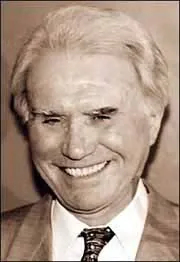
At the age of seventeen, he was included in a professional football team. He stood in goal for another seventeen years (ten of them for the USSR national team). According to all polls, he is our best sports commentator in the history of the profession.
Maslachenko is extraordinarily talkative. This is not at all tiresome, because he always has something to tell. And so he told – a whole book about himself.
Writing is coming into fashion, and what gentleman would deny himself that – I don't remember who said that phrase. But I am not a writer. I am a storyteller. Much of what is in this book was told by me to my friend, journalist Vadim Leibovsky. And it is all absolutely true. I made nothing up, did not dramatize or soften anything. My character and principles do not allow it.
Vadim Leibovsky's book "Vladimir Maslachenko: Pele was lucky that he didn't play against me," several fragments of which are published by "Vremya Novostey," will be released shortly by the Russian publishing house "Vremya".
How Maslachenko became a goalkeeper
...He was so generously endowed by nature that he would certainly have achieved outstanding results in many other sports. At fifteen, without any special training, he long-jumped 6.52 meters. In those years, that was surely the best result in the country among his peers. Vladimir was exceptionally, incredibly, "inhumanly" springy...
Well, he might well not have become a goalkeeper at all; it all happened according to a textbook plot. A Russian language lesson was in progress. At the same time, a football match of the youth championship of Krivoy Rog was beginning. And the team of the Central District unexpectedly found itself without a goalkeeper. A messenger from the stadium rushed into the school principal's office, who quickly understood everything and personally ordered that a student of the 8th "B" grade, Vladimir Maslachenko, be sent to the stadium. The Central District won that match, and its goalkeeper kept a clean sheet. And two days later he took part in a match for the championship of Ukraine – this time among adults – for his Krivoy Rog "Spartak".
How Maslachenko was taken to Moscow
...In 1953, having finished school, seventeen-year-old Vladimir came to Kiev as part of the Dnepropetrovsk region team for the republican schoolchildren's Spartakiad. During the tournament, Vladimir was told that he needed to appear for a tryout with the Kiev "Dynamo" reserves. However, to this seemingly flattering, even exciting message, he reacted in his own way. First, he wasn't invited; he was simply informed: "You must appear." Everything, therefore, was decided without him and for him. So the young goalkeeper refrained from the tryout.
"Honestly, I regretted my action then – not showing up for the team's tryout," he says. "Well, I could at least have come for a talk. But no, a boyish resentment took over, the form of the proposal: 'to appear.' And yet, on the whole, I probably did the right thing. At that time I wasn't ready for real professional football, after all I was only seventeen. And in the modest 'Metallurg' I grew calmly, without force or haste, gaining strength and experience."
Once rumors spread through Dnepropetrovsk: Maslachenko had received an interesting offer and would soon leave. This caused concern among the city's fans and confusion in the highest party-administrative and economic bodies of the regional center. As it later turned out, police officers, military enlistment office workers, internal and railway troops were put on heightened combat readiness. They were tasked with: tracking down, identifying, stopping, and neutralizing!
On the appointed day of his "forever" departure to the capital's "Lokomotiv," at the hour of farewell to the city on the Dnieper, Vladimir Maslachenko arrived at the station for the train leaving for Moscow. He arrived without luggage, empty-handed, with a carefree look that was not supposed to alarm the special agents who were watching him from behind station corners, pillars, trash bins, and kiosks, ready at the right moment to swiftly make close physical contact with the fugitive. According to the secret scenario, he had come to the station to see off his friend and teammate from "Metallurg," Alik Petrashevsky (Alexander Sigizmundovich Petrashevsky, now the sporting director of the Moscow football club "Dynamo").
The secret agents had no idea that the goalkeeper's luggage was in the hands of the "departing one," who calmly carried it into the carriage. The locomotive's whistle sounded like the referee's whistle at the start of a game. Maslachenko and Petrashevsky embraced fervently. Alik entered the vestibule and turned to face the well-wishers. At that moment, the goalkeeper, shouting: "Alik, I forgot to give you the money!", rushed into the departing carriage, where he was immediately met by the head of the Donbass Railway himself. He had his own God. The USSR Minister of Railways, Comrade Beshchev B.P., the curator of "Lokomotiv," was more important to him than any party-economic leader of the Dnepropetrovsk region and its environs. The railway chief whispered: "Quickly to the compartment! Sit in the corner and don't move! Don't enter into any conversations – with anyone! Show your ticket only from a distance, without letting it out of your hands! Don't give in to provocations or threats!" The train was picking up speed.
However, it was too early to consider the escape accomplished. At the Kongrad halt, where the train was scheduled to stop for three minutes, rapid deployment forces burst into the carriage. They opened the doors of the compartment where Vladimir Maslachenko was sitting as if in a solitary cell. He was waiting. But he was waiting not for his fate, but for the development of a situation in which he could not, had no right to lose. The goalkeeper was preparing for battle again.
And there was a battle – with heavy confrontation, force techniques, cutting polemics in Russian and Ukrainian, the colorfulness of which paper is unlikely to convey and withstand. The other passengers locked themselves in their compartments, presumably thinking that a hardened bandit was being arrested in the carriage. As a result, the goalkeeper single-handedly defeated the enemy's superior forces. An hour later (!), the train continued its journey, carrying Maslachenko to "Lokomotiv" and into history.
How Maslachenko was bought to Germany
In the autumn after the World Championship (1958 – Ed.) Maslachenko again met on the field with most of the German national team players when Lokomotiv arrived in Germany for a series of matches against the best clubs in the country. Our goalkeeper played those matches beyond all praise, and the German press was unstinting in its compliments.
And then, shortly before the end of the tour, he received an official invitation to sign a contract with the club Hamburg. The conversation was conducted by one of the club's executives in German in the restaurant of the hotel where Lokomotiv was staying. Maslachenko replied that he was ready to consider the offer if all issues were settled, and above all, with the relevant bodies of the USSR, that he must be understood by his country, that he did not intend to change his citizenship or to be separated for any period of time from the woman who had just become his wife. He was told that the party making such an offer would try to settle all issues, in particular, by contacting the leadership of the Communist Party of Germany.
The contract did not take place. When it became clear that the negotiations had ended without results, a representative of Hamburg handed Vladimir five marks and said: "Take them as a souvenir. Let this modest banknote remind you of my offer. And add as many zeros to it from time to time as your imagination will allow."
How Maslachenko was friends with Lobanovsky
"There is nothing surprising in the fact that Valery Vasilyevich became a coach. Even as a player, he engaged in polemics with the mentors, often disagreeing with them on matters of game organization and overall team preparation. Valery loved to play chess, and very well at that. (I note that he graduated from school with a gold medal.) True, when he lost to Khusainov, he got terribly angry.
In coaching, he achieved greater success than as a player. His relationship with Kachalin in the national team did not work out; he bickered with him over the same issues as with his club coaches. In the end, Kachalin gave up on him.
In the coaching field, Valery Vasilyevich first worked very seriously on his education. His creative alliance with Oleg Bazilevich was an amazing combination of two extreme and distinctive forwards. Bazilevich was more rigid, ironic, and did not forgive players for any of their shortcomings. They elevated the coaching cult to the heavens, and the training process even higher. As a result, I called them world champions in training. In terms of working on functional condition, they became fascinated with the works of Doctor Zelentsov, and it seemed to me that a kind of porridge had formed in their heads.
When it was necessary to think more about the organization of the game, they were more concerned with the functional readiness of the players. I remember once I asked Valery: "Why isn't Taran playing for you?" He replied: "Because the functions do not work, and when they start working, he will be in the starting lineup." Apparently, Taran's functions never started working.
In the end, they and Oleg took up the process of creating the game. They sat over it for a long time and meticulously worked out to mathematical precision the moves of each player and the team as a whole. And, in my opinion, they got a bit lost. It got to the point where once the referee stopped the game, took the ball from the Kyivans and gave it to the opponent – the Kyivans fiddled with the ball so much, as if forgetting about the goal.
I constantly worked at matches of Kyiv Dynamo – domestic and international. I often visited the team's base in Koncha-Zaspa, observed training sessions and diet. I saw juices saturated with oxygen and other products of decay and half-decay. Everything was so scientific that sometimes I, a romantic person, found it a bit boring.
I know that he carefully watched and listened to my reports. We sometimes argued to the point of swearing. So it was in Mönchengladbach, when the Kyivans lost the return semi-final match of the Cup Winners' Cup to Borussia with a score of 0:2. I clearly determined that the coach made a mistake by not bringing on Vladimir Muntyan from the start, and in the second half, when Muntyan came on, everything changed: Dynamo simply tormented the opponents, crushed them. But there wasn't enough time. Lobanovsky got angry, since he had already been told about my words, he attacked me, but then apologized, because he was fair and correct. But nevertheless, he did not admit his mistake, saying that the game plan was correct, and they lost because some players did not follow that plan.
He brought a new stream and a new coaching perspective into the training process. His conversations resembled lectures. I will never forget how a group of serious people gathered in Koncha-Zaspa. They steamed, performed sacred rites, drinking a little, though mostly talking and discussing. When they spoke about Spartak, Valery Vasilyevich said: "Spartak is a firm."
I will reveal a secret. When Spartak was relegated from the top league, I personally suggested to Nikolai Petrovich Starostin to invite Lobanovsky to the team. A couple of days later we got in touch, and he said: "I am ready to agree with you, but the fans will not understand us, and me first of all." And that topic was closed.
Valery Vasilyevich's departure to work in Arab countries was a kind of exile from himself and did not do him any good, but rather harm – undoubtedly.
His pupils now work in many football teams. I believe that they will become top-class specialists only if they do not look back at their outstanding coach as a deity, but go their own way, as, for example, Oleg Blokhin does. You cannot endlessly quote the "football Mao Zedong." You cannot be a second Yashin, a second Streltsov, a second Lobanovsky."
How Maslachenko saw Ozorov off to retirement
Before the Mexican football World Cup, there were already rumors that the upcoming assignment was likely to be the last in the long commentary career of Nikolai Ozerov. His poor health was no secret to anyone. And so Maslachenko discovered that "Uncle Kolya" was being sent to work in Guadalajara from the very first days of the championship, for twenty-four days at that, to the hottest region of Mexico. Maslachenko made some corrections and clarifications to the plan, which he reported the next day to Alexander Ivanitsky, head of the United Editorial Board of Sports Programs of Gosteleradio. And he added: "I know what is happening around Ozerov. But if you consider this his swan song, then it should be performed with dignity and to the fullest. But you cannot send him to Guadalajara; it will be too hard for him there. He must stay in Mexico City, let him cover the opening of the championship and the final."
Ivanitsky agreed. He immediately contacted Lapin's first deputy, Vladimir Popov, who also did not object. At the same time, they agreed to include Vladimir Maslachenko in the team. When he heard about this decision, he said: "You can even send me to Guadalajara." "No," the chief editor objected, "I need you in Mexico City. We will solve the main organizational and creative issues together."
Even before leaving for this assignment, it was decided that the preliminary games of the Soviet national team in Irapuato would be commentated on by Yevgeny Mayorov and Kote Makharadze. But Makharadze had not been scheduled for the Mexican World Cup. He was shocked. It seemed he had never known greater grief in his life. "How will I explain this in Tbilisi? How will I look people in the eye?" he said to his friend. "If you can, help, talk to whoever you need to." Maslachenko managed to resolve his issue. They set off for Mexico.
After the semifinal match, Anatoly Popov, the chief engineer for technical support of the work of Gosteleradio specialists, called Vladimir Maslachenko's hotel room from the office of our delegation. And, referring to Vladimir Ivanovich Popov, Lapin's first deputy, he reported: a decision had been made that Maslachenko should commentate on the final match of the championship, and Nikolai Ozerov – the match for third place.
Maslachenko decided that he needed to urgently get in touch with Moscow to try to change this decision. He understood that fragile and sick Uncle Kolya might not survive this blow. But to call Moscow, he had to get to the Gosteleradio team's office, which was on the other end of a multi-million city. "Tolya," he said to Popov, "not a word to anyone yet. I don't have a car right now; Fesunenko has left on business. I'm asking you to come and pick me up." Anatoly Popov came and picked him up. Vladimir called Ivanitsky and laid everything out. He replied: "This decision is final; nothing can be changed now."
Then Maslachenko tried to contact Vladimir Popov. He did not succeed; he did not catch him, and he did not know the first deputy's home phone number.
The next day our commentator again came to the office and again placed a call to Vladimir Popov's number. He heard his voice and poured out everything he could. He added: "You cannot treat this man that way!" "Volodya!" Popov replied in a steely voice. "If you want me to be fired from my job, call the CPSU Central Committee. This is not my decision! Nor my whim!"
Then they decided: let Fesunenko and a security service officer deliver this bitter news to Ozerov.
And then came the denouement. After hearing the decision of the committee's leadership, Ozerov told Vladimir that he had acted badly, that you cannot treat a teacher that way. Vladimir tried to convince him: "But there is Tolya Popov; he was the first to receive the news of the decision by phone from Moscow; ask him." It did not work. With that, Uncle Kolya had to leave and prepare to cover the third-place match.
Makharadze did not believe the explanations either. When Maslachenko reminded him of the work not yet done – to make a piece about city life in Mexico City – he only flung back: "I spit on your work." And Maslachenko decided it was time to end this story. "You have heard only the truth, the pure truth from me," he said calmly. "And that's enough. You should be ashamed, Kote Ivanovich! The conversation is over. You are free!"
They never spoke another word to each other. Ever again.
How Maslachenko Became a Minister
On May 2, 1992, Igor Netto called Vladimir Maslachenko and said: "Do you want to have some fun? Let's go to Luzhniki; today the teams of the Moscow government and the Russian government are playing at the Grand Arena. We'll watch the game and talk, because we haven't seen each other for a long time. By the way, the coach of the government team will be Boris Nikolayevich himself."
Maslachenko and Netto stood at the edge of the football field, and it was quite amusing for them to watch how diligently the portly, not to say pot-bellied, men gave themselves and their opponents pleasure under the supervision of the head of state. But then the goalkeeper of the Russian government suffered an injury, and his place was taken by a field player. But as soon as that happened, the new goalkeeper conceded a goal, and the Moscow government took the lead – 1:0.
Then Netto said to his friend: "Volodya, you must stand in goal." He replied: "I am not a member of the government, but the same as you, an ordinary spectator." Netto tried to dissuade him: "Nothing terrible about it, the match is unofficial."
This conversation was overheard by the chairman of the State Committee for Physical Culture and Sports, by the name of Machuga (he, a former world champion in acrobatics, had worked in this ministerial post for some time), who supported Igor Alexandrovich's idea. Maslachenko replied: "Very well, but I must get permission from the team's leader." Machuga went to the bench where Yeltsin was sitting and, returning, said to Maslachenko that Boris Nikolayevich asked him to come over.
"Volodya," the president addressed him, "can you stand in for our team?"
"Yes, I can."
"Do you have a kit?"
"I always have a tracksuit with me, in the car."
"Well then, if you agree, please go and stand."
– Let this goalkeeper finish the game, there are a few minutes left until the end of the half, and I will play in the second half.
Maslachenko went to the car, took his kit and appeared in the dressing room. Seeing him, Yeltsin said to the team:
– We are about to have a new goalkeeper. Volodya, are you ready?
– I am always ready, especially since the president asks... However, I fear this will be a setup, because I am not a member of the government. Tomorrow this will become a matter of inquiry in the Supreme Soviet – Khasbulatov will not leave this alone, it is a clear setup!
And then the president said: "In front of everyone, I declare that I officially appoint Vladimir Maslachenko as Chairman of the Committee for Physical Culture and Sports of the Russian Federation. Yegor! (Prime Minister Gaidar was right here.) Please prepare a decree on Maslachenko's appointment."
And the president had no idea that the chairman of the State Sports Committee already existed, and that he, moreover, was personally present at the event. This was immediately reported to the president.
– All right, – said Yeltsin. – Maslachenko, I appoint you first deputy chairman of the Committee for Physical Culture and Sports. Yegor! Prepare all the papers.
Someone handed Gaidar a notepad, and Yeltsin dictated to him the points: what needed to be done for the appointment of Vladimir Maslachenko as first deputy chairman of the State Committee for Physical Culture and Sports of the Russian Federation.
Thus, in the dressing room, where our goalkeeper had prepared for many years to take the field, he received the highest appointments twice within a few minutes.
In the second half, the Russian government team played well. They came back and drew the match. At the same time, Maslachenko pulled out two simply dead balls, after which he became the main goalkeeper of the Russian government team. (And he played several more good matches in the team. Luzhkov really wanted to score against him, he really strove and tried. His teammates did their best to bring Yuri Mikhailovich into a striking position. But Maslachenko immediately told him: "You are wasting your effort, I will not let you score." And he did not.)
And in the evening of that memorable day, May 2, returning home, he heard in the 'Vremya' program about his appointment as chairman (!) of the State Committee for Physical Culture and Sports. Immediately, in connection with the appointment, he was called and invited to television to participate in the 'Dobroe utro' program on ORT. He, of course, came and took part in the program.
During the day he received a fax from Gaidar's reception office, where, signed by the prime minister, he was informed that he had been appointed first deputy chairman of the State Committee for Physical Culture and Sports of the Russian Federation.
He expected that the chairman of the State Sports Committee, Vasily Machuga, would invite him and they would start working. But no call came. Chairman Machuga, presidential adviser Shamil Tarpishchev, and his assistant Boris Fedorov all behaved as if nothing had happened. No moves at all!
Why, then, was the instruction of the President of Russia never carried out? – I ask Vladimir Nikitovich.
– You try to answer that yourself.