
However, de Villepin promised to hold consultations with trade unions and employers to incorporate social guarantees into the law. The situation escalated to such an extent that, in connection with the student riots, the head of the French Interior Ministry urgently cut short his trip and decided to return to Paris.
Last Sunday, French Prime Minister Dominique de Villepin said on the national TV channel TF-1 that the “new type of employment contract, known as the “first hire contract” or “youth contract,” which had sparked mass protests among students, would be implemented, albeit with some changes.” At the same time, he added that he “would like the contract to be supplemented with new guarantees, which should be discussed with employers, trade unions, and employees.
According to the prime minister, there are expected to be three such guarantees. One of them is the establishment of a two-year mentorship over a young employee by a “personal referent.” The second guarantee, as de Villepin suggests, could be that, in the event of dismissal, a young employee would receive, in addition to unemployment benefits, an additional allowance for professional retraining. Finally, the third guarantee is that the general provisions of the “youth contract” would be reviewed every six months with the participation of social partners.
Announcing that the French government had agreed to introduce new amendments to labor legislation, Prime Minister Dominique de Villepin stressed that this was being done solely to reduce social tensions. It is quite possible that this decision was influenced by the fact that on the night before Sunday, the nationwide General Assembly of French Students was held at the University of Poitiers, which decided to hold protest actions against Dominique de Villepin's government policy on employment.
More than 300 delegates took part in the General Assembly of Students, representing every second university in France. A protest action was scheduled for March 14, and a nationwide demonstration for the 16th. The main demand of the students was the government's withdrawal of the first employment contract terms, which infringe on the rights of young people. In addition, the students recommended that all higher education institutions in the country begin blockading lecture halls and other premises.
The new French employment contract, which caused so much commotion, is part of the “Emergency Plan to Combat Unemployment.” According to official data, 22.7% of French citizens under the age of 25 are officially registered as unemployed. This is more than twice the rate for other age groups (for example, the unemployment rate among French people aged 35–50 does not exceed 9%). Results of a survey conducted by the sociological agency LH2 for the newspaper Libération show that the threat of being left without a job after graduating from university ranks first among the problems worrying French youth.
The program to combat youth unemployment consists of a set of draft laws, the first of which were submitted by the government to the National Assembly on January 16. According to experts, the new employment contract primarily affects small companies in France and is officially aimed at employing young people. They believe that the “de Villepin Program” fundamentally changes French labor legislation, providing young job seekers without work experience with effectively guaranteed employment. Under the new legislation, a company of any form of ownership with 20 or more employees is required to hire at least one worker under the age of 25 with no professional experience each year. The “youth quota” increases in proportion to the size of the company: for example, an enterprise with 250 employees must hire 12 young specialists annually. Otherwise, starting from 2007, an additional tax will be levied on employers. The de Villepin program also includes a system to encourage young people to seek work. Persons under 25 who have been receiving unemployment benefits for more than six months (currently 240,000) will receive additional payments from the budget for three years if they take up permanent employment by January 1, 2007.
At the same time, the new type of contract allows employers to dismiss employees under 26 without any explanation or prior notice during the first two years. Trade unions and left-wing parties consider such a law to be fundamentally contrary to previous labor legislation. “Now companies can hire students every year and fire them every year, circumventing the new legislation,” says a press release from the Union Nationale des Syndicats Autonomes de Fonctionnaires, one of the organizers of the student protest.
Observers suggest that Prime Minister Dominique de Villepin took up the issue of youth employment not by chance, as he plans to run for the presidency of France in 2007. By lobbying for the new law, he apparently wanted to win the votes of young voters, but he miscalculated. Students do not need a job that can be lost at any moment.
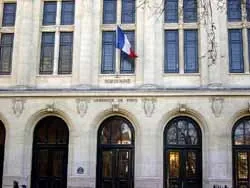
Within literally two days, student unrest, having started at the ancient Sorbonne, spread across the entire country. Large-scale protests also took place in Strasbourg, Marseille, and Bordeaux. 26 of France's 84 universities are protesting the innovations. Nine of them are barricaded. In solidarity with French students, Greek students have staged protests. The youth of France is determined to repeat the student revolution of 1968, which forced President Charles de Gaulle to resign.