
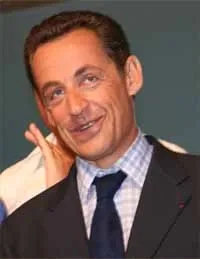
Sarkozy's victory was indisputable and convincing: he managed to increase the five-percentage-point gap that had been established between him and his opponent Ségolène Royal after the first round of elections, and finished with a result of 53.6% (correspondingly, Royal this time garnered 46.94% of the votes). Royal, without waiting for the publication of the final official election results, admitted defeat before three hundred supporters gathered at her headquarters and urged them to 'preserve this giant energy of the popular movement' for future battles.
As for Sarkozy, he now has other concerns. During the election campaign, he made many promises to the French – promises that will have to be fulfilled somehow, if only because this time a record number of French voters went to the polls: more than 85% of all eligible voters. As observers note, in the second round Sarkozy was supported by French voters who 'defected' both from the camp of centrist François Bayrou and from the ranks of right-wing nationalist Jean-Marie Le Pen. The latter is all the more surprising because Sarkozy, who advocates for 'good old France', is the son of a Hungarian nobleman and a Jewish emigrant from Greece: that is, according to political scientists, 'not an option' for any right-wing nationalist. Nevertheless, the fact remains: according to statistical calculations, the right flank of French voters 'gave' Sarkozy about 3% of the votes. Obviously, his reputation as a 'strong hand' and a leader of isolationists who want to make it as difficult as possible for new migrants to enter the country, while 'keeping in check' those already in France, played a role.
What else, besides a bulldozer purge and 'battening down the hatches', did Nicolas Sarkozy promise the French? If we look at his presidential program, we can predict that in the near future France will face tax cuts, a reduction in public debt, a 'loosening' of labor legislation, and a reduction in spending on civil servants – everything that his conservative colleague Angela Merkel promised and is consistently implementing in Germany. In general, with Sarkozy's victory, the positions of conservative parties throughout the European Union have strengthened: it is known that the elegant Frenchman (and Sarkozy twice, in 2004 and 2005, won the unofficial competition for the title of 'the most elegant man in the country') is a like-minded person of the pragmatic German leader on most pan-European economic and political issues.