
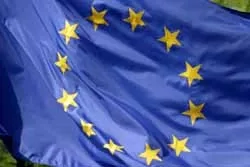
The document was signed by the heads of 27 European states. It talks about the successes achieved by the European Union over half a century, common values, and the need to fight terrorism and organized crime. The declaration calls for resuming reforms in the EU. The text of the document, according to its authors, should give a new impetus to the integration processes of the EU countries and help overcome the crisis. The Berlin declaration declares the need for reforms and the creation of a new text of the European contract by 2009.
The idea of the "United States of Europe" was proposed by Winston Churchill back in 1946. "If Europe once unites, then, fortunately, there will be no more borders. And this will bring it wealth and glory that will be felt by 300 or 400 million inhabitants," the British prime minister said then.
His idea began to be realized already in the late 1940s, when the Council of Europe appeared - a European analogue of the UN, which today includes 46 states. In 1951, West Germany, Belgium, the Netherlands, Luxembourg, France and Italy founded the European Coal and Steel Community, and a few years later, in 1957, the same six states signed an agreement in Rome to create the European Economic Community (EEC), whose main goal was a common economic policy and the elimination of trade barriers. Later, this association became simply called the European Community. In 1973, the United Kingdom, Denmark and Ireland joined it. Greece joined in 1981, Spain and Portugal in 1986. In 1995, the European family was joined by Austria, Finland and Sweden, after which the association acquired its current name - the European Union. On May 1, 2004, 10 new countries joined the EU: Hungary, Cyprus, Latvia, Lithuania, Malta, Slovakia, Slovenia, Poland, the Czech Republic and Estonia. And after the accession of Bulgaria and Romania on January 1 of this year, the list of EU member states expanded again.
Today the European Union unites 27 powers - and apparently this is not the limit. There are states desired by the EU but not eager to join. Rich Norway categorically does not want to lose sovereignty and share control over its own hydrocarbons, which have made it the second richest country in the world (in terms of per capita income). Iceland, whose economy depends on the fishing industry, is not ready to share control over territorial waters. Switzerland seemed ready to join the EU, but conservative Swiss did not want to share the economic space with the EU. And the government decided to freeze the application for an indefinite period. The fate of Liechtenstein also depends on Switzerland, which will most likely enter the EU along with it.
Such mini-states as Andorra and San Marino do not want to join the EU, fearing a rise in the cost of living. Monaco, which has de facto adopted almost all EU initiatives, does not join it for unclear reasons.
Who the EU is not ready to accept into its ranks is the smallest state in the world - the Vatican. Due to its undemocratic structure: the Vatican is a theocracy. Greenland, a Danish territory, left the European Union as soon as it gained self-government in 1979.
The idea of "European integration" began to outlive itself back in 2004, when the EU turned its gaze eastward. Then, Latvia, Lithuania, Estonia, Hungary, the Czech Republic, Poland, Slovakia and Slovenia (as well as Malta and Cyprus) joined the organization. EU officials thought: does the European Union need to "integrate" further, and most importantly, where? From that moment on, the EU leadership prefers not to use the term "integration" and discusses the "further enlargement" of its organization.
The question of the "borders of Europe" was resolved in 1993 at the EU summit in Copenhagen. Then the EU established a number of criteria for determining potential members of the organization. The main one is "goals and ideals of European society", including democratic values and freedoms. From this moment, all 46 members of the Council of Europe can apply for EU membership.
Currently, the EU leadership is deciding on the accession of Croatia, Macedonia and Turkey. If the first two powers do not cause much controversy, the situation with the latter is more complicated. Negotiations with Turkey have been ongoing since 1963. Then, in Ankara, the first treaty on an alliance between Turkey and the EU in the economic sphere was signed. However, long-term relations between these parties do not make Turkish society European and do not soften the hearts of EU leaders. Many politicians believe that Turkey will never become a European country, and its entry into the EU is nonsense. For example, Valéry Giscard d'Estaing, former President of France and one of the authors of the draft European constitution, even proposed writing into its text that European values are Christian and Jewish values. If the constitution had been adopted in this form, it would have forever closed the door to the EU for Turkey. The problem of the occupation of Cyprus also clouds the dialogue.
Due to "non-Europeanness", Morocco was not taken into the EU in 1987. But it seems Brussels is not at all opposed to Israel. This was desired by former Italian Prime Minister Silvio Berlusconi, a supporter also of Russian membership. However, Tel Aviv has not yet decided to officially declare such an intention.
In 2005, the German magazine Der Spiegel published an article arguing the need to include Canada in the EU - a country that, according to the authors, although overseas, is European in essence. However, this idea was not supported by any politician.
Western press congratulated the EU on its anniversary in a rather peculiar way, noting that Europe is currently in a state of decline. The Financial Times, together with the Harris center, conducted a study whose results indicate pessimistic sentiments among Europeans. 44% of respondents in the UK, France, Germany, Spain and Italy believe that their standard of living has decreased after joining the EU. Only 25% hold the opposite view. True, at the same time, about 40% of respondents did not speak out against a possible exit from the European family.
The idea of reviving the European constitution project is supported by 35% of respondents, 27% opposed it. The most opponents of the document were in the UK - 48%.
Based on materials from Gzt.ru, «Vremya Novostey».