
19/7/0
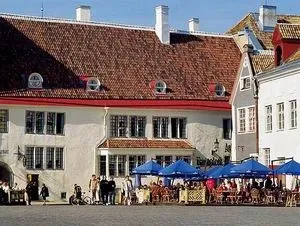 Compared to the Czech Republic, the standard of living and business activity here is much lower. However, you can also settle in a historic castle in Slovakia – about 160 of them are up for sale here. Additionally, those wanting to buy a house in this country are attracted by cheap (compared to neighboring Austria) ski resorts and health spas.
Recently, about 160 castles, kremlins, and other objects of historical and architectural value were put up for sale in Slovakia. Scarce allocations from the state treasury and municipal budgets were insufficient for their reconstruction, so the state decided to sell them off. Thus, the list of national treasures put up for sale includes the castle in Halic with 22 hectares of land for 35 million Slovak korunas (about $700,000). Or, for example, the castle in Nitrianska Blatnica with 5.6 hectares of land for $400,000, the Gothic Viglas castle built in the 14th century, the Slovak kremlins of Bzovec, Slanec, Somoska... However, there are few "hunters" for an old Slovak estate – considering that half of its cost (or even more) needs to be invested in reconstruction.
For those interested in real estate in Slovakia, housing in the historic European city of Bratislava is in traditional demand. Its center is a pedestrian zone, always full of tourists. You can settle near historical places where Mozart, Strauss, and Liszt once lived, and now small apartment buildings are being built near Bratislava Castle (the local kremlin).
Administratively, the capital is divided into five districts, which are designated by numbers: Bratislava 1, Bratislava 2, etc. Housing prices in Bratislava have been rising over the last 5-6 years – the peak of growth was in 1999, but they have now somewhat stabilized. However, they are still the highest here – from $450 to $1,000 per square meter. The price of an apartment depends on location: the most popular are Bratislava 2 and Bratislava 4 – green residential areas not far from the center.
The most popular items are one- and two-room apartments. Per square meter, they are about 10% more expensive than three- and four-room apartments. Housing with large balconies is more expensive. On the secondary market, you can find more affordable living space. Among private ads in the local newspaper, there are offers to sell a one-room apartment for as little as $12,000, a two-room for $17,000-20,000, and a three-room for $25,000.
In Bratislava, you can also buy a house. A mansion of 200 sq. m with 8 ares of land averages $75,000. A smaller cottage on 6 ares with a garage and garden costs $50,000. There are also more substantial options. For example, a three-story villa with ten rooms in the city center costs over $350,000. Local realtors offer newcomers both ready-made houses and assistance in building their own mansion.
Land in Slovakia is generally not cheap: buying a plot within 20 kilometers of the capital costs from $2,800 to $4,300 per are. However, construction itself is relatively inexpensive. Ultimately, a solid house with a plot of 5-6 ares will cost about $100,000. Compared to buying a ready-made house, construction saves up to 20%. If you buy housing through a real estate agency, its fee will be 5-8% of the purchase price.
As in any other country, in Slovakia a one-time real estate tax is paid upon sale. The rate is 5% of the purchase price, and it is paid by the seller. Homeowners themselves are required to pay an annual property tax. The annual tax on land ownership is 0.75% of the tax base. If the plot is taken for construction, the annual tax depends on its location and is a maximum of 9 Slovak korunas per square meter; for a garden plot, it is 0.2 korunas per square meter.
The further from the center, the lower the prices. In Central and Eastern Slovakia, a one-room apartment costs between $3,000 and $5,000, a two-room apartment about $6,000. The starting price for a house also begins at just $6,000. Local legislation does not allow foreign individuals to purchase Slovak real estate as property. As an individual, a foreigner has the right to rent an apartment or house. It can be said that Slovak apartments feature a variety of layouts: from the largest, with more than seven rooms, to the smallest, so-called "garsonkas".
The latter consist of one room (with built-in kitchen furniture in the corner), a tiny bathroom, and a hallway. Due to their cheapness (such housing costs $4,000-6,000), garsonkas are traditionally considered temporary shelters for young families. Renting such a studio apartment costs $120-130 per month. A furnished two-room home with appliances (vacuum cleaner and washing machine) can be rented for $300-350 per month. Decent three-room apartments in Bratislava are rented for about $400 monthly. Rental conditions are strict in the Western style: prepayment for three months in advance and a deposit in case of damage to the landlord's property.
As in the capital, the cost of renting apartments and houses throughout Slovakia varies widely and depends on many factors: location, floor, condition of finishes, furniture, presence of a loggia, its glazing (Slovaks, like us, like to glaze loggias), and similar things. Houses come in different types, namely: houses for permanent residence, dachas, and wooden structures. Depending on this, the rent for a house in the outskirts of Bratislava ranges from $450 to $1,500 per month.
Foreigners also cite the fact that the entire territory of Slovakia abounds with healing springs that cure many diseases as arguments in favor of buying a second home there. In addition, Slovakia has many well-equipped ski slopes. Perhaps the only thing missing here for a 'paradise life' is the sea. Although it is only 500 km to Croatia with its beaches on the Adriatic coast, or 5-6 hours by car on European roads. In summer, many people go there for the weekend, and as for the roads, it can be said without exaggeration that there are almost no traffic jams in Slovakia.
Local realtors say that a new law allowing foreign individuals to acquire Slovak real estate as property is likely to be adopted in the near future. If this happens, demand for real estate and, consequently, prices will increase further.