
The continental European championship was conceived by the Frenchman Henri Delaunay in 1954. He also drew up the tournament regulations, in which the 16 strongest national teams of Europe were to participate, and submitted his proposals to the European Union of Football Associations (UEFA), which had been established shortly before. After lengthy deliberation, the new body came to the conclusion that such a tournament, as proposed by Delaunay, was necessary.
The rules and calendar of the first European Nations' Cup, as the future European Championship was initially called, were approved in 1956. The competition among 16 teams was to take place in two stages: after playing in four knockout groups, the four winners were to meet in a final tournament. The right to become the first country to host the final fell to France - after all, it was a Frenchman who had come up with all this.
The first qualifying match in the history of the European Championships was played on 29 September 1958 in Moscow at the Lenin Stadium - the USSR national team beat Hungary 3:1. The author of the first goal in the history of European championships was Anatoli Ilyin. As a result, the USSR national team also became the first European champion, beating Yugoslavia 2:1 in the final.
True, politics interfered in the course of the first European Championship. Although Spanish footballers were the strongest on the continent at the time, Spain's ruler General Franco deprived his team of a chance to win by forbidding it to play playoff matches against the communists, that is, against the USSR team.
Overall, the first European Nations' Cup did not attract much interest, and participants were barely enough. But with each subsequent tournament its popularity grew. The second time, in 1964, 28 of the 32 UEFA members played in the Cup. That year politics almost interfered with football again, but this time General Franco allowed Spain to play at home against the Soviet Union. The two strongest European national teams met in the final, and Spain won 2:1.
After that, it became obvious that the tournament had gained popularity and needed changes. The UEFA Executive Committee decided that from 1968 onwards it would hold not cups but European Championships, in which the participants of the final tournament would be determined by a qualifying round. For the third time the semi-finalists met in Italy. The USSR team again earned the right to appear in the decisive matches, but the fate of our team in the semi-final game against the Italians, which ended 0:0 after regular and extra time, was decided by a draw. The hosts, having reached the final thanks to a 10-franc coin, beat the Yugoslavs in two matches and became champions.
After this, urgent changes were made to the championship regulations, according to which in final games, in the event of a draw after regular and extra time, a penalty shootout was ordered. In addition, substitutions of outfield players were finally allowed. In 1972, the USSR team managed to reach the final tournament for the fourth consecutive time, where it stumbled against the team from West Germany, which inflicted a 3:0 defeat on our footballers.
In 1976, however, the Soviet team did not make it to the decisive matches, losing in the quarter-finals to the Czechoslovaks, who became champions that year. Before the 1980 championship, its regulations underwent further changes. Now the final tournament featured group games, the winners of which advanced to the final. One place in the final tournament was reserved for the hosts of the championship. And again the USSR team did not make it among the strongest - the champions were the footballers from West Germany.
In 1984, at the European Championship in France, the hosts prevailed, with Michel Platini shining in their lineup. In 1988, in West Germany, the USSR team achieved the last major success in its history, reaching the final and losing there to the Netherlands team. It is noteworthy that if in 1964 Konstantin Beskov was dismissed from the post of head coach for losing to the Spaniards and winning silver medals with the wording "significant mistakes in the course of preparation for the championship", then in 1988 Valeriy Lobanovskyi was honored as a winner for the same result.
In 1992, the Danes became European champions in Sweden, having been invited to participate in the tournament after the traditionally strong team of disintegrated Yugoslavia dropped out of it. The Swedish championship also featured a national team that did not represent any country. Its footballers took to the field with the letters CIS on their chests - the right for this team to participate in the European Championship had been earned by the USSR team...
Before the European Championship in England in 1996, the UEFA Executive Committee once again changed the regulations. The number of participants in the final tournament was increased to 16 (a consequence of the collapse of the USSR, Yugoslavia and Czechoslovakia and the emergence of many new states on the European map). The knockout matches were to start with the quarter-finals, which the two best national teams from each group reached. That year the German national team became champion, beating the Czech national team in the final.
Since then, the rules for holding the European Championship have not changed, and the championship held in 2000 in Belgium and the Netherlands was won by the French national team.
The upcoming Euro 2004 will be held in Portugal, which received this right completely unexpectedly - although the Portuguese had put forward their candidacy for a vote, no one predicted success for them. The Spanish delegation was the most outraged by this UEFA decision, announced in October 1999 in the German city of Aachen.
Initially, bids to host the tournament were submitted by Austria and Hungary, Portugal and Spain. The joint Austro-Hungarian bid had practically no chance, since after holding the European championship in Belgium and the Netherlands, UEFA decided not to deal with tournaments in two countries at once. Therefore, Spain was considered the favourite - a considerably more prosperous country compared to Portugal, one of the poorest members of the European Union. But UEFA officials for some reason decided otherwise, stating that on the homeland of Eusébio there were better conditions for holding the tournament and better infrastructure.
What guided the executive committee of the football union in this is unclear, because soon Portugal nearly disgraced itself. Obligations to build seven new stadiums and reconstruct three old ones, as well as to develop infrastructure, which were undertaken by the country's sports societies, were under threat of failure, since in the state treasury, on which Portuguese football enthusiasts had counted, only a quarter of the required sum of 700 million euros was found. Two years ago there was talk of either transferring part of the matches to Spain or moving the entire championship there altogether. And yet the Portuguese coped, even despite the fact that the construction cost exceeded the estimated budget and amounted to 800 million euros.
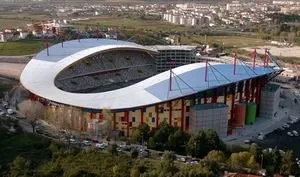
Thus, ten Portuguese stadiums - «Luz», «Alvalade», «Dragão», «Bessa», «Algarve», «Afonso Henriques», «Aveiro Municipal», «Coimbra», «Magalhães Pessoa», and «Braga Municipal» - are ready to receive players and fans.
By the way, in connection with the arrival of the latter, the Portuguese government decided to take additional security measures. Although citizens of Schengen Agreement countries can cross the Portuguese border without presenting a passport, for the period from June 12 to July 4, which is when the football championship takes place, passport control on the Portuguese border has been reinstated for all foreigners.
In general, about 20,000 Portuguese police officers, armed with water cannons, tear gas, and rubber bullets, will keep order during the European Football Championship. The country's airspace, including its borders, will be patrolled by AWACS reconnaissance aircraft. The security forces intend to focus their primary attention on cities where the most restless fans will be located, particularly the English.
Therefore, tourists planning to visit Portugal this summer should prepare for queues at passport control in airports. It should also be remembered that the import of strong alcoholic beverages (such as vodka) into the country is restricted to no more than one liter per person. However, smoking is allowed everywhere, including in stadiums.
But drinking alcoholic beverages in Portuguese stadiums is considered a crime and is punishable by a fine of 1.750 euros. Intrusion onto the football field is also a crime - violators face a fine of up to two thousand euros or even imprisonment. Incitement to violence, racism, and xenophobia is considered a serious offense - for this, in Portugal one can be penalized with a fine from 1.000 to 1.750 euros.
And finally, about something more pleasant. The UEFA Executive Committee announced that all teams participating in the upcoming European Championship will receive additional reward for each victory or draw. In addition, each national federation will receive 7.5 million Swiss francs for simply participating in the tournament. This is 56% more than at the 2000 European Championship in Belgium and Holland.
A victory in a group match will bring each team one million Swiss francs, and a draw - 500 thousand. Each quarterfinalist will receive 3 million Swiss francs from UEFA, a semifinalist - 4 million, the champion and the silver medalist - 10 and 6 million respectively. In total, the maximum profit that a single team can receive at the European Championship is 27.5 million Swiss francs. For comparison: the champions of Europe 2000 - the French - earned 14.4 million.
The Portuguese authorities also intend to derive considerable profit from the championship. According to their estimates, at least 1 billion 200 million euros of net income should flow into the country's budget. Moreover, it is expected that the lion's share of this amount (about 800 million euros) will consist of tourist spending. According to the calculations of the Euro-2004 organizing committee, the number of people wishing to watch the championship matches will exceed one and a half million fans from other countries.