
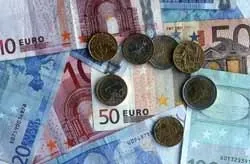
Of the ten states that joined the European Union in May 2004 (Hungary, Cyprus, Latvia, Lithuania, Malta, Poland, Slovakia, Slovenia, Czech Republic, Estonia), all stated their desire to adopt the euro, but they assessed their capabilities differently. Hungary believed it would be ready for the euro no earlier than around 2012, and the Czech Republic modestly aimed for 2010, although its economic indicators best met EU requirements a year ago. The others chose various dates in between, but Slovenia, Lithuania, and Estonia promised to prepare earlier than the rest.
Time flies quickly, and it is time to take stock. As is known, nothing good for the Baltic countries came out of these results. Of all the hasty candidates, only Slovenia managed to fit into the strict EU framework. In mid-May, the European Neutral Bank and the European Commission officially announced their agreement to accept it into the eurozone first and so far the only one among the new EU members. Lithuania was close to the cherished goal, but it lacked just a little. The Estonians hastened to announce a change in their euro currency schedule themselves, doing so back in late April. The insurmountable threshold for them turned out to be inflation.
Treacherous Maastricht
To qualify for the euro, a country must meet strict criteria set out in the Maastricht Treaty. The main ones are as follows:
* the inflation rate must not exceed by more than 1.5 percentage points the average of the three EU states with the lowest inflation;
* the budget deficit is allowed only within 3% of GDP;
* public debt must not exceed 60% of GDP and must be steadily decreasing.
This, of course, is not all, but additional requirements regarding national currency stability and long-term interest rates are not as daunting against the backdrop of strict inflation norms.
The economic condition of those queuing for the euro is scrutinized in the most meticulous manner, as far as possible in a post-socialist society with an inherited tendency, let us say, to embellish one's own achievements. Despite all the desire to look better, in reality it is not always possible to look better. The Estonians, as usual, acted cunningly. Without waiting for a humiliating refusal from Brussels, they quickly announced themselves a 'postponement of the euro introduction date.' The Lithuanians nevertheless preferred to go the whole way and wait for an official answer. They received it on May 16. The answer, as expected, was negative. The Lithuanians can be understood: they did not fit into the strict framework by hundredths of a percent, so they had a chance to slip through. They did not slip through. Perhaps they did not slip through because the criteria were not always limited to pure economics.
Political component
The Lithuanian case is indeed ambiguous. Having more or less met the Maastricht requirements on all parameters, Lithuania failed only one - the same notorious inflation rate. Moreover, the extent of the 'overshoot' depends on how it is calculated. The fact is that a rather tricky mechanism is used for calculation, the details of which would be too complicated to delve into now, but even some of the presented indicators - regardless of how they are obtained - look quite clear. So, according to some data, the Lithuanian inflation rate for the reporting period is 2.72% (with a euro criterion of 2.66%), according to others it is even steeper - 2.63 (with a threshold of 2.6, respectively). Probably, Brussels, had it wanted, could have found a way to 'correctly' calculate by rounding the hundredths to the desired result. That this was not done shows not so much the strictness of European financial analysts as the caution of the EU in the epochal task of introducing the euro to the masses.
Loyalty towards Slovenia in this context does not seem at all special - not only because all criteria seem to be met there. The small country with a population of two million and rapid growth rates (projected 4.3% in the current year) represents an ideal testing ground for the experiment. It is most convenient to monitor the consequences of further expansion of the by no means problem-free eurozone there. And the strictness towards Lithuania is a good lesson for those frightening giants that, already during the EU enlargement process, threatened to disrupt the fragile European economic and political balance of united Europe. First and foremost, Poland is implied. So that the Poles and other candidates have no illusions about possible leniency, the Lithuanian example is very appropriate.
To avoid unpleasant refusals, no matter what reasons - real economic or abstract political - they were explained by, the Estonians quickly began to act on the principle of 'I don't want it myself.' On April 27, the country's government, already knowing that the criteria were 'not being met,' publicly announced its decision to postpone the date of the country's entry into the eurozone from January 1, 2007 to a later date. So far, early 2008 is mentioned.
Giving themselves credit, Estonians explained the high inflation in the country by excessively rapid economic growth, adding, however, a reference to the unforeseen high cost of oil. These are the main arguments given to justify why a couple of years ago, when joining the European Union, Estonia met all the required economic parameters, including inflation, but now does not. They promise to fix the situation within the first half of 2007, when, according to forecasts by the Bank of Estonia, inflation will drop to 3% (that is, according to forecasts, the inflation threshold at that time, more precisely 3.1%). After that, from January 1, 2008, they can safely introduce the euro and... increase inflation, which, according to the same forecasts, will reach 3.7% by mid-2008. There are also explanations for this. To reduce inflation, it was decided to postpone by one year the introduction of planned excise taxes on cigarettes and alcohol and to cut some budget expenditures. And then, having passed the necessary barrier, nothing will prevent them from 'letting loose' to the fullest - including with the same excise taxes. Such is the plan prepared in Tallinn. In Brussels, by the way, they treated it with full understanding - not regarding the subsequent rise in inflation, but in connection with the postponement of excise taxes.
Lithuania also expects to soon catch up with the euro train that had left, even faster than the Estonians, although, according to forecasts, inflation in the country will reach 3.3% in 2007, again higher than the permissible 3.1% at that time. Who knows, perhaps the Lithuanians will also be 'hindered' by growth rates: last year they amounted to 7.5% of GDP - the third 'fastest' indicator among all European Union members.
Against such an exciting backdrop, the chances of another representative of the Baltic triad - Latvia - look much dimmer. The Latvians, as already mentioned, immediately showed caution and set 2008 as their goal. But according to March estimates from the rating agency Standard and Poor's, even that deadline seems unrealistic. 'With inflation at 6.8% in December last year and other economic inconsistencies, Latvia will be 'ripe' for the euro no earlier than 2010,' believes Standard and Poor's analyst Remi Salters. The postponement of excise taxes, driven by the desire to contain price growth 'until the deadline,' could have the opposite effect - the government still cannot postpone excise taxes for too long, and the result of their introduction is easy to predict. Already now, inflation in Latvia is the highest in the European Union, so Riga has little room for maneuver.
By then, however, the Latvians will probably finally figure out how to call the common European currency in Latvian: 'eiro' or 'eiro'? A year ago, a real philological battle broke out in the country, involving Brussels - the Lithuanian Minister of Education and Science of Latvia, Ina Druviete, declared that the diphthong 'ei' in the traditional accepted spelling of euro is unacceptable for the Latvian language. At the same time, EU requirements imply a single name for the currency in all countries where it is in circulation. Apparently, amid the spelling disputes, the fight against inflation lost its significance.
Who needs this?
What are the new EU states fighting for and what real benefits does the euro bring? An unambiguous answer is unlikely to be given now. The UK, Sweden, Denmark live without the European currency and nothing, they are not dying. By abandoning national currencies, governments lose an important tool for stimulating either exports or domestic consumption through devaluation and revaluation. The currency mechanism has simply been transferred to Brussels and the European Central Bank. On the other hand, the euro is a universal world currency, a competitor to the shaken US dollar. And it is still a question whether the dollar's position weakened without the euro or not? Therefore, the existence of such money is theoretically intended to stabilize the economy of the entire region and, more importantly, to unify it.
The single currency greatly simplifies the life of an investor, who is spared the risk of losing on unexpected exchange rate fluctuations. Examples? Please. In 2001, the largest Finnish publishing corporation Sanoma-WSOY acquired the Dutch magazine concern VNU. As Sanoma-WSOY's CEO Hannu Syrjänen said then, 'Without membership in the European Monetary Union, acquisitions like the one we just made could not have taken place at all, because the price at that time was quite high - over €1.2 billion. And if you add to that the risk associated with exchange rates, it would have been too much for us to get involved. Therefore, it is so important to avoid currency risk whenever possible in such large-scale purchases.'
To this, one can add the ease of comparing prices, which is necessary to create conditions for fair competition, the reduction of various costs in money transfers, and other technical details. These can indeed help the investor and the trader. But not everyone. The famous owner of a chain of luxury hotels located throughout Europe (in and outside the eurozone), Rocco Forte, recently told the author of the article that, in his view, the single currency has no benefit at all, and the advantages it gives him personally as an investor and big businessman are insignificant. On the contrary, the euro has exacerbated, above all, German economic problems.
Two mutually exclusive approaches are mentioned here for illustration. Over the past seven-plus years of the single European currency's existence (introduced as a unit of account in 1999, with banknotes entering circulation replacing the national currencies of EMS countries on January 1, 2002), much has been said about it—both good and bad. Therefore, there are plenty of examples both for and against. But if we continue the emerging movement along integration lines, there is no escaping the euro. Proud Europeans cannot focus on the US dollar if they intend to create a competitive economic space under conditions of total globalization. So they have to adjust their economy to at least minimally acceptable criteria.
As can be seen, not everyone succeeds, and not immediately. For the average person, unburdened by investor problems on the scale of global business, the single currency is most often associated with the disappearance of currency exchange offices and convenient price comparisons, when it immediately becomes clear that, for example, the cost of household electricity in 'cheap' Estonia is higher than in 'expensive' Finland. Or some other unexpected little things might surface. Unfortunately, the process of 'euroization' is not limited to these. The game with the European currency is high-stakes.