
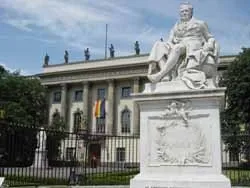
Thus, as of today, there are nine elite universities in Germany. In addition to this year's 'prize winners', the title was awarded last year to the Ludwig Maximilian University of Munich and the technical universities in Munich and Karlsruhe. To earn the right to bear the elite title, German universities had to go through several rounds. To participate in the competition, they had to submit their projects for review by independent international experts. The final choice among the candidates who received positive feedback from members of the international expert group was to be made by an evaluation committee consisting of members of the German Research Foundation and the Science Council.
The competitive spirit of German universities throughout the lengthy selection process was fueled by the prospect of a jackpot of more than €100 million. This is the total amount of subsidies that will go to the development of scientific research at the winning universities from the budgets of the states in which they are located and from the federal treasury.
The new elite did not hide in assessing the competition results that both the high title and additional financial resources would allow the selected institutions to reach a qualitatively new level. But what causes euphoria among the winners makes the defeated rivals look pessimistically to the future. For universities that now, as the rector of the University of Freiburg ironically noted, are to play in the 'top league', winning the prestigious competition undoubtedly opens new horizons. However, it is unclear how the uneven funding of German universities will overall affect the 'balance of power' in the German education system. Representatives of the Education and Science Workers' Union (GEW) fear that the funding program for elite universities may exacerbate structural problems in the education system. All universities currently among the elite are located in the old states. This, according to GEW presidium member Andreas Keller, could further widen the gap in educational development and living standards across regions. The rector of the University of Leipzig, Franz Häuser, is confident that a decisive factor in the fact that among all universities located in the new states, only Humboldt University of Berlin made it to the selection round was a time factor: western universities had a head start of at least 40 years. Häuser also has no doubt that the first negative consequences of the uneven distribution of funds will soon be felt. The professor believes that elite universities will allocate a significant portion of subsidies to attract the best personnel, which will inevitably affect the quality of education at other universities.
The country's leadership, for its part, is full of optimism and places great hopes on the new elite. Financial support for the selected universities should not only promote the development of science in the country but also enhance Germany's image abroad, making German universities more attractive to foreign students.
German Minister of Education and Research Annette Schavan intends to ensure that competitions for the title of elite university continue in the future and to secure the signing of a corresponding agreement between the federation and the states.
Yelena Gromova.
Russkaya Germaniya