
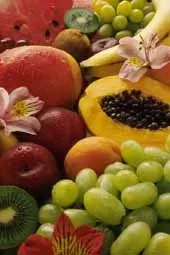
TROPICAL FRUITS: HOW AND WITH WHAT THEY ARE EATEN
MANGO
It grows in Southeast Asia, Africa, Madagascar, Brazil, Mexico, Florida and Hawaii. One of the most popular tropical fruits, its taste is something between a pineapple and an apricot. A ripe fruit is soft on all sides, has a yellow color and a sweet smell. The fruit is peeled with a sharp knife, cut, the pit is discarded. The flesh can be eaten with sweet rice, added to fruit salads, meat and fish dishes. In Thailand, they also eat green mango fresh or pickled.
LYCHEE
About 20 varieties of lychee are grown in Thailand. It is a heart-shaped fruit that grows in clusters on evergreen trees. Each heart is the size of a plum. Under the bright red skin hides a white translucent flesh. This sweet and very juicy fruit also perfectly suits recipes for festive salads and desserts. Its skin is brittle and rough, it should be removed. Inside there is a large shiny pit with a pleasant smell, giving the fruit a unique aroma. Canned compotes are prepared without pits, which somewhat impoverishes their taste.
POMELO
Pomelo is a symbol of prosperity and well-being in Malaysia. A large fruit from the citrus family. It tastes juicy, sweet, sometimes a little sour, the pink or yellowish flesh resembles an orange. To avoid splashing juice on yourself or your neighbor, use a sharp knife to peel the fruit along with the inner white layer. Now it will not be difficult to separate it into segments. Let's also try to remove the skin from each segment. After this work, the segments can be taken from the plate by hand.
DATES
Palm trees are especially revered in Tunisia, the whole life of Tunisians revolves around them. One date palm yields up to 150 kg of edible dates per year, of which about a hundred varieties are known in Tunisia. The best date variety is 'Deglet Nour', or 'Light Fingers' with a translucent pit inside, and the sweetest dates are born on 'female' palms. Dates are tasty fresh and dried. Fresh dates are added to fruit salads, brioches, homemade cookies, pies and cakes. A delicious refreshing drink 'Legmi' is made from palm milk. Palms give it only once, when they die, and there is a risk of poisoning from an over-stood, 'dead' drink.
PINEAPPLE
A large tropical fruit with a thick skin. Peel it with a sharp knife, cut out the hard core and eat the sweet, juicy and slightly tart flesh with a dessert or teaspoon. If the pineapple is cut into slices with the skin, you should use a fork and knife. For piquancy, you can add a little salt. The sweetest part is bright yellow and is near the center. A new variety of pineapple was recently developed in Brazil: it is slightly smaller than usual, it does not need to be peeled, but it is easily separated into segments like a tangerine. For a ripe pineapple, a knife is not needed at all - the core separates from the skin by itself.
FIGS
Figs are an emblem of Mediterranean countries, where they have been grown for millennia. The fruits of the fig tree are mentioned in the Bible. There are white, green and black figs. Ripe fruits become so tender that they cannot bear waiting - they need to be eaten as soon as possible. To do this, cut off the stem, peel with a knife or scald with boiling water and scoop out the pinkish flesh with tiny seeds with a spoon. Gourmets like to eat figs with Parma ham or cheese. They make jam, sorbets and pies from them, add them to dishes of chicken, duck, turkey and pork. In dried form, figs are well known to us as dried fig.
FEIJOA
Feijoa originates from Latin America, but also grows in the North Caucasus. Small, walnut-sized, green fruits with shiny skin. The feijoa tree is valued for its decorative qualities, and not only the fruits but also the fleshy and sweet flower petals are eaten. The fruits have healing properties due to their high content of vitamins and iron. They are ground with sugar and stored all winter.
The taste of feijoa is special - a blend of strawberry and pineapple. Feijoa makes excellent jam, jelly, mousse, compote, fruit salads. Fresh, you need to cut the berry crosswise and scoop out the contents with a teaspoon. To prevent the flesh from darkening, add lemon juice.
PAPAYA
Papaya originates from South America. A large fruit with yellow-green skin, resembling a melon in shape and size, and growing on trees. Only the sweet orange or pink flesh, peeled from the skin, is edible. Cut the fruit lengthwise and remove the seeds. The juicy flesh around the cavity with black seeds is usually eaten with a piece of lemon or lime, as juice, or in fruit salad. It is also baked and made into sauces, jams or juice. Papaya is also similar to melon in that in restaurants it is served with Parma ham.
JACKFRUIT
The largest fruit in the world (up to 35 kg), growing on a huge tree, a relative of the breadfruit. Very popular in Brazil and Suriname. It is also grown in Central and East Africa. The fruit has a thick rough skin, inside are segments of tender sweet yellow flesh reminiscent of banana, with an unusual smell. Liqueur is made from ripe fruits, unripe fruits are eaten dried. The seeds are edible if boiled or roasted like chestnuts.
MANGOSTEEN
Mangosteen (mangostan) is widespread in Southeast Asia, Africa and Latin America. A tasty and delicate fruit the size of a large tangerine. It has a thick red-violet skin and a green stem. It should be opened by cutting in a circle with a knife. The white flesh, melting in the mouth, resembles a peeled orange. It is very juicy and sweet, with the aroma of strawberry and apple.
BANANA
The homeland of mini bananas is South America and the Canary Islands. Many varieties of bananas are grown in Thailand. They say that the bananas we have been accustomed to since childhood are actually fodder varieties. Mini bananas are an order of magnitude more tender, tastier, and more aromatic. Peeled bananas are eaten from a plate with a dessert spoon or dessert fork. Bananas are delicious in any form - fresh, fried, baked in batter, in cocktails, salads, and even dried.
RAMBUTAN
The homeland of rambutan is Southeast Asia. It is no larger than a plum. The name of the fruit comes from the Malay word 'rambut' - hair. Because of the spines, it is called 'hairy lychee'. But inside hides a sweet white translucent flesh. The red spiny skin is easily removed if you make a circular cut in the middle. Fruits are placed half-peeled on a dish to make them easier to pick up by hand. Attention – try not to chew the pit.
DURIAN
Durian grows in the tropical jungles of Indonesia, Malaysia, Thailand. A large tropical fruit with an exquisite taste and an unpleasant specific smell - so strong that it is forbidden to bring it into a hotel and transport it on an airplane. Served as pieces of durian in coconut milk, with rice, or as a filling for pies; it is added for flavor to ice cream and mousses. This fruit is popular canned or candied. Thai breeders have triumphed over the stench and obtained a new variety of durian, 'pleasant in every respect'. True, locals still prefer the smelly one.
CARAMBOLA
Carambola originates from Southeast Asia, and also grows in the tropics of Brazil. A small yellow fruit that, when cut, looks like a star. It is acceptable to eat it with the skin. The flesh of this fruit, although juicy, refreshing, with a slight sourness and aroma of jasmine, is rather mediocre in taste, so it is mainly used for decorating dishes. Cut into crosswise slices, the fruit is used to decorate fruit salads, and the juice is used for cocktails, jams, and sauces. Carambola juice quenches thirst well and relieves hangovers.
GUAVA
Guava is grown in all countries of Southeast Asia and Central America. The fruit is greenish-yellow, resembling an elongated apple. A hard white inedible pit is surrounded by white or pinkish aromatic flesh. As it ripens, the guava becomes softer and yellower, but in Thailand, for example, it is customary to eat hard, unripe fruits, dipping pieces of the fruit in a mixture of salt and sugar. Like an apple, guava is suitable for almost everything - for pie filling, compote, jam, jelly, sauce, pudding; it is used to make butter and spices. For digestion, it is beneficial to eat guava right with the skin.
• And now let's return from the exotic to the essential. For those in the know: I will buy calibrated Diamond sunflower seed and other seeds.