
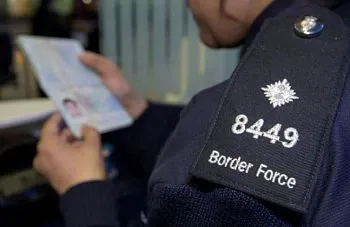
The British government finds it difficult to reduce the number of immigrants arriving in the country
Net migration to the United Kingdom, that is, the difference between the number of people entering the country and leaving it over 12 months, amounted to 282,000 people. Despite the fact that this is 33,000 more than a year earlier, the Office for National Statistics says the figures are "broadly stable."
The government aims to reduce net migration to tens of thousands per year. Last year, a record number of EU citizens left Britain – about 139,000 people. The total number of residents of the country, including Britons themselves, leaving abroad has been gradually increasing since 2015; now about 350,000 people leave the country per year. These are the first official migration data from the Office for National Statistics for a full calendar year after the referendum on Britain's exit from the EU.
Data from the Office for National Statistics report:
• The number of EU citizens coming to Britain to look for work fell by a third – from 55,000 in 2016 to 37,000 in 2017.
• Net migration from Eastern European countries that joined the EU in 2004 (Poland, Lithuania, Czech Republic, Hungary, Slovakia, Slovenia, Estonia and Latvia) fell from 42,000 in the 12 months before the 2016 referendum to 6,000 in 2017.
• Net migration from the 14 "old" EU members (Germany, France, Italy, etc.) after the referendum almost halved – from 84,000 in the 12 months before the referendum to 46,000 in 2017.
• Another 40,000 people moved to Britain from Bulgaria and Romania in 2017. This is the lowest combined figure for the two countries since 2014.
As BBC home affairs correspondent Danny Shaw notes, migration data for EU citizens depends on how many of them live in Britain. There are currently about three and a half million of them here, so it could be expected that the number leaving would be higher than in the 1970s-1990s. However, in 2017 this number rose sharply, and apparently this is a consequence of the result of the Brexit referendum.
As for migrants coming from outside the EU, their number in 2017 was 311,000. This figure returned to the level of 2011.
All this suggests that even if after Brexit the government gains more opportunities to control its own borders, it will be difficult to reduce immigration from non-EU countries.
Opinions: for and against
Recall that migration issues in Britain are handled by many non-governmental organizations. Some of them support migrants, others advocate for reducing migration.
The head of Migration Watch UK, an organization advocating for reducing migration, Lord Green called the published figures disappointing and added: "It is time for the government to seriously tackle reducing migration instead of continuing to make concessions to any demands of the immigration lobby."
According to Madeleine Sumption, director of the Migration Observatory at the University of Oxford, the migration figures indicate that Britain remains an attractive country, but for EU migrants this attractiveness has significantly weakened over the past couple of years.
Diane Abbott, Shadow Home Secretary of the Labour Party, said that for almost anyone except Prime Minister Theresa May, it is obvious that the authorities should abandon target figures for net migration.
In response, a spokesperson for the Prime Minister said: "We remain committed to reducing net migration to sustainable levels, which are tens of thousands."