
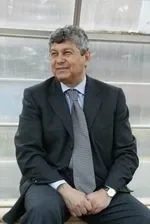
Lucescu proved to be the most successful coach in the entire history of the miners' club. He won the Ukrainian championship and the Ukrainian Cup, the country's Super Cup, and also performed quite successfully in European competitions. Last season the team played in the Champions League, defeated Belgian Club Brugge, Scottish Celtic and Spanish Barcelona, and then in the UEFA Cup left German Schalke empty-handed. This season they failed to reach the Champions League because the opponent on the way to the group stage of that tournament proved too strong - Inter, one of the favorites of the current Italian championship. But the Donetsk side did not lose heart and in two UEFA Cup matches gave Hungarian Debrecen no chance at all. Now Shakhtar and another Ukrainian club - Dnipro from Dnipropetrovsk - will represent our country in the UEFA Cup group stage.
On the eve of Lucescu's arrival in Donetsk, many names were mentioned as possible head coaches of Shakhtar. Club president Rinat Akhmetov openly stated that he was going to invite one of the famous foreign managers. And so the media periodically brought up the names of Serb Slavoljub Muslin, Italians Marcello Lippi and Claudio Ranieri, German Christoph Daum, Turk Fatih Terim and Argentinian Hector Cuper. Lucescu was also talked about, but the Romanian coach had obligations to Turkish club Besiktas, so it was believed that Shakhtar's chances of getting Mircea were not very high. But Lucescu himself, who had been actively courted by Donetsk representatives back in 2003, was not at all against taking charge of Shakhtar. And so, during the course of one day, the Romanian specialist managed to terminate his contract with Besiktas and sign a new one - with Shakhtar.
"I had offers from the South Korea national team, Panathinaikos, Portsmouth and Rapid. If I had left in June, the world public would have found out about it and there would have been more offers. But Rinat Akhmetov beat everyone to it, and the contract was signed today," said the newly appointed coach during a press conference at which he was presented to the Donetsk public.
Much can be said about Lucescu. He played football quite well, playing more than 300 matches for Dinamo Bucharest and scoring 78 goals. He became champion of Romania six times and twice won the Romanian Cup. He defended the colors of his country's national team, for which he played 74 matches and scored 9 goals. In 1969 he was named the best footballer in Romania. In short, he left a good impression.
But even as a coach, Lucescu showed himself in the best light. He was even entrusted with the Romanian national team, which the young coach confidently led to the final tournament of the European Championship. At that time, when only eight teams participated in the final tournament, not 16 as now, that was a very difficult task. After leaving the national team, in 1985 Mircea took charge of his native Dinamo Bucharest, with which he worked for five seasons and made it champion of Romania, overcoming the hegemony of another capital club - Steaua. Then came the Italian stage of his career - Pisa, Brescia and Reggina. The seven years spent on the Apennine Peninsula gave Lucescu very rich experience, and therefore his return to Bucharest (but not to Dinamo, but to Rapid) turned out to be triumphant.
In 1999 Lucescu again became champion of Romania, after which he received an invitation from one of the best clubs in the history of world football - Inter. But things did not go well for the current Shakhtar coach at that team, where coaches rarely stay longer than a couple of months. And via Rapid Bucharest, Lucescu found himself in Istanbul. In 2000 Galatasaray under the Romanian won the UEFA Super Cup, and in 2002 became the champion of Turkey. In 2003 Lucescu led another Istanbul club - Besiktas - to the gold medals, from which, as you know, he moved to Donetsk.
And as for the achievements of the Romanian specialist in our country, they were mentioned above - victories in the championship, the Cup and the Super Cup of Ukraine, and a successful performance on the international stage. In short, Shakhtar made the right choice, and Lucescu, who turned 60 (he celebrated the round milestone at the end of July this year), is a very serious figure in European football.
Interestingly, Ukraine is not at all a foreign country for the Lucescu family. The coach's mother-in-law lived on the current territory of Odessa Oblast. At the beginning of the last century these lands were called Bessarabia and belonged to Romania. After the Second World War, the family of Nelly, the wife of the Shakhtar coach, was deported to Romania. At the same time, Lucescu's wife has nostalgia for Ukraine because of her mother's and grandmother's stories: "It is surprising that we returned to her historical homeland," Lucescu says. "Nelly was brought up on the works of Chekhov, Turgenev, Tolstoy, and Shevchenko. She speaks Russian well because her mother is a Russian language teacher. By the way, on the day we played against Pyunik in Yerevan, my mother-in-law was in Krasnodon - she is interested in the history of the Young Guard organization."
At the press conference dedicated to the introduction of the new head coach of Shakhtar, Lucescu surprised many, since the Romanian's first word was "hello" uttered in Russian. The fact is that Mircea studied Russian in the 4th-7th grades at school, and his daughter is fluent in the language of Pushkin and Tolstoy. Consequently, one can confidently say that Lucescu's adaptation to Donetsk and Ukraine was quick, and no language barrier arose at all. Moreover, the Shakhtar coach is a very sociable person. He often gives interviews and frequently holds press conferences, trying to be as open as possible with journalists. Lucescu really differs from the previous foreigners who came to coach Shakhtar - Scala and Schuster.
"Every person has their own life philosophy, they look at certain things in their own way," explains the Romanian. "This also applies to people of the same profession. My vision of football differs somewhat from the point of view of Shakhtar's former coaches. Let me give an example from my own experience. I am probably the only coach in the world who, when leaving a club while under contract, did not demand compensation for material losses. I simply shake hands with the club president and leave. And at a new place I start a new life. My relationship with the club is based exclusively on mutual friendship. I do not pursue personal material gain and only claim what I deserve. I left Galatasaray two years before the contract expired. And that is three million lost money. But I don't regret it and sleep calmly at night. For me, there is something more important than money."
"The following story happened to me at Inter Milan. After losing in the Champions League to Manchester United, I called the then club president Moratti, who was in New York at that time, asking for my resignation. Moratti talked me out of it. I explained to him that there would still be a new coach in the team - Lippi, and everyone knows it, including the players. Moratti took time to think and the very next day changed the terms of my contract, according to which even in the event of my resignation the club would still pay me all the money I was due. Nothing of the sort ever happened to me - neither before nor after. As always, everything depends on the person, on his decency and upbringing."
Lucescu was born when World War II was coming to an end, and in childhood he experienced many difficulties. A family of seven huddled in one room; Mircea's father, after the war, spent a lot of time in hospitals and sanatoriums because of lung problems. Despite the difficulties, the parents, with the help of their eldest daughter, managed to put the children on their feet. One of Lucescu's brothers, without finishing school, went to work at a factory at the age of 12, and football helped the future Shakhtar coach survive and get an education.
At the age of 20 he debuted for the national team, and at 23 he became its captain. At the same time, without interrupting his football career, Mircea graduated from the academy with a degree in International Economic Relations and could well have gone to work at some Romanian embassy. But he remained faithful to football, and through his studies at the academy he met his future wife. He had his wedding at the age of 21.
Lucescu believes that Ukraine and Romania are very similar. And there is nothing in the new country that could cause misunderstanding for the Romanian coach. "Ukraine and Romania are countries close in spirit, mentality, traditions, and history, as, indeed, are all states of Eastern Europe. Now they are going through a difficult period: the negative aspects of the communist era are taking their toll. And now they have a difficult period of reincarnation. In an era of fierce competition, one must be able to rejoice in the successes of neighbors, in how they gradually straighten their backs, freeing themselves from the burden of the transition period. Only those who are stronger achieve success. Victory goes to the one who desires it more, who is more prepared for it. There are many positive aspects in Ukraine. Both here and in my homeland, they are trying to raise their country from its knees, achieve high results, and qualitatively new development. But our countries - the countries of Eastern Europe - still lag behind the leading 'G8'.
At first I had the impression that the Ukrainian championship was not strong enough in competitive terms. My opinion turned out to be wrong. As in many European countries, the Ukrainian championship is very tough. So in this sense one can confidently put a plus sign. No one here will give away points just like that. And the level is constantly rising. During my first visit to Ukraine, I said that this championship has a great future.
The investment of funds in Ukrainian football by club owners cannot but bring a corresponding return. New teams are entering real competition, strengthened by players who could well play, say, in Italy or Turkey. And, I emphasize, the process is moving at a very fast pace.
Personally, it doesn't matter to me what nationality the football players are. Only the best will take the field. On the other hand, of course, it is very important that the Ukrainian team also has Ukrainian players. On this matter I had a conversation with Rinat Akhmetov, and on this issue the president and I are like-minded. A team that plays in European competitions should be strengthened by stars of European and world level. This will raise interest in the championship, people will fill stadiums. At the same time, the club must nurture its own young talents. That is why Shakhtar's reserve team consists only of young players. For Ukrainian football, it is important that the best players play in the best European clubs, like Shevchenko at Milan. Thanks to this, the level of the national team rises."
Lucescu deserves respect if only for his victories in a wide variety of championships and with a wide variety of teams. But he has another important quality — the ability to find motivation for himself. Moreover, even at such a respectable age. “There are dreams — you want to make them come true. There is an understanding that it is I who must do certain things. Another fairly strong motivation: to be in agreement with oneself. There are not so many things that I have to do against my will. If I find myself in a place where I am uncomfortable and uneasy, I either change the place or make it cozy and comfortable. And one more thing. With age and experience, a certain line forms in life, below which one cannot stoop, at least out of self-respect — both in profession and in personal relationships. For example, in relation to people who believe in me, who have given their souls into my hands, and their well-being already depends on me. Even the club president, when he watches a game, worries as if he himself is on the field, and only when the match ends does he sigh with relief. I have a responsibility to people who have entrusted their fate to me. They rely on me. And I cannot let them down.”