
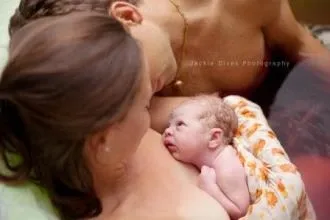
The disputes over home births have moved to the European Court
The plaintiffs, in particular, complained about a law that came into force in the Czech Republic in April 2012, according to which assistants providing midwifery care at home and working without the necessary permits for the specifics of such work can face very high fines. In the opinion of Czech mothers, this infringes on their right to home births under the supervision of a qualified specialist.
The European Court concluded that the mothers in the Czech Republic were not discriminated against in this case and stated that Article 8 of the European Convention on Human Rights, which provides for respect for private and family life, had not been violated. The Court also took into account the fact that there is no consensus at the European level on the practice of home births and that the law does not address the financial aspect of providing such emergency medical care.
As Radio Prague notes, in the Czech Republic, the cost of a midwife's home services must be paid by the mother herself, since health insurance companies do not cover this type of assistance.
“The case concerns women who, by law, have the right to give birth at home, but Czech legislation essentially does not allow them to use the help of midwife assistants, which complicates the choice for expectant mothers,” says David Zahumenský from the League of Human Rights, who defended the rights of one of the Czech mothers who appealed to the European Court. “I believe that this ruling of the European Court means that Strasbourg does not want to interfere in the internal politics of states and is a signal that the organization of the healthcare system is primarily a matter of domestic policy. It should also be noted that this ruling is not necessarily final. The plaintiffs can still appeal to the Grand Chamber of the European Court of Human Rights, and I think that given that the Belgian judge was against the decision, this case could still be considered by the Grand Chamber.”
Bohuslav Svoboda, a member of parliament from the Civic Democratic Party and an experienced obstetrician, is convinced that home births pose a huge risk to the child and a significant risk to the mother as well. “Since I have been present at more than 3,000 births, I know how serious and complicated the situation can be,” he says. “This miracle being born cannot say: I want everything to be as safe as possible. And I say it on their behalf precisely because I have helped thousands of babies come into the world and have witnessed so many complications. Therefore, I decided to fight for these children so that they have the best conditions for coming into the world in accordance with our current knowledge of physiology and postpartum condition.”
At the same time, Bohuslav Svoboda is not a complete opponent of home births or alternative methods, and intends, according to his words, to initiate a discussion in parliament within the health committee on the issue of home births.
“First of all, we want to define the conditions that need to be created for childbirth,” he notes. “Because the place where it takes place does not play such a key role; the most important thing is that in the event of complications, the child’s life can be saved. We also want to give full legal responsibility to midwife assistants who will be in charge of the birth.
I see the main solution in the state and maternity hospitals investing more in maternity facilities so that the environment resembles a home as much as possible, and I think that in many maternity hospitals today it already meets the needs of women. We obstetricians are ready to meet women's wishes and deliver births in water, on all fours, or standing up.”