
The spread of obesity is called an "epidemic" in the charter. The term is, of course, somewhat emotional: no virus or bacterium that carries a tendency to gain excess weight exists. But the rate of growth in the number of fat people is indeed reminiscent of an infectious disease. Currently, half of the adult population in Europe is overweight. What is especially unfortunate is that a fifth of all children are also overweight or obese. But excess weight is only half the problem, since approximately a third of those who carry unnecessary fat deposits receive a diagnosis of obesity from doctors. Over twenty years, the number of such "patients of their own weight" in Europe has almost tripled. And obesity is not just a spreading figure; it can involve serious health problems. For example, diabetes, in which Europe is one of the world leaders: currently there are 50 million patients on the continent, and by 2025 their number will reach 60 million.
It is not just about type 2 diabetes, the classic "disease of the fat." Excess weight increases the risk of diseases of the cardiovascular system and the musculoskeletal system. As a result, overweight people spend more on treatment. And this is not only a personal or social problem; it brings trouble to the economy as a whole. In Europe, 6% of all healthcare spending goes to combating obesity and its consequences. Overall, the Old World loses 1% of GDP due to its overweight population. For example, in Sweden alone, according to data provided by the European Regional Office of the World Health Organization, annual direct losses from obesity per capita amount to $451.
The fact that the amounts of economic losses were presented at the congress in Istanbul is a very correct policy. The right words about harm to health, unfortunately, do not make a sufficient impression on politicians. But when it comes to losing "real" money because of something, a fire immediately lights in the eyes of people in power, interest in the issue appears out of nowhere, and soon a readiness to solve the problem arises in the minds of officials. For example, at the end of October this year, prominent economist and advisor to the British government Nicholas Stern clearly demonstrated that inaction by states in the fight against global warming will cost 5% of GDP annually. After that, Prime Minister Tony Blair announced that he was ready to join forces with the entire world community and apply tough measures to combat the "high-carbon" economy. And now, when the ministers of health were shown the loss figures, the need for the charter and the fight against the "high-calorie" economy is beyond doubt.
Educating a thin nation
Despite the fact that obesity is considered an epidemic, this disease is primarily social. By and large, it nests not in our bodies but in our heads: most fat people cannot fit into their own pants not because of metabolic disorders, but because with their lifestyle it is simply impossible to do without fat deposits. We eat too much and not at all what the body needs, we move little, we sit for hours at a desk at work, and we rarely exercise. Hence the logical conclusion: it is necessary not only to treat the fat but also to change the lifestyle of modern society. People must want and have the opportunity to live in such a way as not to gain extra kilograms.
In general, this is one of the strangest paradoxes with which humanity never ceases to amaze scientists and thinkers. In the modern world, being slim, fit, athletic, even skinny, is fashionable. The Western ideal of beauty presupposes thin legs, a flat stomach, and a noticeable waist. Ribs protruding from under taut skin are considered not a sign of elementary dystrophy but evidence of "enhanced slenderness." A man who wishes to be called handsome must flaunt abdominal squares and sculpted shoulder muscles. With a developing beer belly or folds on the hips, you wouldn't even go out in the summer without blushing with shame for your figure. That is why an effective diet for weight loss has become so popular.
But despite the fact that thinness is in fashion, such fashionistas are literally few and far between. The majority of our contemporaries in developed countries of the world are old-fashioned, "models from old collections." Yes, perhaps in traditional societies, the average European, American, or Russian would be considered a successful person who has grown a belly because he has the opportunity to eat to his heart's content and not burden himself with hard work. Many of our contemporaries who cannot get their waists to meet model standards would be placed on a pedestal as beauty contest winners in Polynesian cultures. But in Western civilization, the lot of the full is to evoke laughter or sympathy. Few manage to conform to fashion trends.
It seems that European health ministries are ready to throw all their efforts into fighting this paradox of civilization and teaching people to live in a way that is fashionable. The task is, of course, worthy at least of Hercules, not to say Sisyphus. However, even in case of success, only the next generation will live in a society of general weight loss. After all, first of all, Europe is planning to teach children healthy eating. Marc Danzon, WHO Director for Europe, even during the preparation of the Istanbul congress of ministers, stated that with obesity and overweight, children are the most vulnerable group. So in the next four to five years, "noticeable progress must be achieved, particularly with regard to children and adolescents," and by 2015 the number of fat people should begin to decrease.
Propaganda of a healthy lifestyle, according to health officials, must accompany a child constantly - starting from kindergarten. Among the program's points, one can find both quite traditional proposals (for example, 'creating opportunities for daily physical exercise, adequate nutrition and physical education in schools') and relatively unusual ideas. For instance, a school bus is convenient and safe, but harmful to health, so children should be encouraged to walk to and from school.
To the credit of the charter's authors, it must be admitted that the document is focused not only on propaganda and agitation. The situation cannot be corrected by appeals and advice alone: you can talk as much as you want about the dangers of a sedentary lifestyle, but people are conservative and tend to overuse progress's lazy-encouraging achievements like public transport. So if you want a person to burn calories by pedaling, you need to make it convenient to pedal. That is why, for example, the charter requires that a network of bicycle paths with priority traffic be developed, that streets be lit (not everyone will decide to walk through dark alleys).
Don't get them hooked on fast food
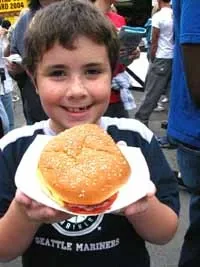
Another important issue concerning the upbringing of slim children is advertising and marketing of high-calorie products. It is now recognized that children are even less capable than adults of resisting the massive pressure of commercials and posters. As a result, from an early age, a person is accustomed to consuming not very healthy food - from fast food and soda, cursed by nutritionists of all countries, to ordinary chocolates and candies (though children have been drawn to sweets since time immemorial even without any advertising).
Here, European health ministries agreed that without the help of legislation, the invisible hand of the market, which overfeeds young citizens, cannot be fought. The charter mentions the need to change national legislations: advertising of high-calorie products and drinks should be restricted. First of all, try to reduce the impact of commercial propaganda on children. In addition, it is proposed to create an international marketing code that should regulate what food is permissible to 'push' on the younger generation.
Implementing this part of the program is perhaps most difficult, since here the interests of society clash with commerce. After all, to build bicycle paths, you only need money and a municipality decision. To introduce daily physical education lessons - money and a decision of the ministry of education. But if we want to restrict advertising, then we will have to be ready for a world war three. On one side will be the lobby of transnational confectioners, sandwich kings and corporations that carbonate syrup water, armed with billions of euros. On the other - society and its authorities, who do not want Europe to turn into a continent of fat people. And the only worthwhile - literally and figuratively - argument of the defenders of a 'thin world' is that very 6% of healthcare spending that goes to treat obesity and its consequences. Our lifestyle costs us too much.
Of course, different countries are trying to somehow protect children from unhealthy food. The most famous recent example is the Latvian bill prohibiting the sale of sweets, sugary soda and chips in schools. Estonia introduced free school meals, which allows sanitary inspectors to more clearly control the students' menu. However, different countries introduce different programs, and Europe hopes to introduce uniform and very strict standards for all states of the region. But there is one important question: what exactly is the Istanbul charter?
Something must be done. But what?
The charter is not a law, not an international treaty, not a convention. It does not impose any obligations on the countries that signed it, practically does not set specific dates and almost does not operate with precise figures. What, after all, is that 'noticeable progress' in the fight against excess weight of the population that should be achieved in four to five years? It is more a good wish than a legal norm. The essence of the charter, probably, is different. Let it sound pompous and banal, but the main thing here is unity and agreement. The agreement of European great powers and small states that obesity is becoming one of the main dangers threatening the Old World. And unity expressed in the readiness to adopt universal standard laws and regulations designed to stop the growth of European bellies. Marc Danzon called the charter a guideline that 'provides tools for effective action'.
What and how soon will European countries do to realize these good intentions? There are some things that can be done in a few months if there is political will. For example, a ban on the sale of high-calorie food in school canteens can be established by a single decree, the introduction of daily physical education in schools can be implemented within a year. But it is hard to believe that one day bicycle paths will be built in all cities.
There are also points in the charter that it is not at all clear what to do with. For example, it states that "only in some countries does the level of fruit and vegetable consumption meet recommended norms." And what now to do with that? The problem is clearly not a lack of money; Europe is a prosperous continent. There is also no shortage of pineapples and carrots. The benefits of watercress, apples, and radishes are even taught in school. Nor are there "cultural obstacles" to vegetable consumption (similar, for instance, to the traditions of China, where dairy products were completely excluded from people's diets for centuries). Nevertheless, people eat few greens and fruits, far less than needed. Perhaps this healthy food is more expensive than harmful calories, and people try to save money. Or perhaps cooking from raw vegetables takes more time than reheating a convenience food, and housewives try to reduce time spent at the stove. Or perhaps the notorious advertising is to blame: weaning people off "simple country" food. However, no one can say unequivocally what measures society, the state, the school, or medicine should take so that everyone suddenly switches to spinach and muesli.
Moreover, skeptics have expressed the opinion that it is currently not very clear whether the measures devised by experts and politicians to reduce the number of obese people are working. For instance, the Reuters news agency quotes nutrition specialist Meera Shekar (World Bank), who states that there is no rigorous evaluation of the effectiveness of such methods yet, and so far none of the projects in this area have proven effective. In particular, it is mentioned that increasing taxes on tobacco products led to visible results, whereas it is unknown whether, for example, attempts to manipulate prices to make vegetables and fruits more affordable for consumers will be of any use.