
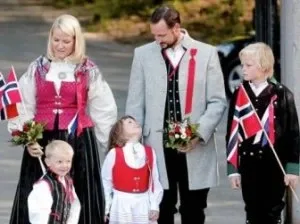
Norway is a world leader in spending on social programs
At the same time, midwifery care was decentralized. “Midwives visit their charges at home and monitor their condition,” says Professor Bjørn Bakke. “But the main task of specialists is to determine which risk group a particular pregnancy belongs to – ‘green’ or ‘red’.”
A woman from the prosperous ‘green’ group got the opportunity to give birth where she feels most protected. This is the positive effect of decentralization – the possibility of choice. You can give birth at home, or at a small maternity clinic, or at the city's central maternity hospital. If a woman is placed in the ‘red’ group for medical reasons, she should not count on giving birth at home or in a small hospital. Women in the risk group must give birth only in those clinics where a team of anesthesiologists is on duty around the clock, where conditions for blood transfusion are available. All this is noted in the pregnancy management card. By the way, this also gives the woman a feeling of security and care.
Since 2005, a three-level system of responsibility for childbirth has been in place in Norwegian healthcare: the first level is delivery rooms where women from the ‘green’ group can deliver. They just need to call a familiar midwife when contractions start and drive to the delivery room. The second level is maternity hospitals that receive about 4,500 patients per year, where in addition to a midwife, a gynecologist, a female urologist, anesthesiologists and pediatricians are on duty. And finally, the third level is the kvinneklinik, which receives an average of 1,500 births per year and also 24 hours a day, specialists are ready to provide assistance in any complex case. 90 percent of Norwegian women prefer to give birth in small clinics with a capacity of 500 patients per year. Moreover, these are public hospitals where you do not have to pay for childbirth care.
Comfort and calm, as well as highly qualified personnel, are certainly important for a woman in labor. But no less important is that no Norwegian large family is left face to face with economic difficulties. Norway is a world leader in spending on social programs. In particular, about one percent of the gross national product goes to support families with young children. In 2007, it amounted to 2.289 billion Norwegian kroner, that is, about 22 million kroner were allocated to help families. Norwegian women's paid parental leave is the highest in the world.
The current scheme was introduced in 1993, and since then the birth rate in the kingdom has been constantly growing (now 1.8 – higher than in most European countries). In Norway, you can take 10 months with 100 percent salary retention (on average, this is $25,000 per year) or 12 months, but then you will be paid 80 percent of your salary. That is, for the first six months of childcare, a Norwegian woman receives $12,500 (for comparison: a Swedish woman receives $10,000, a Danish woman receives $10,500). In Eastern Europe, according to Mercer Human Resource Consulting, the numbers are completely different: for example, in the Czech Republic and Russia, some of the lowest paid parental leave – $1,762 and $2,000 per year respectively.
Parental leave is paid from the state budget. But not only the mother, but also the father takes leave! In the first year after the birth of a child, the father is entitled to a 5-week paid leave (“to stimulate paternal feelings”), but if the father cannot use it, the leave is lost. After the first three months after birth, the father can completely legally take over at the cradle and receive his salary for it. After a woman returns to work, she is entitled to a 5-week annual leave, a 37-hour work week, and a government grant – if one of the parents decides to stay home with the child until the age of 2.
Inger Setov, vice president of one of Norway's oil and gas companies, has two children under the age of 10. Inger often meets with female colleagues from other countries. Only a few of them, occupying a similar position in business, have allowed themselves to have a child. “Our employers treat those who have children differently; it's a different level of psychological support,” says Inger. “Sometimes during a conference call, one of the employees' children will cry. The bosses are willing to wait until the mother figures out what's wrong with the child.”
It is also important that Norway has experienced steady economic growth since the early 90s. Yet Norwegian women are always dissatisfied with something. “The system will not be completely fair to women until parental leave is legally divided equally between father and mother. Only then can a woman become fully equal in the labor market, and maybe then we will decide to have more children,” assures Inger Setov.
The combination of women's civic initiative with the economic capabilities of the country probably created the fertile ground on which Norway and Australia broke into the top of the ranking. The top ten also included Iceland, New Zealand, the Netherlands, Belgium, Germany, Sweden, Denmark, Finland. But here's something to think about. Women from the countries at the bottom of the list have a 25 times higher risk of losing a child in the first year of life and a 500 (!) times higher risk of dying during childbirth. Russia in the ranking, alas, is slowly sliding – now in 38th place, just behind Romania...