
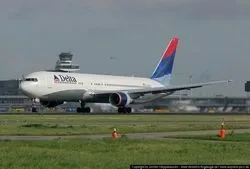
Four of the seven largest US airlines have been operating under bankruptcy protection since last week. According to Vremya Novostey, on September 14 the third- and fourth-largest US airlines, Delta Air Lines Inc. and Northwest Airlines, filed for it. They joined United Airlines and US Airways, which rank second and seventh among US airlines and had already gone through the same procedure earlier: US Airways declared bankruptcy in August 2002, and United Airlines in December of the same year. With each new bankruptcy, the likelihood grows that those US aviation giants that have so far managed to make ends meet will follow their less successful competitors.
Under US law, companies that declare bankruptcy receive a deferral of their obligations to creditors and their own employees. Thus, bankrupt airlines gain the opportunity to cut operating costs and, accordingly, reduce ticket prices. As a result, competition among market participants intensifies further, their aggregate revenues decline, and the number of bankruptcy candidates grows.
Rumors of the imminent bankruptcy of the two airlines appeared on the market several months ago. They intensified when Northwest acknowledged that it could not make debt payments. Northwest's shares fell by more than 50% early last week. Delta's share price also declined. The company has lost $10 billion since 2001 and warned investors that its financial performance would decline significantly in 2005. Delta has accumulated $14 billion in debt and, to offset it, has recently been trying to raise $5 billion from selling some of its assets.
Global financial troubles have plagued US civil aviation since September 11, 2001. The terrorist attacks that day in New York and Washington caused the first sharp drop in demand for air travel. In subsequent years, the Iraq war, the SARS epidemic in Asia, and rising energy costs only worsened the airlines' situation.
Experts expect that the aggregate loss of US carriers in 2005 will reach $10 billion. They fear that the next victim of this string of misfortunes could be the largest airline in America (and the rest of the world), American Airlines.
The most unpleasant thing for carriers that have not yet gone bankrupt is that the first of their colleagues 'protected' by bankruptcy proceedings, United Airlines and US Airways, have used the respite to cut social and pension payments to their employees and have re-entered the competition for the few American passengers of today with renewed vigor. Of course, the US air transport market remains the largest in the world. However, the total capacity of local airlines is too large for it in its current state. To sustain the market, airlines would need to reduce their supply of air travel by grounding some of their aircraft. But a coordinated action of this kind across the entire industry is expressly prohibited by antitrust law. And none of the largest airlines has dared to take this step backward unilaterally, leaving market positions in the face of competitors. Experts consider it quite possible that Delta Air Lines Inc. and Northwest Airlines will now also use the protection from creditors they have received to unleash a new round of price war.
For passengers, the good news is that flights of bankrupt airlines do not stop. Delta's management has reached an agreement with the Federal Bankruptcy Court to continue operations in full. Judge Prudence Beatty ordered the company to fulfill all obligations for booked transportation, ensure refunds for unused tickets and ticket exchanges in accordance with usual rules, preserve bonuses provided by frequent flyer programs, and pay for fuel under current contracts.
In a shrinking market, US companies are not reducing their presence but are trying to grab new pieces of it. This is also evident on routes between the United States and Russia. Of the American carriers, only Delta flies between the two countries. In July of this year, despite already experiencing serious financial difficulties, it announced the opening of a new route Moscow - Atlanta (Georgia), in addition to the Moscow - New York route that has existed for several decades. Continental, which is also among the top seven US carriers and has so far managed to avoid bankruptcy, promises to enter the Russian market next spring.