
IGRA Indian-Style
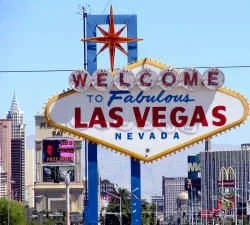
Americans, a pragmatic yet extremely excitable people, give nearly $100 billion a year to the god of gambling (if such a god exists), and half of that amount is lost under casino roofs. There are more than 500 casinos registered in the US, most of which have opened in the last two decades. In New York State, there are about four casinos; they are small and located somewhere on Indian reservations, almost at the Canadian border. But where can a resident of a big city, say New York, play? There are two ways: west to Atlantic City, the gambling capital of New Jersey, and east to Connecticut, where the world's largest casino is located. By car, the distance to both these places is about the same: three hours. And of course, Las Vegas, which from New York requires a five-hour flight. Las Vegas was and still remains a symbol of affordable Epicureanism and demonstrative indulgence in vices, as well as an anecdotal tastelessness of American cultural omnivorousness. Since Nevada legalized gambling in 1931, compensatory powers of a lightning rod were consciously delegated to this most famous "sin city" in the world. In a country founded by Puritans, one was supposed to sin in a specially designated place, preferably in the boondocks. But today, new places for gambling enthusiasts are emerging rapidly in the US, promising to easily surpass even Las Vegas in popularity...
The world's largest casino, Foxwoods, is located in neighboring Connecticut. Deep in the woods, not far from the Atlantic coast, near the town of Mashantucket, there are six halls, 400 tables for 17 types of games, including a poker table, more than 7,000 slot machines (also known as "one-armed bandits"), three hotels, and dozens of restaurants. The scale is unprecedented even for the States. About 40,000 visitors come here every day. The rooms are luxurious, spacious, with many amenities; such rooms in Manhattan and Moscow would cost $300-400, not less, but here on weekdays the price is very modest: $100-120. Just so the dear guest comes, just so he sits down, breadwinner, and plays. That's why special cheap shuttle buses regularly run from nearby megacities, primarily from New York and Boston, and passengers are given a gambling credit of $15-20 to stoke their excitement. The entire arithmetic of casino debit-credit is built on this bait, without any particular tricks.
I look out the window of my room. Right next to the massive Foxwoods complex, a ribbed skyscraper, the MGM Grand, is attached. This gambling and entertainment monster opened in May and is already luring the public with the newest slot machines numbering 1,400 and more than 50 tables for card games and roulette. And quite nearby, in a neighboring town, there is a very successful casino with a beautiful, almost Mayne Reid-like name: "Sun of the Mohicans". The Mohicans in the name are not just for show. They are co-owners of the "Sun", built on their reservation land. The Foxwoods complex is also built on Indian land, but of the Pequot tribe, which I had not heard of before. In a local ethnographic museum, I was told that there were about eight thousand Pequots by the 17th century, but wars with colonists and a smallpox epidemic reduced their number to a few hundred. In the 1970s, they successfully sued the authorities and won back—using peaceful procedural means—a significant territory for a reservation.
Federal law delegates authority over gambling establishments to state administrations, leaving Washington with only one specific sphere of relations: with Indian tribes. And it is this sphere that has suddenly, like a swollen gland, grown into a giant industry. Under current law, all Indian tribes recognized by the federal government—and there are more than 560 of them—have sovereignty and have the right to open virtually any enterprise on their land under preferential conditions. And which business is the most profitable and trouble-free? Correct: gambling. Twenty years ago, in 1988, a fateful federal law was passed: the Indian Gaming Regulatory Act, abbreviated IGRA. It is amazing how the English words prophetically formed an abbreviation with Russian semantics. The goal of the federal authority was to dampen social inequality and atone for historical guilt toward the native population of the continent. The feds humanely figured that easy money would help tribes languishing in poverty to fight unemployment and fund education and social programs. The plan was, so to speak, overfulfilled, making the Indians sudden wealthy rentiers.
In the first year, Indian casinos brought in $100 million in revenue, and now they earn about $22 billion annually, which exceeds the combined income of Las Vegas and Atlantic City. The Seminole tribe, living in a district in Florida, has about 400 souls. The profit from their casino is about $75 million a year. That means $187.5 per soul. The Ramzi band of the Wintun tribe, living north of Sacramento in California, has only 44 people. Their casino made $150 million in profit a year. That means every Indian, including children, is a millionaire two or three times over. Today, 220 sovereign tribes operate 360 casinos. And not all have declared their gambling ambitions yet. There are many tribes seeking recognition of sovereignty and they may achieve it.
Sweet Dreams
Besides Native American casinos and the two Hollywood-vaunted gambling supercenters, Las Vegas and Atlantic City, there are many other places where Americans happily lighten their pockets. In the 1980s, only Nevada and New Jersey welcomed commercial gambling*, but today casinos and other forms of commercial gaming are allowed in 48 out of 50 states. For instance, a player from New York can not go anywhere and amuse himself by pulling the 'one-armed bandit' at the racetrack in suburban Yonkers. And soon in Queens, at the Aqueduct racetrack, a giant hall of slot machines will appear. According to state law, slot machines, where you have to put in money and which much less frequently but still pay out winnings, are allowed only in specially designated places. Recently in Rochester, in the north of the state, a trade fair was held where the public rapidly bought up gaming machines. People, not particularly versed in the intricacies of jurisprudence, dragged machines into their homes.
In Buffalo, another city in the same state, is the office of a company from Atlanta that hopes to get permission from local authorities to install its electronic game Moxie Mania in bars, taverns, and private clubs. In Ohio, 4,000 such machines brought in about $1,000 each per week until state authorities banned them last October. Police officers stationed in bars and clubs regularly reported to their superiors that some people, starting to play seemingly jokingly for small stakes, lost amounts up to $2-3,000. Upon closer inspection, Moxie Mania turned out to be a video version of the well-known school game of tic-tac-toe, but for money. Experts in Ohio classified them as commercial gambling, and according to state law, such endeavors belong only in casinos. Representatives of the manufacturer are desperately lobbying in the corridors of power in New York, trying to prove that a powerful mind is more important in this game than random luck.
The American Gaming Association recognizes several categories of games, including card games, charitable games, bingo, legal bookmaking, lotteries, even parimutuel betting. Games where intellect and skill are decisive for victory are not considered gambling in New York and are not subject to licensing. For example, bridge, chess, or backgammon. But with a slot machine, you simply toss a coin or token, pull the lever, and get a win - if you're lucky. In this case, his majesty chance rules the roost. Such games - whether with a machine, with a dealer at a card table and roulette - are considered pure gambling in New York, as in many other states, and are, speaking of the specific area of Buffalo, the exclusive privilege of the local Seneca Indian tribe.
Supporters of gambling cite as its main advantages increased tax revenues to the treasury and the creation of new jobs. Casino is a magic word, it promises easy and quick money, as if woven from air. For example, Kansas recently legalized gambling to fund the ailing education sector. Detroit is also building casinos with an eye to revitalizing its dilapidated downtown. Connecticut motivated the 'green light' for casinos by the need to create new jobs.
Why do gambling business representatives manage to push through projects? Because they spend 75 times more money on it than their opponents. First of all, on lobbyists. For instance, information recently leaked that the Poker Players Alliance hired influential former Senator Alphonse D'Amato as its chief lobbyist, paying him $900,000. Other gambling associations and groups fork out millions of dollars, pushing through legislative and administrative decisions favorable to them. And they give generously to politicians. According to the American press, in the last election cycle, 905 candidates for the House of Representatives, 102 candidates for the Senate, and 22 candidates for the presidency received 'gambling' money in the form of donations to their funds.
No temptation!
However, when monetary interests are significant and the mechanism of relationships is not streamlined, conflicts inevitably flare up. A characteristic legal dispute has long been pending in Alabama. There, the Poarch Band of Creek Indians runs three local casinos, bringing them $130 million a month. That seemed insufficient, and the Creeks asked the Department of the Interior to allow them to install a new batch of 'one-armed bandits.' But the Alabama state authorities intervened, challenging in court the right of the feds to so unceremoniously dispose of their territory. 'The department's actions represent a complete disrespect for the fundamental principles and rights of the state and an arrogant disregard for the people of Alabama,' said a statement by state Attorney General Troy King. 'Federal bureaucrats have no authority, contrary to the will of the people of Alabama, to allow flooding our state with gambling establishments.'
In 2000, South Carolina dropped out of the game - literally - by passing a law prohibiting the possession and use of video poker machines. The only form of legal gambling in that state remained the state lottery, whose proceeds go to education. The state authorities were able to prove that the gambling business is inevitably accompanied by corruption, crime, and psychological problems arising in a fairly large number of players.
Massachusetts said a firm 'no' to the gambling temptation the other day, delivering a stinging slap to its governor Deval Patrick. He was pushing a project to build three casinos to patch holes in the budget. It was assumed that the gambling establishments would each bring $400 million per year in taxes and create 20,000 new jobs. But legislators sank the governor's plan, believing it unseemly for a state that considers itself the Athens of America to stoop to such speculation. Speaker of the lower house of the legislature (the state's legislative body) Salvatore DiMasi is convinced: the social downsides outweigh the tax benefits of the governor's project. 'There are more effective and proper ways to create new jobs and increase budget revenue lines,' he stated. 'By rejecting the project, we won. The interests of the people proved higher than the interests of private corporations.'
Stakes rise
...On the way from New York to Foxwoods, I got into a terrible traffic jam, which significantly extended the journey. Of course, it's rather far, especially for regular visitors. For fifteen years now, New York authorities have been struggling to get federal permission to build a series of Indian casinos in the Catskill Mountains, which are an hour and a half drive north of the metropolis. We are talking about the area near the racetrack in Monticello, where slot machines have already been installed. The feds are resisting so far, since these are not Indian lands but state lands, located very far from the Mohawk tribe's reservation. And the Mohawks themselves are desperately bargaining with the businessmen, the project initiators, for increased revenue shares.
Donald Trump and other non-Indians who own casinos in Atlantic City are closely watching these upheavals. After all, it's direct competition! If New Yorkers prefer the nearby Catskills, then Atlantic City might as well close down as unnecessary. New Jersey authorities take very seriously the danger of losing a tax cash cow. If the feds give the green light to the Mohawks' warlike plan, they threatened to build a gambling house on their side of the Hudson, right at the exit of the Lincoln Tunnel connecting the two states. After all, gambling for such money is no joke.
* gambling (English: gambling) - organization of games of chance, a type of criminal enterprise.