
The initiative for the "summit" (Integrationsgipfel) belongs to Bavaria's Minister-President Edmund Stoiber. It was proposed back in April in response to rampant violence among the capital's foreign-born teenagers and in line with Stoiber's own demand to tighten entry rules for people who pose a potential danger to the democratic state order. Having caused a discordant chorus of voices "for" and "against" in the spring, the CSU chairman's idea has, as it turned out, not disappeared into bureaucratic drawers, but has taken shape as a concrete item on the government's agenda. However, even though July 14 is fast approaching, it remains unclear whether this event will be purely symbolic or will give a real impetus to amending the law on restricting and regulating migration.
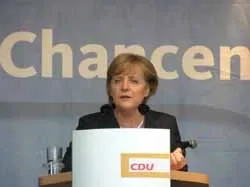
The Chancellor considers the very idea of such a meeting to be "symbolic," naturally in a good sense, where in "direct and open dialogue" representatives of the Federation and municipalities, trade unions and churches, migrant associations and agencies responsible for migrant affairs would sit around one table. They would come together to discuss the mistakes made by past and current authorities in immigration and integration policy and to work out a kind of "national action plan," a sort of "social contract" between the government and Germany's non-indigenous population.
Its implementation, according to Angela Merkel, will become "the guarantee of real integration and harmonization of interests of all ethnic groups living in Germany."
The chosen date is also symbolic – July 14, just a few days after the end of the 2006 World Cup. Riding high, united by the success of its beloved players (here, of course, it wouldn't hurt for the German national team to become champions, but that's a matter of luck), the country is expected to chant the championship motto "A time to make friends" in a united front and extend it to everyday practice of dealing with the new arrivals. And the "guests" who intend to stay longer are expected, in turn, to enthusiastically accept the new rules of the game that the summit's organizers intend to offer them, ready to repent of their own mistakes while at the same time toughening punishments for the mistakes of others.
No less symbolic is the participation in the "summit" of top sports officials. Angela Merkel's invitation was "gladly" accepted by the president of the German Football Association (DFB), Theo Zwanziger, and the head of the German Olympic Sports Confederation (DOSB), Thomas Bach. "Football," Zwanziger supported the federal chancellor, "develops not only motor skills, it strengthens the spirit of collectivism, teaches people of very different backgrounds to play as a team. We have something to share with the experts – for example, experience working with referees and with foreign coaches." Thomas Bach also spoke about the "enormous social role of sport," calling physical education for girls from migrant families a "proven mechanism of integration."
The endless number of symbols is both pleasing and alarming. "Such events are often held just to show the people that politicians are working," says Hans-Olaf Henkel, a professor at the University of Mannheim who once worked on the government commission on immigration under the leadership of Rita Süssmuth. Sevim Dağdelen, the parliamentary group spokesperson of the Left Party in the Bundestag, goes so far as to call the "summit" a mockery and urges a boycott. Her main reproach to the organizers is that the meeting is limited to four astronomical hours. "In such a time it is unrealistic even to read out a list of actually existing integration problems: language deficits, lack of vocational education opportunities, violations of women's rights, violence, prostitution... This meeting is a tick-box exercise; the authorities remain true to their line – deciding issues over the heads of those who are particularly interested in their solution."
Most migrant associations, which presumably should be given a chance to speak on equal footing with government officials, have so far received neither invitations to the Federal Chancellery nor an agenda, let alone proposals to submit their own topics for discussion. "Such chaos in the preparation suggests that the event lacks any clear concept," says Zidar Demirdegen, chairwoman of the Federal Union of Migrant Women.
It is clear who will be the main speakers at the "summit." It is clear what and how much each of them will say to fit into the allotted four hours. The initiators of the meeting – enthusiasts from the CDU/CSU bloc and the state of Bavaria – will speak about the need to toughen penal sanctions against "those who avoid integration" and to raise the age threshold for those wishing to reunite with their legal spouse to 21 years. The government's commissioner for migration, Maria Böhmer, who holds in her briefcase a summary of documents from the just-concluded conference of her state colleagues in Potsdam, will demand the abolition of the mechanism of annual visa extension (Kettenduldung) in order to "quickly grant migrants the right to work." The Social Democrats will call for increasing German language courses to 900 hours and differentiating them according to the social background of students. The Greens – to publicly repent.
It cannot be ruled out that it is precisely the “new green” ideas that will form the basis for a revision of some provisions of the Immigration Law, once so dear to their hearts. “We must finally ask migrants: what have you done for the development of our society?” – this is what the head of the party faction in the Bundestag, Renate Künast, now proposes. The Greens, it turns out, were wrong in recent decades in “positioning themselves as advocates for foreign fellow citizens” – they did this, Künast explains, in defiance of the CDU/CSU bloc, which “preached ethnic strife.” But today the political opponents are no longer the same, and are even ready to call Germany a country of migrants, so it makes no sense for the Greens to rebel, and it is better to sit down and prepare an “integration concept” that includes, in particular, a clause on language testing for four-year-old children and mandatory courses for those “showing a deficit in speech communication.”
The illiteracy of the migrant population, the propensity of foreign teenagers towards violence, ghettoization – all these problems cannot be neatly classified under “social contract,” and they cannot be solved by instructions marked “urgent.” Nor can one eradicate from political minds the entrenched misconception about the mass and uncontrolled entry of foreigners into Germany. Immigration, since the time of the Turkish-Italian “guest workers” and “war” refugees, has turned into a kind of scarecrow overgrown with stereotypes.
Yes, last year experts from the Federal Office for Migration and Refugees (BAMF) counted 450,000 newly arrived. But 330,000 of them were seasonal workers and returned home after the harvest. 20,000 will do so upon the expiration of temporary labor contracts. The army of asylum seekers decreased by 19% compared to the previous year. Only 20,000 people, BAMF experts say, are “classic” immigrants who came to the Federal Republic to live and work. And only 500 opened their own enterprises – a drop in the ocean, unable to provide the country with the much-needed influx of additional jobs. “Germany has ceased to be interesting to migrants,” believes Professor Henkel. “And it will not become so again until politicians move from abstract discussions to real transformations in the scientific and economic spheres.”
This is what we need to think about. And talk about at “summits.” The fact that not all willing representatives of migrant associations will get to participate in them is like an experienced shepherd does not always consult the sheep about which of them to select as breeders and which to send to the meat-packing plant. They say the professional knows better, and the discordant bleating will change nothing. True, the sheep do not choose the shepherds either.
According to the Federal Statistical Office, in 2005 about 6,000 contingent refugees from the former Soviet Union and about 7,500 ethnic Germans entered the Federal Republic for permanent residence. 29,000 applications were submitted for political asylum (Asyl) (in 2004 – 35,000, in 2003 – 50,000). No more than 10% of them can be satisfied. 53,000 visas for family reunification were issued by the Ministry of Internal Affairs (in 2004 – 66,000, in 2003 – 76,000).