
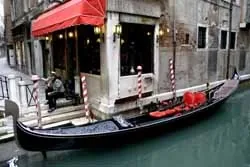
However, both the current mayor of Venice, Paolo Costa, and the Gondolier Association are convinced that many of those who today cater to tourists are trampling on historical traditions, and their overly decorated gondolas have turned into a floating version of "Arabic" taxis – shiny, flashing, and hung with all sorts of trinkets. Therefore, the association recently began an active fight against bad taste among the carriers. "Attempts to attract tourists have gone too far," Lenta.ru quotes the head of the Gondolier Association, Roberto Luppi. "We must remind everyone that we are in Venice, not Las Vegas!"
The reminder, apparently, will be harsh. The London Times claims that Venetian officials threaten to revoke licenses for those who refuse to return their boat, even if it is a 2006 model, to the medieval gondola appearance: black hull, plain leather seats, no knick-knacks, bright blankets, or flashing lights. The latter, however, have already lost some of their functions – after the end of 2004, the city hall imposed restrictions on gondola traffic on Venice's main water artery, the Grand Canal, and banned night and group rides.
Along with the requirement of a mandatory "dress code," the Gondolier Association also issued recommendations regarding the repertoire of songs performed on the water. Ideally, boatmen are advised to limit themselves to the functions of rowers and guides, who during the trip retell a tourist guidebook with small digressions. Singing and paid invitations of musicians are recommended to be avoided. And if tourists insist, they should not disgrace their hometown by performing the Neapolitan "O Sole Mio," which all visitors to Italy have recently begun to associate exclusively with Venice. The authorities of the city of canals remind that the capital of European carnivals also has its own worthy repertoire.
Such a transformation of the gondola into a faceless sightseeing taxi is unlikely to please most of the four hundred Venetian gondoliers, who not only consider themselves the city's calling card but also sometimes demonstrate enviable solidarity. Previous attempts by the authorities to restrict the freedom on the canals were met with strikes by boatmen, who several times even blocked the waterways to the most popular squares of Venice with hundreds of gondolas lying side by side. But noisy actions, which, by the way, gathered crowds of tourists, have not yet forced the city hall to abandon plans to restore order on the water. On the Grand Canal, gondoliers who had sought to restrict motor traffic there had to make room themselves. Most likely, the song repertoire will now have to be updated.
Fyodor SEREBRYANSKY.
"Vremya Novostey"