
Germans are increasingly moving to suburbs, while major cities continue to grow due to an influx of foreigners and young people
As a result, according to Deutsche Welle, prices for apartments and houses are now rising fastest in medium-sized and small towns, as well as in rural areas.
"Germans want to live in the 'fat belt' again"
These are the key findings of three studies published in March on the German real estate market. They were presented by the German Economic Institute (IW) in Cologne, the Deutsche Bank Research Center (DB Research) in Frankfurt am Main, and Postbank in Bonn.
IW researchers focused on a trend that began shortly after German reunification in 1990 and lasted until 2003, then paused for ten years, resumed in 2014, and has been gaining strength ever since. It concerns the outflow of native residents, more precisely German citizens, from most large and the seven largest cities. These are the "million-plus" cities – Berlin, Hamburg, Munich and Cologne, as well as Frankfurt am Main, Stuttgart and Düsseldorf.
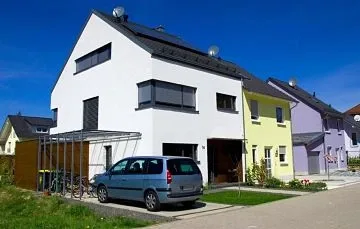
"Germans want to live in the 'fat belt' (Speckgürtel) again," write the institute's experts, using a popular term in Germany for well-to-do suburbs of big cities where middle-class representatives often live in single-family or two-family homes. From their perspective, the researchers explain, "big cities are too crowded and too expensive," so "the new motto is: 'Back to the village'."
Thus, the decade-long fashion for living in major cities has passed; for four years now, holders of German passports have been leaving them more often than moving in. At the same time, the population here is steadily growing. In Berlin, according to IW, it increased by 287,500 people from 2011 to 2017, in Munich by 91,000, and in East German Leipzig by 72,000 or 14 percent.
Annual influx of half a million labor migrants
This population growth is largely due to the influx of labor migrants. The need for foreign workers in the context of an aging society and successful economic development is steadily increasing: Germany is experiencing an ever more acute shortage of personnel, especially skilled and highly qualified workers. They come to Germany primarily from EU countries, including Poland, Italy or Spain, as well as, for example, via the Blue Card system from India, China, Russia, Ukraine.
According to IW, from 2012 to 2017, the net inflow (taking into account outflow) of foreigners averaged 619,000 people per year, of which 20 percent were refugees. 43 percent of all these migrants settled in large cities: firstly, because that is where the demand for labor is greatest, and secondly, because diasporas already exist there, making it easier for newcomers to adapt to life in a new country.
After school – to the big city, after marriage – to the suburbs
Another key factor that led to the rapid population growth and, consequently, demand for housing in Germany's big cities in this decade was the influx of German youth.
"Educational and labor migration of 18-30-year-olds has been steadily increasing since the 1990s," IW researchers state. Today, natives of small German towns and rural areas increasingly flock from all over the country to a few major centers after finishing school to work or study there.
But over time, once they start a family, they feel the need for more living space. "Apparently, until 2013, most people still managed to find a suitable rental apartment or buy a home to their liking in large cities. But today, families seem less and less willing to bear such high housing costs in such cities," the IW study notes.
The authors conclude that the high cost of housing is effectively pushing young families into the suburbs. Or even into more remote towns, including rural ones. Especially since attractive job opportunities are often increasing there. Moreover, there is less noise, fewer traffic jams, public transport is less crowded, and various social problems are less acute than in the largest cities, the Cologne researchers point out.
As a result, housing in Germany is now rapidly becoming more expensive not only in the largest cities but also far beyond their borders. This is the main conclusion of the "Housing Atlas 2019" (Wohnatlas 2019) published by Postbank.
Its specialists analyzed the situation in all cities and rural districts of Germany, a total of 401. While in 2017, price increases for real estate were observed in 242 territorial units, in 2018 they were recorded in 365, which is over 90 percent. On average across the country, housing became 7.2 percent more expensive last year.
At the same time, the highest growth rates of 20-40 percent (naturally due to the low base effect) were seen in northern Bavaria, the neighboring southern part of Thuringia, or, for example, in rural areas along the autobahn connecting Berlin, the car city of Wolfsburg, and Hanover.
The absolute record holder last year was the city of Suhl, with a population of 36,000 in the south of the East German state of Thuringia: here, housing on the secondary market rose in price by 48 percent in just one year.
Nevertheless, even in currently sought-after small and rural settlements, housing still costs several times less than in large cities and their prestigious suburbs. In Zella, for example, the price per square meter is now around 1,650 euros, in other districts of the same Thuringia even less than 1,000 euros, while in towns and villages within a radius of about 50 kilometers around Munich, according to Postbank, they pay from 4,500 to 5,600 euros. Not to mention Munich itself, where the square meter on the secondary market rose by 8.7 percent last year and reached 7,500 euros.
Berlin faces a supercycle of price growth
The Bavarian capital will continue to be the city with the most expensive real estate in Germany, since the labor market here continues to develop dynamically, and housing construction will lag significantly behind demand for the next decade, predict analysts at DB Research, based on an analysis of urban development plans and opportunities in Munich (they give a similar forecast for Stuttgart).
In Munich, meeting growing demand will be particularly difficult also because almost 54 percent of households consist of a single person. These are not only or even mostly elderly people, but rather young singles who have come to the city to study and build a career, as scientists from the Cologne Institute IW described in detail.
The forecast of the Deutsche Bank Research Center for all of Germany sounds like this: "Thanks to the influx of migrants and further improvement of the labor market situation, prices and rental rates in the housing market will continue to rise." Experts believe that the current cycle will last at least until 2022.
Moreover, for the German capital Berlin, where more and more new startups in the field of information technology are being created and the sphere of highly qualified and knowledge-intensive services is developing rapidly, DB Research even predicts a "supercycle" of price growth.