Tourism
How Belarus Can Surprise You
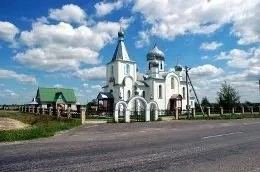
The village of Bezdezh is famous for Belarusian folk crafts<\/em><\/p>
It only seems that this country is Russia's twin sister, known for Belarus tractors and manufacturers of inexpensive porcelain stoneware<\/a>. In fact, this is not entirely true. There are many interesting examples proving that Belarus can be as distinctive and interesting for tourism as, say, distant overseas countries. Here are some of them.<\/p>
Where in the world, tell me, can you find a museum with such an interesting name, and more importantly, with such highly valued content as the Museum of Ancient Crafts and Technologies 'Dudutki'? There are many exhibits and information on the country's historical crafts: from milling and blacksmithing to weaving and bread baking. But there is one exhibit that even people very far from history peek over the fences of the establishment for. This museum houses a real moonshine still – perhaps the only one officially permitted and registered in the country.<\/p>
The most interesting thing is that the museum staff absolutely officially – for scientific purposes – produce several varieties of this traditional Belarusian beverage. During excursions, tastings are held under the supervision of guides.<\/p>
And in the village of Bezdezh, cut off from the rest of the world by impassable swamps, even in the 21st century there is the world's only museum of aprons, for which both linen threads and fabric, and the aprons themselves, skillfully embroidered with traditional patterns, were made by hand using ancient technology.<\/p>
Everything that happens is for the best. A clear confirmation of this is the work of Belarusian scientists in the territory adjacent to the Chernobyl nuclear power plant. Despite the terrible nuclear tragedy, the inhabitants of Belarus do not lose faith in a better future and try to turn bad into good. For a decade and a half, the world's only Polessky State Radiation-Ecological Reserve has existed. It is located in the particularly affected areas of the Bragin, Narovlya, and Khoiniki districts of the republic.<\/p>
Research is conducted to study the consequences of the accident and the possibilities of using the territories where people no longer live and agricultural work is not carried out. Over 15 years, much has been achieved: a fruit orchard has been planted whose fruits do not accumulate radionuclides, the forest is being restored, and conservation activities for rare species of animals and birds are underway. About 2,700 people work in the reserve.<\/p>
Belarusian scientists care even about the smallest inhabitants of their native country. In 2007, concerned about the fauna in the Berezinsky State Reserve, road builders together with scientists built the first underground crossing for amphibians in the CIS. This was done to prevent the disappearance of the toad population living in the reserve, through which the Minsk-Vitebsk highway passes. According to scientists, this measure has already yielded positive results.<\/p>
Whatever vicissitudes await Belarus in the future, the country where such hospitable people strive to preserve their history and culture is destined for a good future.<\/p>
