
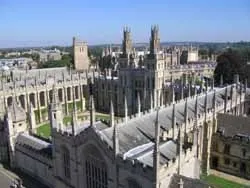
From time to time, new educational leaders appear on the world map – for example, in recent years people have begun to talk about Singapore and South Korea. The American system is attractive to many for its focus on practical success. The German system is known for its high-quality training of manual labor specialists. The Russian system still retains its reputation for fundamentalism. However, for many decades now, the British education system has consistently been recognized as one of the best in the world.
In March, the British Council (an institution that represents British culture and education in many countries around the world) organized a press tour of universities and colleges for journalists who won a competition on covering educational topics. This allowed us to see firsthand what English and Scottish education are strong in. In the Anglo-Saxon world, everything is built on clear measurement of results. The concept of external assessment is relevant: students are assessed not only by representatives of their own institution, but also by those from other universities. I will attempt to give an external assessment of the entire British education system, which is interesting to us not simply in itself, but as a kind of benchmark. What can really be transplanted onto our soil, and what is unlikely to take root? My 'external assessment' is oriented toward my own interests.
British tricolor
Countries have their own color. I remember Britain for its combination of dense greenery (lawns in cities, meadows and grassy patches in rural areas, including in winter), low gray skies, and dark red-brick houses.
According to David Green, the rector of Worcester University (central England), the features of British education that make it attractive for replication are also of 'three colors': a coherent, clear organizational structure; high quality, which consists of a substantive model and an assessment system; and a reliable, time-tested financing scheme. The success of the nurturing process—whether of a lawn or of an educated nation—lies in a trinity: system, care, and consistency.
On structure
Education begins at the age of two or three. Note the difference: the first stage there is considered education and is mandatory. Entry to the next levels involves exams: into primary school (from ages 7–8 to 13), into secondary school (from 13 to 16). Initially, study proceeds without particular burdens: many trips to the forest, listening to birds, and making herbarium collections. The system does not stress out those who do not need further education simply because they cannot or do not want to study seriously. But those who are thinking about an educated future have to work very hard in the last two years.
After completing secondary education, it is impossible to go directly to higher education; one must undergo pre-university preparation: a one-year foundation course or a two-year A-level. University admission takes place without exams, based on the results of the preparatory course, now mostly via the Internet. Degree levels: bachelor, master, doctor. The system to which countries that signed the Bologna Convention have had to adapt originates precisely from the British Isles, so there is no painful 'Bologna syndrome' observed here; they do not need to restructure. Bachelors are taught for three years, saving time and money. They indeed do not possess 'excess' knowledge, but they are ready for practical activity. Only those inclined toward scientific work and serious study of the subject go on to master's degrees. There are fewer of them than bachelors, but they enjoy greater respect in society and higher salaries. MBA courses last one year, unlike the two-year programs common in Europe and in our country. You can become a student of such courses only after gaining work experience.
Almost all universities in the UK are public. Among schools, the private sector accounts for 20%. The aforementioned rector David Green was in a hurry after talking with journalists to pick up his daughter from school. Which one? Of course, a private one. What makes it better than a public school? The programs are the same, but instruction is individualized. If a regular class has 28–30 students, a private one has 10–16, and each child receives more attention from teachers. This is similar to our private schools. The difference, however, is that learning conditions are by no means 'hothouse'; on the contrary, control is stricter and demands are higher. 'So that they sit and work, not slide down the corridor on their behinds,' came the expressive comment of a strict Englishman.
Creative industry
One of my first British impressions, still at Heathrow Airport, was the sight of a two-month-old baby with an uncovered head and dangling bare legs, while the mother (a respectable young woman) was wearing a hat and boots. In Edinburgh, the capital of Scotland, I remember schoolgirls in knee socks and short skirts walking single file through freshly fallen snow. Perhaps it is their hardiness that explains why life expectancy in the United Kingdom is 12 years higher than in our country? Brits are rarely familiar with colds, and they do not consult doctors for acute respiratory infections: the body must cope on its own.
Meanwhile, medical specialties are among the most prestigious and highly paid; gaining admission to medical colleges is extremely difficult. Nearly on par with them in the rankings are fields such as economics and top management. Engineering specialties have lately lost ground: the country is increasingly moving its own production to foreign lands. Instead, another industry is developing rapidly—creative. In our country, such a concept has not yet even formed, but in the UK it is the most sought-after field.
At the University of Worcester there is a Center for Digital Arts. The photography course at Stevenson College Edinburgh is considered the best in the country, and the competition is huge. At the Faculty of Creative and Cultural Technologies at the University of Hertfordshire (Hertfordshire county, near London) they deal with animation, sound recording, industrial design, and fashion. Just as every domestic higher education institution takes up producing lawyers, economists, and psychologists, so in Britain there is a creative boom. 'The fastest-growing sector of the economy today is virtual reality, cinema, and media technologies: such specialists are needed everywhere,' says the rector of the University of Hertfordshire, Tim Wilson. It is unlikely that our path will be different.
We visited the last of these universities on Special Effects Day. Students amused themselves by inventing and implementing 'pranks' (if you will) in various techniques. Someone's imagination gave rise to a whimsical animal, and a 3D printer made the invention material. Someone dressed a mannequin in incredible outfits, someone else combined a centipede with a rocket. It turns out that such pleasant pastime, in addition to learning, also has quite practical meaning. Twenty kilometers from the university campus is located 'British Hollywood': a group of film studios. Such unique shots as the flights and transformations of Harry Potter, his friends and enemies, Batman's stunts, and transformations of the heroes of 'The Matrix', the special effects of the film 'Alexander' were made right here - by teachers and students of the University of Hertfordshire. The local hotel, built in high-tech style, is also a partner of the institution: the rooms were designed by students, who, by the way, earned about 60 thousand pounds sterling.
The dean of the faculty, Chris McIntyre, tells that such a modern faculty started with a traditional school of arts. Similar schools in our country still train numerous academic-oriented artists, who master the basics of modern visual techniques by hand.
University as a city-forming enterprise
I will tell in more detail about the University of Hertfordshire and its social role. The town of Hatfield, where it is located, was known for large aircraft and instrument-building plants, which closed about ten years ago. The revival of the economy began, among other things, thanks to the university. Now new companies of international rank (such as T-Mobile) are drawn here, and they take into account what specialists are trained here. There are also reverse processes: the university reacts to the needs of the nearby region, producing three to four new specialties annually. The educational institution provides jobs for local residents, who also use its infrastructure, for example, visiting a sports complex with a swimming pool, a dozen gyms, and a climbing wall.
The university received its status in the 90s, and it is called new. 'The fact is that England is a country with traditions, and only in about 300 years will they stop calling us that,' the rector jokes in a classically English manner. And he continues seriously: 'We say about ourselves that we are a new-style university. We are trying to create a new type of education, not copying others, even the best ones.' This is an important remark, given that Cambridge and Oxford are nearby. By new style, Tim Wilson meant, first, orientation to the most modern specialties; second, a new system of relations with business, when all educational programs are developed jointly with enterprises; and third, progressive educational methods.
Teach not 'what' but 'how' to think
'Listener' is a concept that is becoming outdated for modern education. Today, what is relevant is not passive consumption of knowledge, but active comprehension and conquest of it. Therefore, a significant part of study time is devoted to self-study.
In Hertfordshire we were introduced to a student, Theodor (that is, Fyodor) Savelyev, a regional manager of the company M.Video. His study day goes like this. In the morning, a few hours of work at the computer in his room: university students have access to materials wherever they are, thanks to the StudyNet program. Then a couple of lecture hours, seminar classes, and trainings. In the evening, again work at the computer, this time at the resource center (a huge modified library where, in addition to books and traditional sources of information, 800 computer stations are installed). You can study at night as well; the resource center is open 24 hours a day.
Peter Bilan, the head of the university's innovative technology department, formulates the department's goal as follows: combining classical teaching methods with electronic ones. I ask: do students stop attending lectures? 'No one forces them to attend either lectures or computer halls. We simply organize access to one and the other source. Thanks to modern technologies, the possibilities for personal communication between teachers and students expand. Recently, an economics teacher conducted an experiment: he completely replaced the lecture course with a virtual one, and the contact hours were spent on discussions and seminars. This proved to be very effective; study results improved.' Does the role of the teacher diminish in this process? From the answers of the students themselves, I am convinced of the opposite: it increases. Teachers do not exhaust them with tedious 'double periods'; they turn lectures into exclusive performances that concentrate both knowledge and personal human charm.
However, I am not sure that such a high emphasis on independence (weeks of self-study, a huge number of hours "free" from lectures, when one needs to prepare for those very lectures) can take root here – our student body on the whole has a different mentality. And instructors are not ready to change fundamentally. But, for example, in the project "Under Pressure," which we observed in action at Worcester University College, our students would have succeeded. The director of the center for digital arts, Paul Hazel, explained meticulously: "We are trying to simulate an extreme situation where a project that usually takes several weeks must be completed as quickly as possible. The assignment was received yesterday morning, and it must be submitted by tonight." If only he knew that for our heroes this kind of academic extreme is almost the norm.
And the topic was very timely: using any media technologies to create a product that stimulates citizens to participate in elections. Too bad we didn't stay for the results.
Another modern feature of teaching methodology is a close connection with practice. In the UK, sandwiches are popular: both as food and as study courses. A sandwich course is one year of work between two years of study. Other time variations are possible: five weeks of learning theory - five weeks of testing it in practice. The system of organizing the educational process is flexible and adaptable. The important thing is that while working, students continue to study.
Academic modules are gradually replacing rigid comprehensive programs. If several people enroll in the same faculty, same specialty, their paths through lecture halls can diverge very quickly: each determines their own set of subjects. Alongside classical disciplines, a student can study modern areas. Starting, for example, with political science, they can finish with a business course, and combine a management course with any disciplines. In the end, the larger and broader the set of mastered subjects, the higher their final ranking. By the way, about rankings.
"A-plus"
A, B, C, D, I, F, G – these are, as is known, the beginning of the English alphabet, and also the grading system in British school education. Schools, like universities, are interested in student performance: their ranking directly depends on it, and consequently their financial situation. Artificially raising performance is difficult: a double or even triple grading system is in effect. Students evaluate each other (group assessment), their knowledge and skills are evaluated by teachers (internal assessment), as well as by representatives of several external educational institutions (external assessment). 300,000 parents make up school councils – another powerful evaluation structure, a public one. There is also state assessment, issued by the Quality Assurance Agency for Education. Federal-level criteria are very strict; this is the foundation that must be met without fail.
An interesting nuance: not only knowledge is assessed, but also social position. Activity gives a considerable head start when entering a university or getting a job. For example, in Scotland there is an exempt position – chair of the student council of a college or university. For a year, this person represents the face of the institution: it is extremely prestigious, a most important line on a resume. Membership in sports teams, especially leaders of national leagues (many universities take pride in sporting achievements), also raises students' ratings.
External examination is undergone by both study courses and programs, and the educational institutions themselves. University rankings are constantly compiled on various bases, but the top five leaders are the same year after year. They are Cambridge, Oxford, Imperial College, the London School of Economics, and the University of Edinburgh. However, there is an opinion that there are no "bad" higher education institutions in the UK. Almost every one has its own highlight, be it a world-class pollen research laboratory, as at the small University of Worcester, a huge technopark at the University of Southampton, or simply a rare specialty.
The key indicators that ordinary Britons use as a guide are close to ours. For schools, it is the percentage of students admitted to prestigious higher education institutions. For universities, it is the income level of graduates in the first year of independent life. The difference is that such data are collected officially; the information is open and accessible.
What, then, should be considered the result of the educational system as a whole, by what criteria should it be assessed? Perhaps by the standard of living of society? Or by the number of Nobel laureates (there are 72 in the UK, more than in other countries per capita)? Or by the number of foreigners who prefer to study precisely here?
Our people in Britain
Every year, 600,000 people come to "the islands" to study. In the list of countries "exporting" students here, Spain and Germany lead, while China is increasing its presence, as in other areas.
The initial preparation of our students is highly regarded, especially their knowledge of mathematics: at first, many manage to pass the subject "automatically" thanks to the efforts of their home school system. Our compatriots easily adapt to new educational methods, willingly participate in discussions, which compares favorably with representatives of Asian countries, whose mentality is unconditional obedience to those older in age and status, rather than arguing with them. "It's just that your people lack an understanding of how business works and is structured; it evidently hasn't yet been instilled in the genes," notes David Green.
Different paths and goals bring our young people to the United Kingdom. Dmitry Ser has been living in Edinburgh for three years: first a language college, now the University of Edinburgh. His father runs his own construction business, but his son finds it boring and wants to become a music producer. “Dad guides me, controls me, but I make the decisions myself.” The family pays for his tuition, while he covers his living expenses (about half of the required funds). He worked in a shop and is now getting a job at a Japanese restaurant. If students work no more than 20 hours a week, their earnings are tax-free. Dima is a British old-timer; he already thinks in English but reads Russian books. What he misses most is familiar food. He doesn't like how local people eat. Once in Birmingham he saw “native” dumplings and, overjoyed, bought two and a half kilograms at once. Where will he live after graduation? “Probably, back home.” Although in Scotland, which is experiencing a demographic crisis, there is a “Fresh Talent” program: a citizen of any country can stay there for two years after studying.
Polina Pervushina is from a family of designers and continues the dynasty. A typical “home girl,” so how did her parents send her so far away? It turns out, for safety reasons. They didn't let her go to the capital—they were afraid for their daughter. They decided that Britain is more reliable. Although, of course, incomparably more expensive.
Maria Navrotskaya, on the other hand, was lucky—she received a grant from Coca-Cola and studies for free. As do Dana Galiyeva and Asel Zhiyenbayeva: their home state, Kazakhstan, pays for the education abroad of three thousand of its citizens. Marina Sukhikh is taking a preparatory course in the resort town of Torquay at one of the English First schools and is already choosing a place for further study.
Alexander Goncharov's fate is interesting. He received his higher education in Russia (Moscow State University, theoretical physicist), realized that this field, due to its high cost, has no prospects in his home country, and came to the south of England, to Southampton, with £300 in his pocket. He entered a postgraduate program and completed it, earning money for his studies along the way. He associates his future with Britain. Unlike Alexander Lokhov, Karina Ilyasova, and others who are studying management and intend to start their own business. They believe that there is much more room for action back home.