
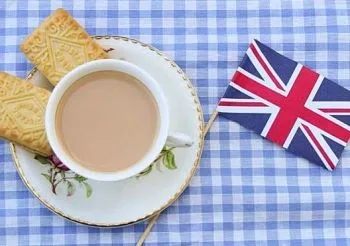
Britons drink more than 60 billion cups of tea a year
Tea has become an integral part of British lifestyle: from modest tea breaks to ceremonial afternoon tea – in suits and ties, gentlemen! – in the most luxurious London hotels. It turns out that every man, woman, and child in the country consumes more than 900 cups a year, although, undoubtedly, we all have acquaintances who drink much more.
To begin with, it makes sense to understand what gives tea its taste. It is closely related to how tea leaves are grown, processed, and brewed, starting with the lighting conditions.
The tea plant, or Camellia sinensis, is planted in rows on plantations throughout the tropics and subtropics. However, to obtain certain types of green tea, such as matcha, the plants are carefully shaded with nets or mats. Under conditions of sunlight deficiency, the leaves produce more chlorophyll and fewer polyphenols – the molecules that give tea its characteristic astringency. Of course, some of us like that astringency, and it can be enhanced through special processing.
After picking the young leaves and buds, they are spread out to dry. The duration of drying also depends on the desired type of tea. For green varieties, the leaves are almost immediately placed on a heated pan or steamed (it may seem that the tea is quite raw, but in fact it is roasted or at least steamed). To obtain oolong tea, the leaves are slightly dried, then crushed, and only then subjected to heat treatment. Black tea (the most popular, accounting for 78% of global consumption) is obtained if the crushed leaves are first dried thoroughly and only then finished by roasting.
The fact is that during the drying process of tea leaves, the enzymes contained in them actively convert simple molecules into more complex ones. The longer the leaves are dried, the more such molecules accumulate under the action of enzymes. The most famous molecule is probably theaflavin, which consists of several carbon rings and, along with other pigments, gives black tea its reddish color and astringency. During the roasting of tea leaves, enzymes are destroyed and the process stops. Therefore, for example, green teas have so little theaflavin and related molecules.
Over time, hundreds of various compounds accumulate in tea besides polyphenols, but their role in forming tea's aroma and taste is still unclear. Regardless, each type of tea has its own chemical composition.
Given the volume of tea consumption, people are increasingly interested in whether this beverage is beneficial for health. Apparently, the molecules in tea can protect cells from certain types of damage, but despite numerous studies, scientists have not yet found a definitive answer as to whether tea provides any benefits (other than warming and invigorating).
Tea, of course, contains stimulants. Brewed tea has about half the caffeine of the same amount of coffee, but that is more than enough to keep you from nodding off after lunch. You may have heard that the caffeine in tea has a different effect than the caffeine in coffee. Many studies have established that this is due to the action of an amino acid called theanine, which is present in tea.
Participants in a study who consumed both caffeine and theanine instead of caffeine and other tea molecules were slightly more alert and better at switching between tasks than those who consumed only caffeine. However, the content of this substance in a particular cup of tea may differ from the dosage used in the study, and the effect of theanine is not limitless, so caffeine alone can be an excellent source of energy.
So, we have figured out what gives tea its taste (and gives its lovers energy). But why do these combinations of molecules matter so much to the British? And what can one say about a person based on the tea they prefer and how they drink it?
In her book "Watching the English," anthropologist Kate Fox writes that when drinking a cup of tea, any Briton reveals several facets of their personality. She notes that the strongest tea with the highest content of such molecules is typically drunk by the working class. The higher a person's position in society, the weaker the tea in their cup.
Milk and sweeteners also speak volumes. "Putting sugar in tea is regarded by many as a sure sign of belonging to the lower classes; even one spoonful will arouse suspicion (unless you were born before 1955); more than one spoonful – you are at best lower-middle class; more than two – you are definitely working class," writes Kate Fox.
Adding milk has its own rules. According to Fox, a pronounced preference for Lapsang Souchong tea without sugar or milk may betray a middle-class person striving to break into high society. Such a drink is perceived as the complete opposite of a mug of strong, sweet tea with milk – the favorite drink of honest working people, "builder's tea" as it is often called in Britain.
How did the British come to drink an infusion of imported dried leaves? The appearance of tea on British shores was preceded by a series of historical events. And one can invent many reasons why the current state of affairs was inevitable (for example, boiling water for tea reduced the risk of acute gastrointestinal distress).
A dietitian I once dealt with remarked, “In my opinion, food choices are determined by the surrounding environment – context.” A craving for certain foods is not necessarily determined by their properties, although, obviously, one can become addicted to almost anything.
The true place of a product or drink in a person's life can be determined by surrounding circumstances – the culture of its consumption. Fox notes that tea is an excellent way to defuse a situation. Describing the cultural peculiarities associated with various methods of brewing tea, she writes: “Making tea is a wonderful defense mechanism: when the English feel awkward or uncomfortable in a social situation (and this is almost a permanent state for them), they brew and pour tea.”