
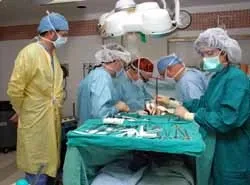
Brown's proposals mean introducing a presumption of consent for organ removal after death, if during life the person did not take steps to be removed from the national donor registry, or if his family members did not object to transplantation, who otherwise would have had to take care in advance. However, patient rights organizations say they are completely opposed to Brown's plan because it takes away people's right to control their bodies.
As Gzt.ru notes, in the UK more than 8,000 people need organ transplants and more than a thousand die each year without receiving a donor organ that could save their lives. The British government is beginning to restructure the existing system. Doctors will be tasked with identifying potential donors as early as possible and informing organ procurement coordinators about a patient's impending death.
Supporters of reforms in transplantology point out that the current system of organ donation in the UK has led to a large quantitative gap between the needs of patients for transplant organs and the capabilities of the healthcare system. For example, in 2007, 120 lung transplants were performed, 252 people donated lungs, and 263 patients are waiting for their turn for a transplant. 333 people have not yet been able to receive the donor liver they need, although 629 such operations were performed, and 621 people donated their liver. Similar statistics apply to heart, kidney, pancreas, and skin transplants.
However, Brown, who himself has a donor card, indicated that he advocates an even more radical restructuring of the system that would lead to the introduction of presumed consent. He claims that introducing a "presumption of consent" would allow an additional 1,200 operations annually.
The essence of the new system is quite simple: Britons will no longer need to register as donors in order to donate their organs after death. Doctors will be required to identify dying patients as potential donors and report them to coordinators while the person is still alive. The percentage of deceased patients whose organs go for transplantation will become one of the criteria for evaluating the effectiveness of a medical facility. Britons who do not wish to act as donors after death will have to officially register their refusal during life. In addition, when deciding on transplantation, the opinion of the deceased's family will be taken into account: the operation will be carried out if there are no objections from relatives.
This approach is based on the experience of Spain, which has the highest number of donors in the world. Since the early 1990s, the proportion of people registering such a refusal has fallen from 30% to 15% there. Thanks to this, there are 35 potential donors per million inhabitants. This is three times more than in the UK, where according to polls, 90% of residents agree to act as donors, but only 25% are registered as such.
"Such a system will help bridge the gap between the potential of British transplantology and the limitations imposed by the current system, under which organs can only be removed with prior consent of the donor or his relatives," writes Brown. In 2004, he voted against similar innovations. But sources close to the prime minister explained that the measures proposed at that time were different, in particular, they deprived families of the right to make the final decision.
Public organizations are shocked by Brown's intervention. "The authorities call it presumed consent, but in fact no one will ask for any consent," explains Joyce Robins from Patient Concern. "They hope that people's inertia and ignorance will help them achieve the desired results." She emphasizes that the government is doing nothing to get people who do not object to organ removal after their death to register. "Where is the media campaign, where are the leaflets? Why, when I visit my GP, doesn't he ask me about organ donation?" wonders Robins. "They should have started with that, not take away our right to decide what to do with our bodies."
She is supported by Catherine Murphy from the charity Patients Association. "We do not believe that the state should make decisions for its citizens, especially on such a personal matter where each person's conscience should be involved," she notes. "If people want to give someone life, that is their right, but it must be a voluntary step."
Although public opinion polls show that 90% of Britons support transplantation, 40% of relatives of the deceased do not give permission for organ removal. Among black Britons and ethnic minorities, this figure rises to 75%. To change the situation, the working group on organ procurement and transplantation is developing measures, including increasing pressure on doctors to identify patients as potential donors before they die.
In the working group's report published last week, it is proposed to appoint a senior doctor in each hospital responsible for organ transplantation, as well as a public activist who would explain why it is important. The group, which will also publish a report this summer on introducing universal presumed consent for organ removal, hopes that implementing the 14 measures it has outlined will lead to a 50% increase in the number of donor organ transplants within five years.
While experts acknowledge that there is a possibility of a conflict of interest between medical personnel, who are obliged to fight until the last moment to save the life of each patient, and those who will seek to ensure the maximum number of donors. Dr. Kevin Gunning, a consultant in the intensive care unit of Addenbrooke's Hospital (Cambridgeshire) and a member of the advisory group of UK Transplant, the organization responsible for organ retrieval and transplantation, believes that the planned measures could increase pressure on doctors and relatives of the deceased. 'If, as a doctor, you think of your patient as a donor while they are still alive, that is a real conflict,' he is convinced. However, Chris Rudge from UK Transplant believes that patients will not be considered as donors as long as they have any chance of survival.
As Lenta.ru notes, the problem of donor organ shortage remains relevant for most European countries. For example, in June 2007, a scandal erupted around the reality show 'The Big Donor' on the Dutch television channel BNN, where candidates in need of a kidney transplant competed for the right to become the recipient of terminally ill Lisa. 12 thousand people called the program, declaring their consent to become donors. Later it turned out that the show was a hoax aimed at drawing public attention to the problems of transplantology.
One example of a liberal approach to such a controversial issue is the legislation of New York State. An American who agrees to act as a donor after death simply needs to sign in a special box on the back of their driver's license or other identification document. If this person is involved in a fatal accident, then, after confirming the authenticity of the signature, their organs can be donated for transplantation to those in need.