
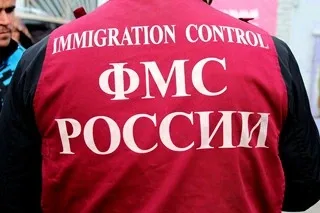
Russian authorities promised to complicate life for Ukrainian migrant workers
"From January 1, a different system of work permits will be introduced," FMS head Konstantin Romodanovsky told Rossiyskaya Gazeta. "Ukrainian citizens in general order will have to obtain patents for work for both individuals and legal entities. In 2014, we met them halfway and took an extremely liberal approach to Ukrainian citizens. Probably in 2015 we will return to our usual track and consider Ukrainian citizens in general. With the exception of those who left Ukraine forcibly and cannot return for objective reasons."
In the last sentence, according to Lenta.ru, we are talking about refugees from Donbass, of whom there are currently about 850,000 in Russia, according to authorities.
According to Romodanovsky, the Russian leadership "is not taking a path of tightening, of a specific attitude towards citizens of a brotherly state who have now found themselves in such a difficult situation due to internal conflict." But nevertheless, "Ukrainian citizens will not be an exception" and will be able to stay in Russia without permits (work patent, temporary residence permit, and others) for only 90 days out of 180. It is not entirely clear what Romodanovsky meant, since even today Ukrainians are allowed to stay in Russia for a maximum of 90 days per migration card.
In fact, it all comes down to the notorious patent. Actually, the restrictions on Ukrainians were announced in mid-December by Russian Prime Minister Dmitry Medvedev, who said that "for many Ukrainians, work in Russia is their only source of livelihood." "And only thanks to Ukraine's actions will Russia be forced to cut off this source," the prime minister explained. "From January 1, 2015, 'gray' Ukrainian workers, who make up the majority of those who have arrived, will not get work in Russia without a patent. We will also be stricter about compliance with the terms of stay in our country – 90 days within six months. Previously, it was enough to leave Russia and then re-enter to work here without problems for the next three months. Now our border guards will treat such Ukrainian travelers without a work patent with increased attention."
Medvedev estimated the losses of Ukrainians who will lose their jobs in Russia at $11-13 billion, or 7 percent of the country's GDP.
It is clear that the statement by the prime minister and the head of the FMS, who can scare the uninformed public as much as he wants with the new-old rules for Ukrainian migrant workers, is not intended to warn knowledgeable people who already have work experience in Russia, but rather to sow confusion in the minds of observers. This psychological attack on Ukraine from the Kremlin was to be expected, since Ukrainian migrant workers have long become an integral part of the Russian landscape.
As of the end of 2013, 1.607 million Ukrainian citizens were working in Russia. The same Romodanovsky, reporting in March 2014 on the situation, said that Ukrainians working in Russia earned about $27 billion in 2013. However, according to the Central Bank of Russia, Ukrainians transferred only $3.42 billion to their homeland last year. That is almost half of what Uzbek migrants sent home – $6.67 billion. Although the average earnings of a Ukrainian in Russia during the reporting period was $523, while that of an Uzbek was $403.
"A program for the adaptation of Ukrainians in Russia is now open," Timur Dushko, editor of the migration publication "Roadmap," said in 2011. "The Russian government is interested not so much in seasonal migrants as in new citizens. When a person accepts Russian citizenship, money is allocated for adaptation and in some regions even housing (if it's not Moscow or St. Petersburg). So no matter what anyone says about everyone going to Europe, according to our data, among the countries where Ukrainian labor migrants go, Russia is in first place."
According to Dushko, the refusal rate for providing work to Ukrainians in Russia at that time was only 2 percent. It was easier for engineers and workers to find employment. At the same time, according to the Russian Embassy in Ukraine, mostly residents of the western regions of the republic went to Russia to earn money.
The restrictions for Ukrainians announced by Medvedev and the FMS did not cause much alarm in Kyiv. As the UNIAN news agency notes, if previously a work patent (costing from 1,000 rubles per month) allowed employment only with individuals, then from January 1, 2015, this permit will also apply to legal entities. And by paying for a patent, Ukrainians will be able to work in Russia for up to one year. Therefore, Russians should not expect a serious outflow of migrant workers.