
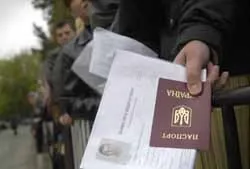
From now on, it will be much easier for entrepreneurs, journalists, scientists and cultural figures, athletes, students and teachers, as well as close relatives of persons living in EU states to enter Europe. Businessmen will only need a written request from the host legal entity, journalists – a document confirming that the purpose of the trip is to perform professional duties, those traveling on school, scientific or cultural exchanges – a letter from the host organization. For Russians who decide to visit their relatives in Europe, a written invitation from them will be sufficient. Holders of diplomatic passports will be able to travel without visas altogether, which, according to the European Commission, 'will create additional conditions for expanding contacts'.
The fee for processing ordinary visas will be €35, for urgent visas (within 72 hours) – €70. Moreover, some categories of Russian citizens (for example, disabled persons and their accompanying persons) will be able to travel to EU countries free of charge.
Of the 27 European countries, only 24 states signed the agreement. The simplified regime does not apply to the United Kingdom, Denmark, and Ireland. The agreement does not apply to Norway and Iceland, which are not EU members but are part of the Schengen area.
Russian travel agencies have mixed feelings about the new visa regime. Tour operators fear that with the introduction of a single fee, visa processing for some European countries will become more expensive. For example, for Poland – more than double. Another concern is that consulates, which always processed visas quickly for Russians, have now made it a rule to process them within 10 calendar days (this is the maximum period specified in the agreement). Previously, visas for Slovenia and Slovakia were processed in 5 days, and for Poland and Estonia – in 2-3 days.
However, the Russian Foreign Ministry does not take such trifles into account. The entry into force of the visa agreement is seen in Moscow as 'a first step on the path to visa-free entry of Russians into EU countries.' However, Europeans do not share this enthusiasm: according to Western media, the new rules are just a small concession to Russia, whose leadership has long sought the abolition of European entry visas for its citizens.
Simultaneously with the visa agreement, an agreement on readmission between the Russian Federation and the EU came into force. The purpose of this document is to combat illegal migration. Brussels has undertaken to send, at its own expense, 'illegals' who entered its territory from Russia, and Moscow, accordingly, to accept them, regardless of citizenship (if they entered Europe from Russian territory) and to share the costs of returning its citizens to their homeland.
For Europeans, this agreement is much more important than the simplification of the visa regime. As is known, Russia has in recent years become the main transit point for illegal migrants on the way from Asia and the Middle East to Europe. The number of such unwelcome guests who entered the EU from Russia has already exceeded Ukraine, which until recently led this sad list. So in Brussels, the new agreements with Moscow, signed in May last year in Sochi, are regarded not as a step towards visa-free exchange, but as another 'barrier' on the road to Europe.