
When it comes to investments, the residents of Liechtenstein are accustomed to looking far ahead. The descendants of the family whose surname gave the principality its name waited almost 600 years to get their hands on it, and when they succeeded, they gained long-awaited power and might within the Holy Roman Empire.
This sense of perspective is born of geography: high in the mountains, at a prudent distance from all possible enemies, the principality seems invulnerable. When dark solid BMWs and Mercedes park in front of the doors of countless banking organizations, this land not only exudes an aroma of prosperity but also seems a testament to prudence.
Liechtenstein has built its reputation as a reliable keeper of others' secrets since the Second World War. Legends are told about its financiers, whose tax expertise can hide any fortune from the prying eyes of an inspector. Banks helped lift the country out of need and paved the way to its current prosperity.
However, the latest news cannot but sadden one of the most prosperous nations on the European continent. In recent weeks, 10 countries have launched investigations into the activities of their citizens suspected of illegally hiding their wealth from taxes using special institutions in Liechtenstein's capital, Vaduz. And the list of these countries is growing daily.
The list includes Great Britain, 100 of whose citizens are suspected of tax evasion. Considering that the data on these people was bought for £100,000, and taking into account the high probability that each of them has hidden assets worth more than £1 million from taxation, it turns out that the British tax authorities have a very interesting case to unravel.
Germany had to pay much more. Its secret agents, blinded by data on a number of key business figures, paid around £3.5 million for information that they hoped would help tax authorities significantly replenish the treasury.
It seems that tiny Liechtenstein has been punished unfairly. Sweden, the USA, France, Italy, Spain, Canada, Australia and New Zealand are preparing to jointly strike at the foundation of its economic prosperity. 'European partners should treat each other with respect,' Liechtenstein government spokeswoman Gerlinde Manz-Christ said the other day. 'For now, we are very disappointed.'
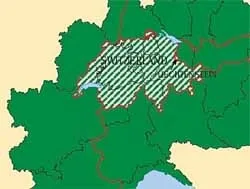
After the people of Liechtenstein managed to survive the collapse of the Holy Roman Empire, maintain independence by avoiding the clutches of Austria and Switzerland, and recover after World War II, in which the country carefully maintained neutrality, they had a right to think that their worst days were behind them.
But nothing of the sort. Of all the troubles they have experienced, the unfolding tax scandal has probably become the biggest threat to the state's existence. Professor of economics and former head of the European Bank for Reconstruction and Development Willem Buiter said that Liechtenstein should be given a choice: abandon banking secrecy or be annexed. His fervent intolerance is shared by many governments around the world, tired of losing billions in 'vanished' revenues.
Liechtenstein's Hereditary Prince Alois can fume as much as he likes about the violation of sovereign rights: German Chancellor Angela Merkel is indifferent. At a meeting in Berlin last week with the principality's Prime Minister Otmar Hasler, she warned: 'The clock is ticking.' It sounds ominous.
In this scandal, the huge numbers cannot go unnoticed: hidden billions of dollars, euros, Swedish kronor, 73,000 holding companies involved in scandals, more than 20 million in taxes that 91 suspects in Germany have already agreed to pay. All this suggests that punishment will follow not only inevitably but also soon.
It took just one man, a lone renegade, to jeopardize the future of Liechtenstein. There is information that Heinrich Kieber is watching the scandal he created from afar, probably from Australia. He is using a new identity, kindly provided by German intelligence services in exchange for a database he illegally accessed at a Liechtenstein bank where he used to work. Bathing in millions, Kieber is enjoying life, unlike the wealthy Australians whose tax scams he exposed.
A computer technology specialist who was implicated in Spanish real estate scams in 1996, Kieber is unlikely to be a national hero. At least, that is the opinion of Danish Taxation Minister Kristian Jensen, who called the whole affair 'an advanced form of dealing in stolen goods.' In his words, rewarding a criminal for stolen information is immoral. 'I don't like this whole story, and I don't think such a practice is the best way to ensure proper tax payment,' Jensen remarked.
Whether we like it or not, Kieber's revelations have major consequences. Who knows how many voluntary confessions are now being feverishly prepared for tax authorities in Europe and beyond? But most importantly, they will change the fate of Liechtenstein.
'We are carrying out a reform. Give us the opportunity to see it through, give us a little time,' Manz-Christ pleaded. But even from their lofty heights, the Alpine illusionists specializing in income tax must realize that little time remains to change the situation.
Harry Cettville.
Translation by Gzt.ru.