
Short-term courses offer an educational version of a vacation.
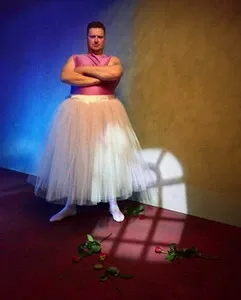
As the name suggests, you won't get away with just a hobby. You will also have to learn a foreign language, which usually means 15-20 hours a week. “This option of courses is chosen either by those who care about knowing how their leisure will be filled, or by those who are interested in getting in touch with the culture,” believes Sergey Martynov, director of a travel agency that organizes such tours. “You need to understand that in two or three weeks they won't teach you much. If you have never stood at a ballet barre in your life, you won't become a ballerina. You will be taught the basics of dance, shown the basic positions. So you will get initial skills. Even if you do something almost professionally, you are unlikely to improve much. I know that, for example, those who are seriously fascinated by Celtic culture go to Dublin to learn Irish dance. Although such courses are a pleasant, popular and useful thing, you shouldn't be too deluded.”
So, what is offered as a hobby? Almost anything, even cross-stitching. However, it is not the most popular. Sports and dancing lead. The former, as it is not hard to guess, attracts men more, the latter – women. And although you can choose almost any sport, tourists usually prefer a national one.
Sometimes devotion to the country of the language being studied goes beyond reasonable limits. There was a case when a client came to the travel agency office and demanded that he be arranged bullfighting lessons in addition to Spanish lessons. Moreover, the man, due to his impressive build, did not at all fit the role of a miniature and nimble bull tamer. The staff spent a lot of time trying to tactfully convey this idea to the client, and in the end they succeeded. Spitting on Spanish, the man decided to learn German. As a hobby, as it is not hard to guess, brewing was intended.
But these are all extremes. Less extravagantly minded but sports-oriented citizens prefer to play golf while learning classical English, or baseball while mastering the basics of so-called American English. Golf is of greater interest – it is now fashionable, although very expensive (one set can cost $1,000). Most English schools provide their students with both ideal grounds and exactly the kind of trainers we expect to see after watching films about high society.
Flamenco lovers are especially lucky: Spaniards are dancers from God, everyone knows the basics of flamenco, and the initial movements will be shown even on the street. Then you will have to move to the hall and learn the dance with a teacher. It is worth paying attention to Malaga – the dance schools located here are considered the best in Spain.
For those who love to cook, programs of the 'language plus cooking' series are offered. These programs are especially popular in schools in France, Spain, and Italy. Here food is treated as an art. Courses for amateur cooks are available at almost any Italian language school. Qualified chefs will work with you. For those who wish, culinary excursions to local markets and to the kitchens of city restaurants can be arranged. After that, be prepared to receive a certificate and to dreams in which pizza and pasta will become frequent guests.
Those who come from Spain will dream of paella, olla, gazpacho, podrida. Spanish cooking courses are less academic than Italian ones. They won't lecture you here, except perhaps just a little so that it's clear what we're talking about. Perhaps only the first lesson will be devoted to theory, where the cuisine of various regions of Spain will be described in summary form. Then it's all practice. Being freedom-loving people, Spaniards do not torment their charges with pedantry. Forgot the paella recipe? What, completely forgot? Oh, you remember a little after all? Well then go ahead! Create, make paella according to your own personal recipe. And then we'll even have a contest to see whose version is better... That's roughly the scenario of a Spanish cooking lesson.
Those watching their figure should stay away from Madrid, because it is here that almost every language school offers cooking. And don't think that since you chose the 'language plus ballet' course, this doesn't apply to you. It absolutely applies to you, because the schools are multidisciplinary, and your roommate may well turn out to be an avid cook who never gives up hoping to stuff a piece of her masterpiece into you.
Run from her, for example, to France, and not just anywhere, but straight to sommelier courses. Excellent courses are available not only in Paris but also in Normandy. French people are recognized wine experts. They value this drink and require the same respectful attitude from course participants. The Spanish version of 'Forgot? Make up your own!' won't work here; the French are demanding teachers. But they issue a certificate that gives the right to work in this specialty.
True, those who intend to work afterwards are a minority among the course participants. Most students study for themselves, simply to be well-versed in wines while having a genuine French certificate.
And now, having satisfied your hunger, you can think about your appearance. We have done sports and dancing, so now it is worth taking care of what to clothe your trained body in. Those wishing to learn from famous tailors have appeared with enviable regularity, and they are still here today. A 'rag' course can be taken in Paris, Rome, Milan, and London - cities that have become centers of world fashion. There are several options: from classes on the history of costume to lessons in the technology of making modern clothing. You will master all the fashion subtleties with the help of designers from the most famous fashion houses. Under their attentive guidance, you will be taken on a tour of their workplace, that is, the fashion house. The group is unlikely to be allowed into the workshops: what if you turn out to be an industrial spy and steal from the couturier the idea for his new collection? Although in general you will be introduced to the organization of the House and its divisions. The charm of such programs is that Italians often have no strict language requirements, and anyone who wants to can enter fashion courses. Another thing is that without knowing the language of Petrarch, you will not understand anything, but that is already your problem.
As you can see, to get a foreign certificate, you don't need to exert yourself much or set aside special time: a vacation is quite enough. To your own surprise, you can go on a blissful vacation as a simple tourist, and come back as a specialist in making olla or a performer of jig.