
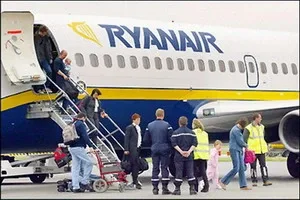
Suspecting a trick, skeptics go to ticket offices with the familiar logos of national carriers. In fact, they are both right and wrong at the same time. The so-called budget airlines play masterfully on what, until recently, was routine unworthy of attention for large companies.
Businessmen bring most of the profit to any airline. Their business trips are paid for by commercial organizations, for whose budget an extra hundred dollars makes no difference. Consequently, airlines feel entitled to use business travelers as almost their main source of profit.
It is easy to tell those who spend other people's money: they usually fly on flights that arrive at their destination around nine in the morning and return after five in the evening. Their plans are unpredictable first of all to themselves - for the most part, businessmen buy air tickets for the nearest available flight and try to make the round trip in a day, at most two.
But if airlines sold all seats at the prices they offer to businessmen, planes would be no more than 10-15% full.
This is how tickets for the general public appear - they cost less, but they have to be bought a few days before departure. This principle continues to operate further, and in the end it may turn out that one economy class passenger pays several times less for a ticket than another.
For airlines with a traditional pricing policy, this gap is not so large. But budget carriers are a different matter. Ryanair itself sells tickets to Brussels' Charleroi airport, which is at the center of the current scandal, for almost $120 to those who want to fly out tomorrow, and for only $2 to those willing to plan their trips three weeks in advance.
But juggling fares is only one of the tricks. The vast majority of budget flights operate from small, unprestigious airports, sometimes located tens of kilometers from the nearest large city. National carriers prefer to fly to traditional world-famous air hubs - their clients value comfort more than the opportunity to save on airport fees. Ultimately, it is the passenger who pays for airport operations, and it is up to him to decide what he wants - to pay less for a plane ticket or to save on a taxi to the city center. The chairman of the board of directors of Ryanair, Michael O'Leary, said at a press conference that if it were not for his company, Charleroi airport would now be living its last days.
Whatever they say in the EU, O'Leary is largely right: the demand for the services of this regional airport was low. It is not surprising that the managers of this airport were ready to do a lot to get customers.
The situation in Charleroi is not unique. This is the case in almost all cities where Ryanair flies. And its passengers seem to have nothing against the journey taking longer but costing less.
"Budget" carriers save on everything: in-flight meals are not given out but sold; tickets are sold only via the Internet - meaning they do without ticket agents and expensive offices; they buy aircraft of only one type, and dozens at a time, getting huge discounts; they sacredly observe the 25-minute rule: an airplane brings profit only when it flies, and the time it spends on the ground must be reduced to a minimum.
The only thing that is not subject to savings is safety. Suffice it to say that pilots at Ryanair itself (many of whom, by the way, came to this company specifically from Russia) earn no less, and sometimes a little more, than their colleagues at British Airways.
The natural question of whether budget carriers will come to our country remains open for now. On the one hand, such companies continue to grow richer and gain more influence. On the other, their business is impossible without a single sky shared by all and a unified interstate economic space. And the fact that tickets for flights of British Airways, Lufthansa and other aviation giants are becoming cheaper precisely because of the pressure from companies like Ryanair is already considered proven.
_