
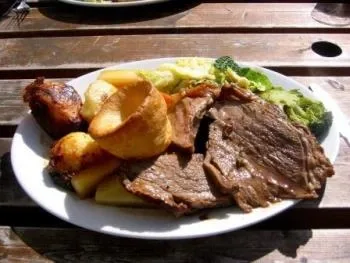
The daily diet of the British consisted of meat from livestock, game, cheese, bread, and vegetables and fruits. In this case, the difference between the laconic British cuisine and the cuisines of continental Europe, rich in various herbs and spices, is so fundamental. Nevertheless, despite the complete absence of 'culinary imagination' for which English cuisine is known, the traditions of eating in Great Britain are very conservative.
Let's take a closer look at what this conservatism consists of. An English breakfast occurs at 8 a.m., then at 1:30 p.m. comes lunch, at 5 p.m. tea time, usually served with raisin buns, and at 7 p.m. – the final, full dinner. This schedule is followed not only by locals but also by English catering establishments.
Breakfast, which begins at 8 a.m., is characterized by its fundamental difference from the breakfast offered by French cuisine, which consists of coffee and a croissant. An English breakfast starts with a wide variety of fairly simple products – eggs, tomatoes, bacon, tomatoes. Breakfast also includes porridge – a thick oatmeal.
The next point of the English meal is 'lunch', which takes about 30-40 minutes. Usually, the British lunch is not overloaded with excesses. In lunch you can find the simplest recipes of British cuisine – meat, fish combined with vegetables, and pudding. There are probably an endless number of pudding recipes, both sweet and savory. Moreover, pudding is a kind of culinary hallmark of Britain – an English national dish.
At 5:00 p.m. – traditional tea with pastries, but it, unfortunately, is becoming somewhat of an atavism, despite the quite established British tradition.
Dinner follows at 7 p.m. and involves a meal of various puree soups with bread and butter. The main courses of an English dinner are no longer surprising in their simplicity – these are beef steaks of varying degrees of doneness, combined with various types of side dishes – potatoes or vegetables.
As mentioned earlier, British cuisine often adopted recipes from other peoples and combined recipes from the territories that make up the United Kingdom. Therefore, it is worth giving examples of some regional dishes.
Such a constituent part of Great Britain as Wales can delight you with fruit bread, seaweed-based crackers, cheese toasts. Scotland contributes the following to the diversity of English cuisine – shortbread and oatcakes, calf tripe, onion soup with chicken and prunes, beef stewed in beer. Residents of Northern Ireland add to the variety with potato-based dishes – colcannon and champ
If we highlight the most general trends, English cuisine, unlike, for example, French, does not welcome the use of sauces in recipes. The emphasis is on the taste and preparation of the dish itself. Fried meat dishes are usually slightly undercooked and served rare – these can be beefsteaks, steaks, and so on. Soups in Britain also occupy a large niche – as mentioned earlier, soup is necessarily part of dinner. In English soup recipes, one rarely finds a large amount of spices because according to British culinary traditions, they should be in moderation.
In conclusion, I would like to note the fact that the inhabitants of Britain have an increased inclination towards healthy food. Yes, there is little specificity in the culinary tradition of Britain, but the British approach established recipes very responsibly. Regarding health, I would like to remind that the British use a significant amount of vegetables in their recipes.
If English cuisine has not left you indifferent, many English cuisine recipes can be found on the website www.kashewar.com.